
To choose fresh beets, pick small to medium roots that feel firm and heavy with smooth, unbroken skin. The best bonus: fresh, vibrant greens still attached — they are the clearest freshness signal. Avoid soft, wrinkled beets, cracked skins, or wilted, yellowing tops.
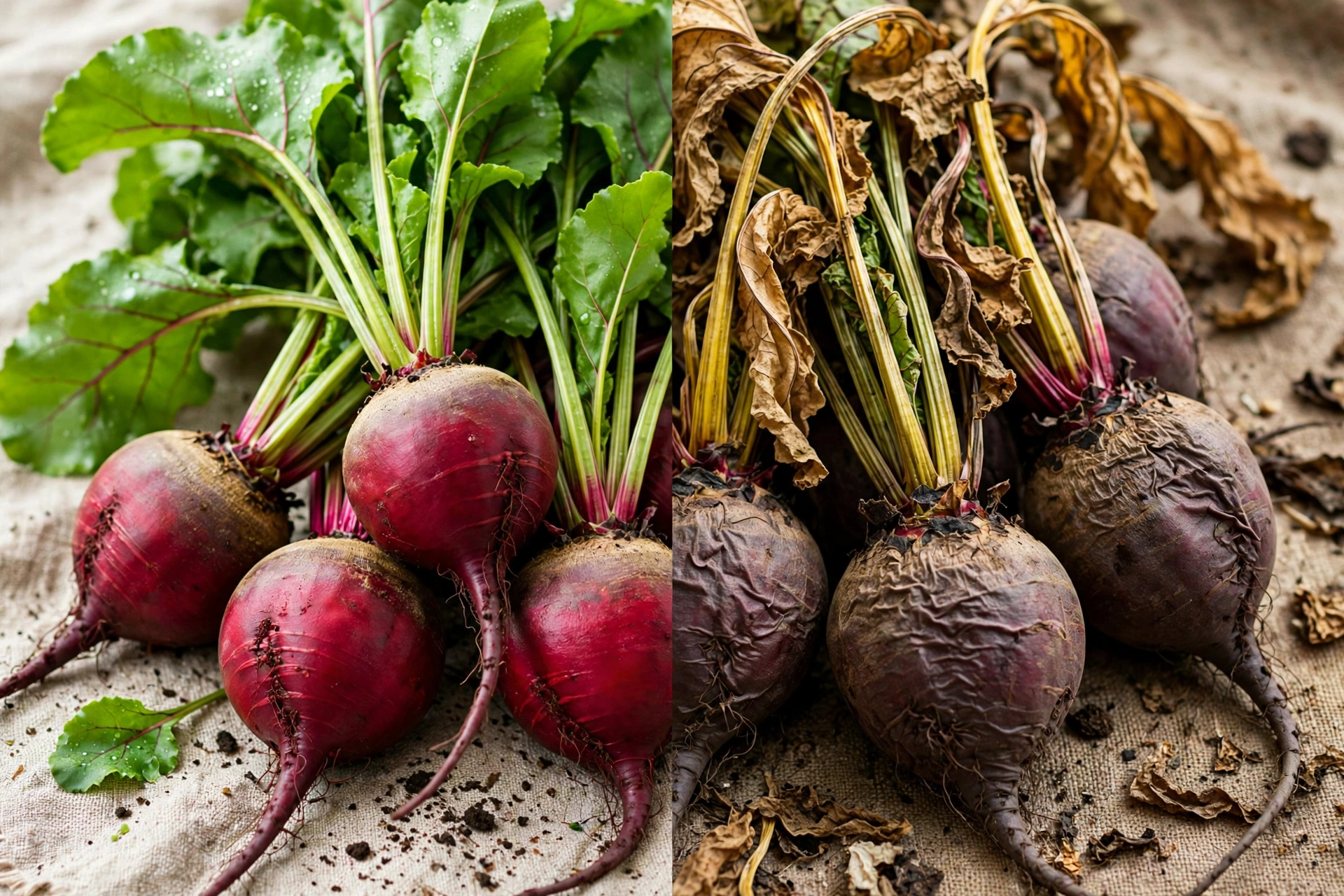
Prefer
- Small to medium size (large beets can be woody)
- Firm, rock-hard feel
- Smooth, unbroken skin
- Fresh, vibrant greens attached
- Deep, even color
Avoid / check more closely
- Soft spots or spongy texture
- Wrinkled, shriveled skin
- Cracks or deep cuts
- Wilted, yellow, or slimy greens
- Oversized roots with rough skin
Firmness and size matter most
A good beet feels like a billiard ball — dense and rock-hard. Any softness or give means it is losing moisture and turning spongy inside. Smaller to medium beets (golf-ball to tennis-ball size) are sweeter and more tender; giant beets often develop woody cores and take forever to cook. The skin should look smooth and intact — deep cuts and cracks invite decay.
Read the greens like a calendar
If the greens are still attached, they tell you exactly when the beet was harvested. Bright, perky greens mean fresh; wilted, yellow, or slimy tops mean the beets have been sitting. Bonus: fresh beet greens are delicious sautéed, so do not throw them away. No greens at all is fine too — just judge by firmness and skin instead.
Storing beets at home
Cut the greens off (leave an inch of stem), but do not wash the roots — store unwashed in a perforated bag in the refrigerator for two to three weeks. Keep the greens separately, wrapped in a damp towel, and use within a few days. Cooked beets keep about five days refrigerated, and both raw and cooked beets freeze well.
Common questions
Can I eat beet greens?
Yes — they cook like chard or spinach. Use fresh ones within a few days; discard wilted or slimy greens.
Why are my beets woody?
Oversized or old beets develop tough, woody cores. Choose small to medium, firm beets instead.
How long do beets last?
Two to three weeks refrigerated unwashed with greens removed. They are one of the longest-keeping root vegetables.
References
U.S. Food and Drug Administration — Selecting and Serving Produce Safely. Reference for produce selection, handling, and visible damage.
Prepared October 11, 2026 with AI assistance. Cited sources do not endorse the entire article.