To choose fresh tomatoes for eating today, pick fruit that feels firm but gives slightly under gentle pressure, with smooth, unbroken skin and a mild, sweet smell at the stem end. Skin color alone is not the full story: shine, weight, and smell often tell you more about freshness than a deep red color. Buy firmer tomatoes when you plan to use them later in the week, and let them ripen at home.
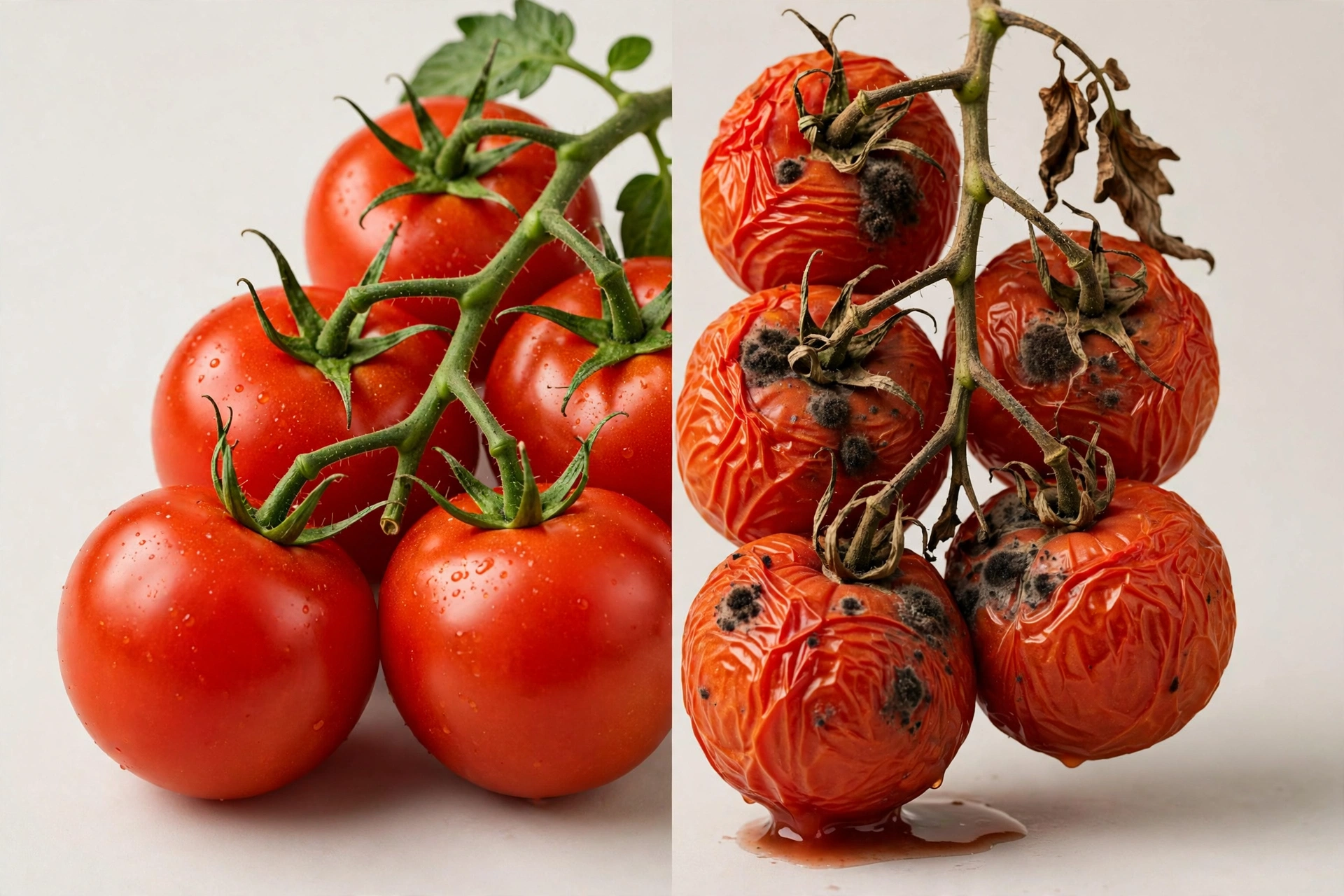
Prefer
- Firm fruit with a slight, even give under gentle pressure
- Smooth, taut, unbroken skin with a healthy shine
- Tomatoes that feel heavy for their size
- A mild, sweet, earthy smell at the stem end
- Green, fresh-looking stems or caps where still attached
- Even coloring for the variety, without dull or wrinkled patches
Avoid / check more closely
- Soft spots, wrinkles, or any leaking juice
- Visible mold around the stem end or inside cracks
- A sour, fermented, or otherwise off smell
- Deep splits or cracks that expose the flesh
- A very light, hollow feel for its size
- Skin that is already splitting or peeling away from the flesh
How should a tomato feel?
Cradle the tomato in your palm and press very gently near the middle, not at the stem end. A tomato for today should feel firm with a slight, even give. A tomato for two or three days from now can be a little firmer. What you want to avoid is a tomato that feels mushy in spots, collapses under light pressure, or feels noticeably soft on one side only — uneven softness is often a better warning sign than overall firmness. Do not squeeze hard or press the same spot repeatedly: rough handling bruises the flesh, and the damage may not show until later.
Look closely at the skin and the stem end
Fresh tomatoes usually have smooth, taut, shiny skin. Wrinkling is a common sign of moisture loss, which often goes together with mealy texture and faded flavor. Turn the tomato over and check the underside and the stem end, where mold and damage often start. A few dry surface marks are usually harmless, but sunken spots, leaking cracks, or white or gray fuzz around the stem are reasons to put it back. Green shoulders — the area near the stem staying green while the rest reddens — are common in some varieties and often just mean the fruit could use another day or two of ripening.
Use smell as a secondary clue
Hold the tomato close and sniff the stem end. A fresh tomato often has a mild, sweet, slightly earthy scent, and fragrant tomatoes tend to be more flavorful ones. A sour, fermented, or musty smell suggests the fruit is past its best, even if it still looks fine. Smell is a useful supporting clue, not a guarantee — it cannot tell you anything about handling, storage history, or anything you cannot see. Use it together with firmness and skin condition, not on its own.
Ripening and storing after you buy
Store firm tomatoes stem-side down at room temperature, away from direct sunlight, and give them a day or two to ripen. Cold storage can dull the flavor and texture of ripe tomatoes, so the refrigerator is best reserved for fully ripe fruit you cannot use right away — and even then, let them return to room temperature before eating. Once cut, cover the tomato and refrigerate it, and use it within a day or two. On the way home, keep tomatoes on top of heavier groceries so they do not get crushed.
A simple tomato-shopping checklist
Before choosing a tomato, answer three questions: what am I making, when will I use it, and is the fruit intact? Match the firmness to your plan — slight give for today, firm for later. Check the skin and stem end for damage, give it a quick sniff, and buy only what you will realistically use. This checklist helps you match the tomato to your meal; it does not test for microorganisms or chemical residues.
Common questions
Should tomatoes go in the fridge?
Usually not, while they are still ripening. Cold temperatures can make the texture mealy and mute the flavor. Keep firm tomatoes at room temperature until they give slightly to gentle pressure, then refrigerate only the ripe ones you cannot use soon, and let them warm up before serving.
Are green shoulders on a tomato a problem?
Not usually. In many varieties the area near the stem stays green longer, and it often ripens with another day or two at room temperature. If the rest of the tomato is firm and smells fine, green shoulders are simply a sign it was picked a little early.
Why do some store-bought tomatoes taste bland?
Many are picked before they are fully ripe so they survive shipping, and flavor develops best on the plant. To improve your odds, choose tomatoes that feel heavy and smell sweet at the stem end, let them finish ripening at home, and consider vine-ripened or in-season types when they are available.
References
- U.S. Food and Drug Administration — Selecting and Serving Produce Safely: guidance on choosing fresh produce and handling it safely at home. Dish-specific suggestions in this article are kitchen tips, not laboratory findings.
Prepared October 8, 2026 with AI assistance. Cited sources do not endorse the entire article.