
To choose fresh kale, look for deep green, sturdy leaves with no yellowing, wilting, or brown edges. The leaves should feel crisp and firm, not limp or rubbery, and the stems should look moist and freshly cut. Smaller leaves tend to be more tender; huge, thick leaves can be tough.
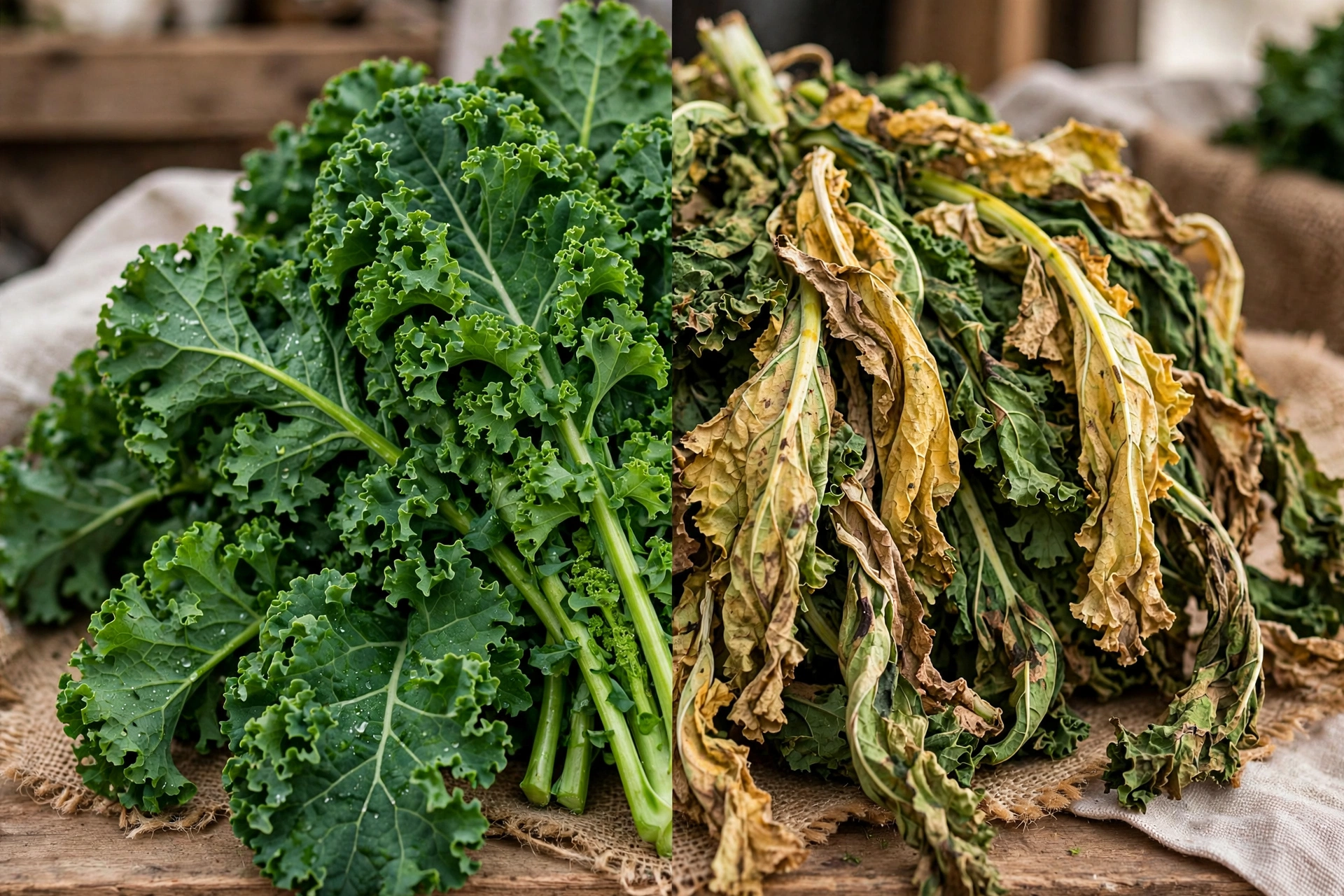
Prefer
- Deep, vibrant green color (or rich purple for red varieties)
- Crisp, firm leaves that stand up
- Moist, fresh-looking stem ends
- Small to medium leaves for tenderness
- Clean smell, no sourness
Avoid / check more closely
- Yellow or brown leaf edges
- Limp, wilted, or rubbery leaves
- Holes or heavy insect damage
- Slimy stems or sour smells
- Dried-out, woody stem ends
Leaves first: color and texture
Fresh kale leaves look alive — deeply colored, slightly glossy, and rigid enough to hold their shape. Yellowing starts at the edges and means age; widespread yellow means the bunch is done. The leaves should feel crisp, not floppy. A few small holes are normal for field-grown kale and harmless, but heavy damage means the leaves will spoil faster.
Stems and size cues
The stems should look fresh-cut and moist, not dried, cracked, or slimy. Thick, woody stems signal older, tougher kale — fine for long-cooked dishes but chewy in salads. Smaller, thinner leaves are more tender and milder; if you are eating kale raw, choose the smaller bunches. Give the bunch a sniff: fresh kale smells clean and green.
Storing kale at home
Refrigerate unwashed in a loose bag or wrapped in a damp towel — it keeps four to five days. Wash just before using. Kale actually sweetens after a light frost, but store-bought bunches just need cold and a little humidity. For long storage, blanch and freeze chopped kale for soups and smoothies.
Common questions
Is yellow kale safe to eat?
Slightly yellowed leaves are just aging — trim them off. Widespread yellowing, sliminess, or sour smell means discard the bunch.
Should I remove the stems?
For salads and quick sautés, yes — the thick center ribs are tough. For soups and braises, chopped stems are fine.
Can I freeze kale?
Yes — blanch for two minutes, chill in ice water, drain well, and freeze. Best for cooked dishes.
References
U.S. Food and Drug Administration — Selecting and Serving Produce Safely. Reference for produce selection, handling, and visible damage.
Prepared October 11, 2026 with AI assistance. Cited sources do not endorse the entire article.