
To choose fresh corn, look for bright green, tight husks and moist, slightly sticky silk — dry brown husks mean old corn. Peel back a small section of husk and check the kernels: they should look plump, milky, and tightly packed in even rows. Fresh corn feels heavy and the ear should feel firm, not spongy.
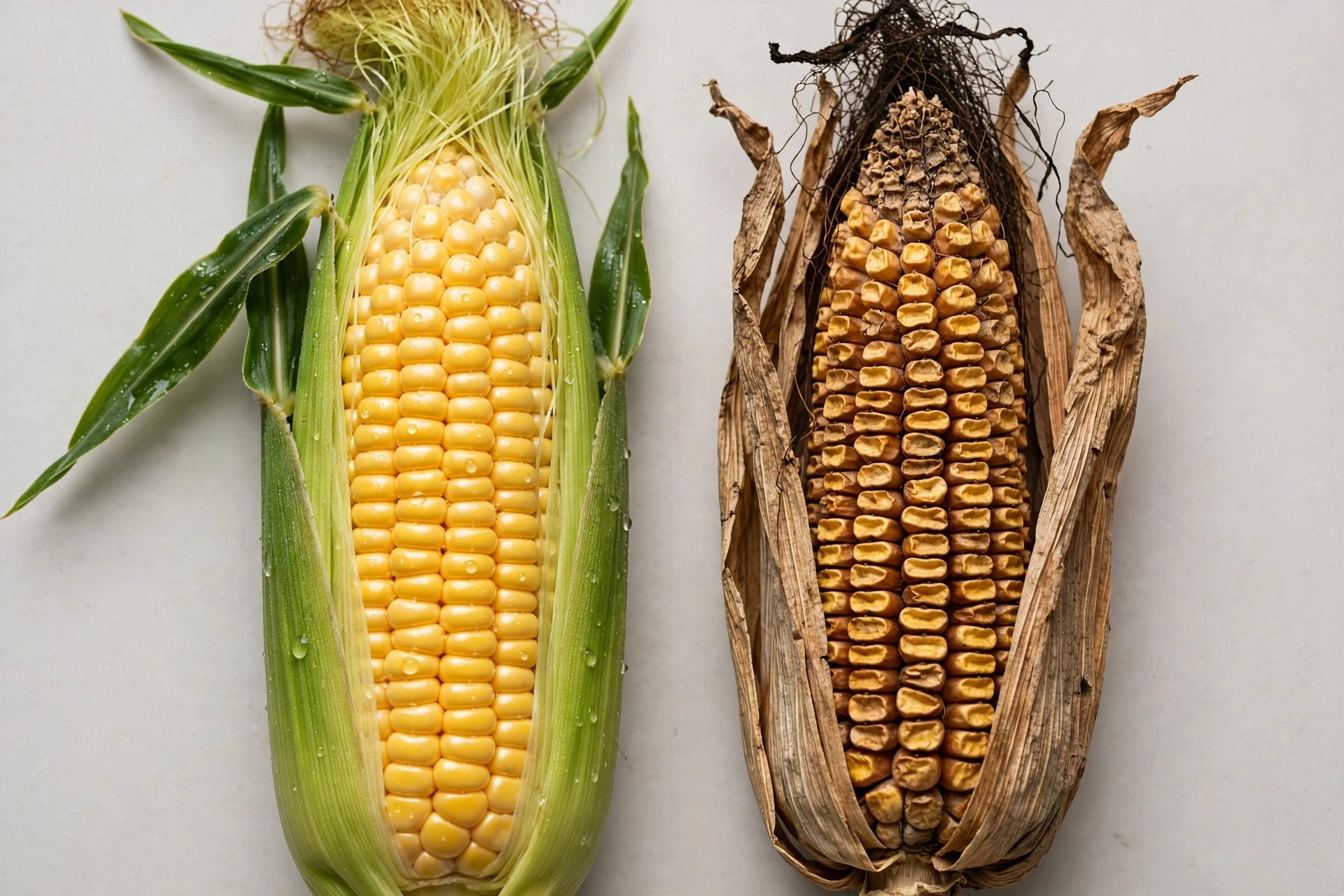
Prefer
- Bright green, tight, fresh-smelling husks
- Moist, slightly sticky silk (a little browning at the tip is fine)
- Plump, milky kernels in tight even rows
- Heavy, firm-feeling ears
Avoid / check more closely
- Dry, brown, papery husks
- Dry or black silk throughout
- Shriveled, dented, or missing kernels
- Light, spongy-feeling ears
- Mold or dark spots under the husk
Husk and silk: the freshness wrapper
The husk is corn’s natural packaging — bright green and hugging the ear means fresh; dry, brown, and pulling away means old. The silk sticking out of the top should feel slightly moist and sticky; completely dry, black silk throughout signals age (a little brown at the very tip is normal). Give the husk a sniff — fresh corn smells sweet and grassy.
Peek at the kernels
It is fine to peel back a small part of the husk to inspect — but do it neatly and buy the ear if it looks good. Kernels should be plump and juicy-looking, releasing milky liquid when pierced with a fingernail. Clear watery liquid means underripe; no liquid and dented kernels mean overmature and starchy. Rows should be even and full from tip to base.
Storing corn at home
Corn’s sugars convert to starch fast — cook it the day you buy it for the sweetest ears. If you must store it, refrigerate unhusked in a bag for one to two days. Husked corn dries out quickly. Corn freezes well: blanch ears, chill, cut kernels off the cob, and bag them for months of sweet corn.
Common questions
Should I peel the husk back in the store?
A small peek is acceptable and the best way to check kernels — just keep it tidy and buy ears you inspect.
How fast should I cook fresh corn?
As soon as possible — sweetness fades within a day or two as sugars turn to starch. Same-day cooking is ideal.
Can I freeze corn on the cob?
Yes — blanch first, chill in ice water, drain, wrap tightly, and freeze for several months.
References
U.S. Food and Drug Administration — Selecting and Serving Produce Safely. Reference for produce selection, handling, and visible damage.
Prepared October 10, 2026 with AI assistance. Cited sources do not endorse the entire article.