
Choose snap beans for the dish you plan to make: look for firm pods with an intact surface, then consider size and the variety’s normal color. A crisp snap can help judge texture, but it does not prove a bean is safe or tell you its harvest date. Yellow wax beans and purple varieties are not defective green beans.
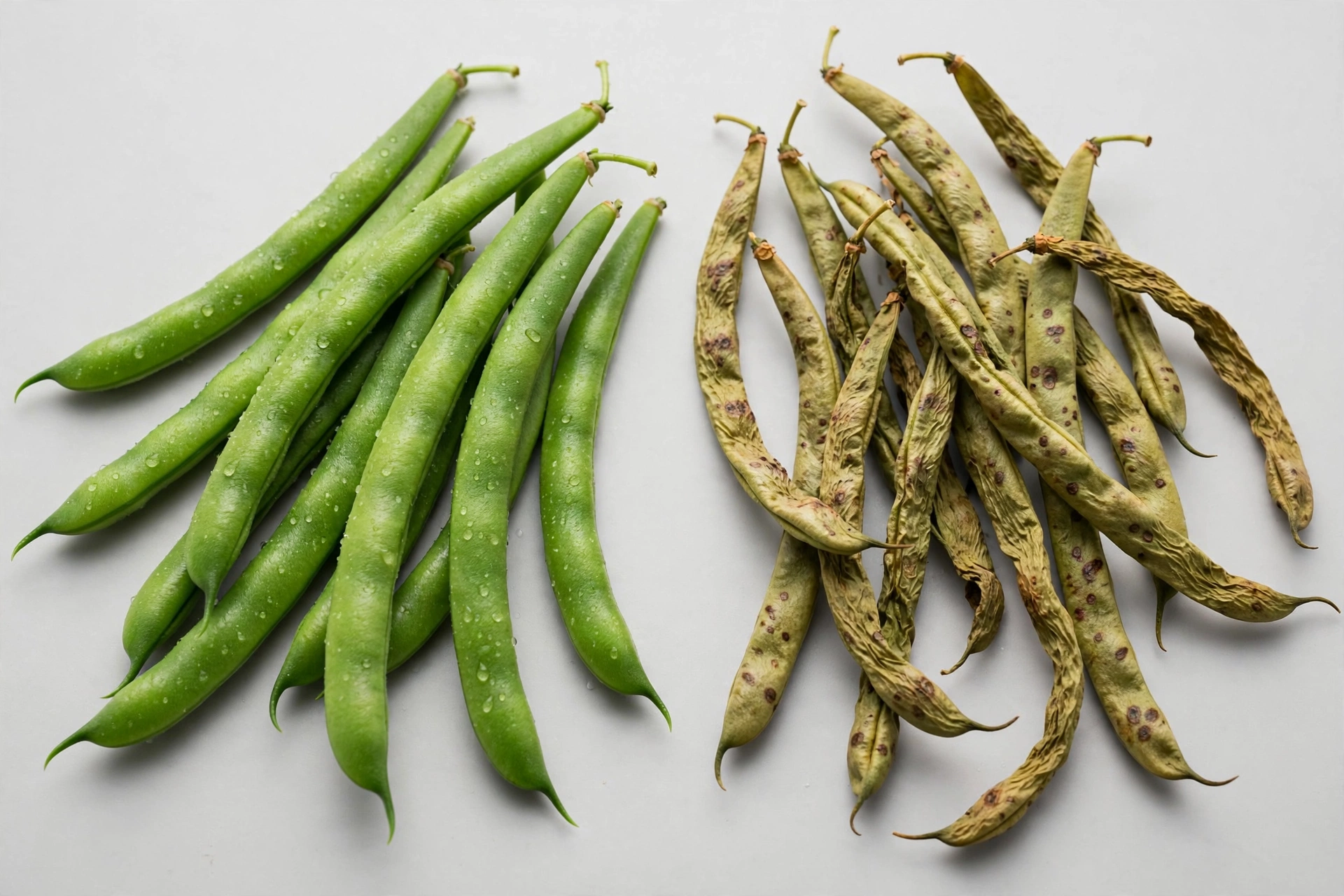
Start with the variety, not a single shade
University of Minnesota Extension describes snap-bean varieties with green, yellow, purple, or striped pods. Compare beans within the same variety. The same source explains that pods become more fibrous as the seeds enlarge; this is a maturity clue, not a rule that every large bean is unusable. A naturally broad pod and an overdeveloped seed bulge are different things.
For example, if a stall has slender green beans beside broad purple beans, do not rank the purple ones as older because of their color. Ask which variety they are and how the seller uses them. For a recipe needing evenly cooked pieces, choose pods of roughly similar size within your purchase.
What a snap test can and cannot tell you
A firm pod that breaks easily is a useful texture cue. Nebraska Extension recommends smooth, firm pods that snap when bent. It is not a laboratory test and does not establish that the beans are free from contamination. Ask before breaking produce in a shop; you can inspect the surface without damaging merchandise.
At home, a sample pod can help you plan preparation. If the pods differ in size, separate them before cooking rather than assuming every bean needs identical time. Judge the cooked texture for your recipe; do not use a raw taste test to settle a question about spoilage.
A short buying checklist
- Identify the variety and choose a quantity you can use.
- Look for intact, firm pods without widespread damage.
- Avoid beans with brown spots or a damp, sticky surface, as Iowa State Extension advises.
- Do not treat a green color or crisp snap as proof of safety.
- If a pack has deteriorating beans, inspect the contents rather than hiding the problem beneath better-looking pods.
Store and prepare the batch you bought
Iowa State advises refrigeration in a plastic bag and use within one week; Nebraska recommends storing the beans unwashed. Treat this as a planning window, not a promise that every purchase lasts seven more days. Rinse under running water before preparation. Follow a tested preservation method if you want to freeze or can them; this shopping guide is not a canning recipe.
References and next steps
- University of Minnesota Extension: varieties and harvest maturity.
- Nebraska Extension: selection and unwashed storage.
- Iowa State Extension: buying, storage, and washing.
These sources support the named guidance, not an endorsement of Fresh Decoded. Browse more vegetable selection guides or send a correction.
Corrected October 26, 2026: removed the absolute snap-test claim and clarified variety differences; clarified the limits of visual checks and added specific references. Prepared with AI assistance; no product testing or expert review is claimed.