
To choose crisp celery, look for firm, rigid stalks that snap cleanly when bent — limp stalks mean age. The leaves should look fresh and green, and the heart stalks should be pale green to whitish. Give it a sniff: fresh celery smells clean and vegetal, never sour.
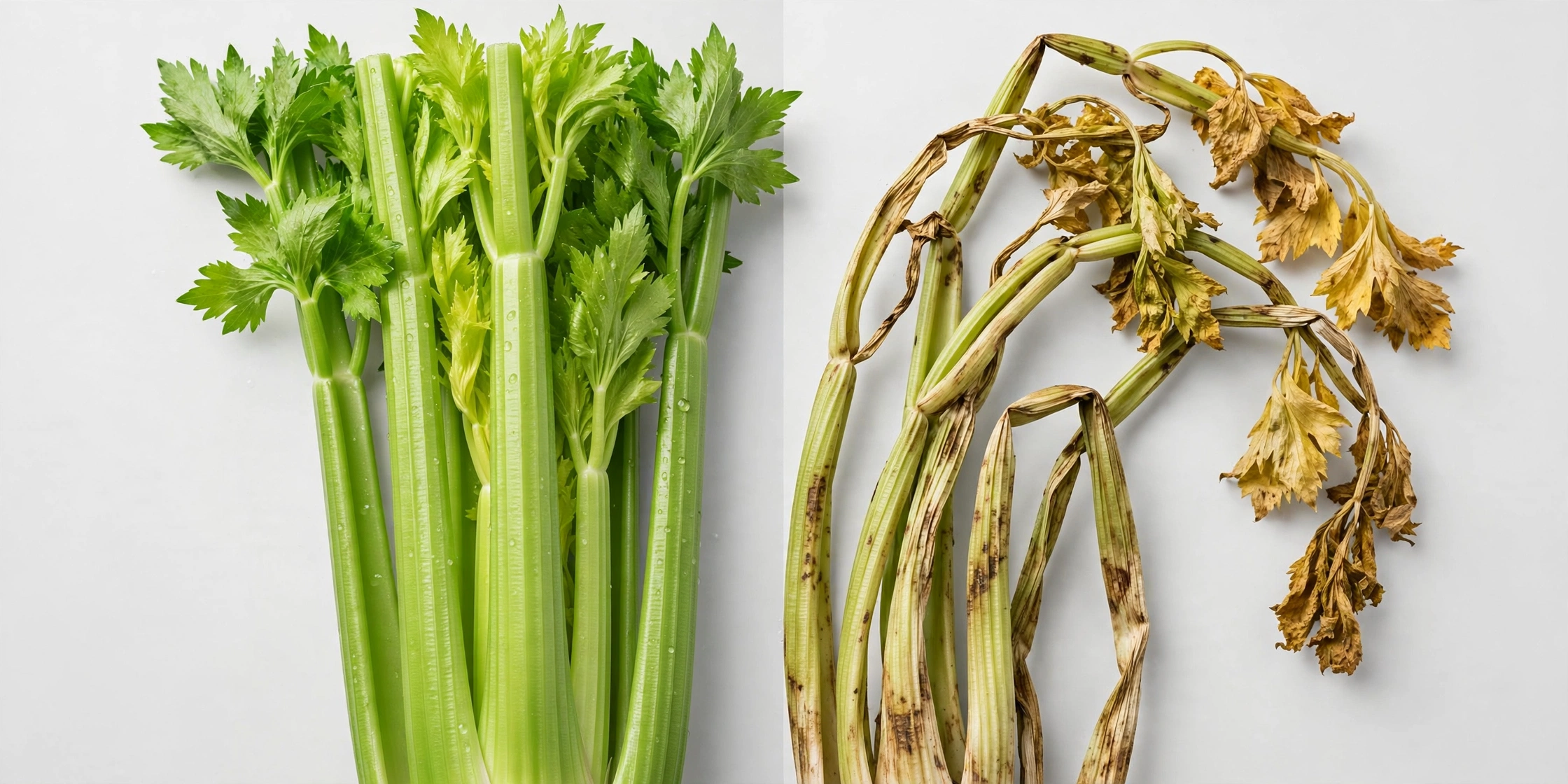
Prefer
- Firm stalks that snap, not bend
- Fresh green leaves
- Pale green to whitish heart stalks
- Compact, heavy bunch
Avoid / check more closely
- Limp, rubbery, bendy stalks
- Brown or black discoloration inside stalks
- Wilted or yellowing leaves
- Hollow-feeling stalks
- Sour smells
The snap test
Celery’s signature test is simple: bend a stalk and it should snap crisply with a clean break. Limp celery that bends without snapping has lost moisture through age or warm storage — still usable in cooked dishes, but no good raw. The stalks should feel rigid and look glossy, with tight, compact arrangement in the bunch.
Leaves, hearts, and hidden browning
Fresh leaves on top signal a recently harvested bunch; wilted or yellow leaves mean age. Break open a stalk or two and check inside — brown or black streaks inside the stalk (pithiness or decay) are a reject. The inner heart stalks should look pale and tender. A heavy, compact bunch beats a light, sprawling one.
Storing celery at home
Wrap celery tightly in aluminum foil — it lets the ethylene gas escape while keeping moisture in — and refrigerate; it stays crisp for two weeks or more. Plastic bags trap ethylene and speed decline. Limp celery can be revived with an ice-water soak. Keep cut celery in water in the fridge for snack-ready crunch.
Common questions
Why does foil work better than plastic for celery?
Foil keeps moisture in while letting ripening ethylene gas escape; plastic traps the gas and speeds up aging.
Can I eat limp celery?
Yes, if it is just dehydrated — revive it in ice water for raw use, or cook it. Discard slimy or sour-smelling stalks.
Are the leaves edible?
Yes — celery leaves are flavorful and great in salads, soups, and stocks. Do not throw them away.
References
U.S. Food and Drug Administration — Selecting and Serving Produce Safely. Reference for produce selection, handling, and visible damage.
Prepared October 10, 2026 with AI assistance. Cited sources do not endorse the entire article.