
To choose fresh carrots, look for vibrant, even orange color and firm roots that snap rather than bend. Fresh green tops are a bonus sign of recent harvest, though many carrots are sold trimmed. Avoid limp, rubbery carrots or ones with cracks, sprouting, or green shoulders — these signal age or poor storage.
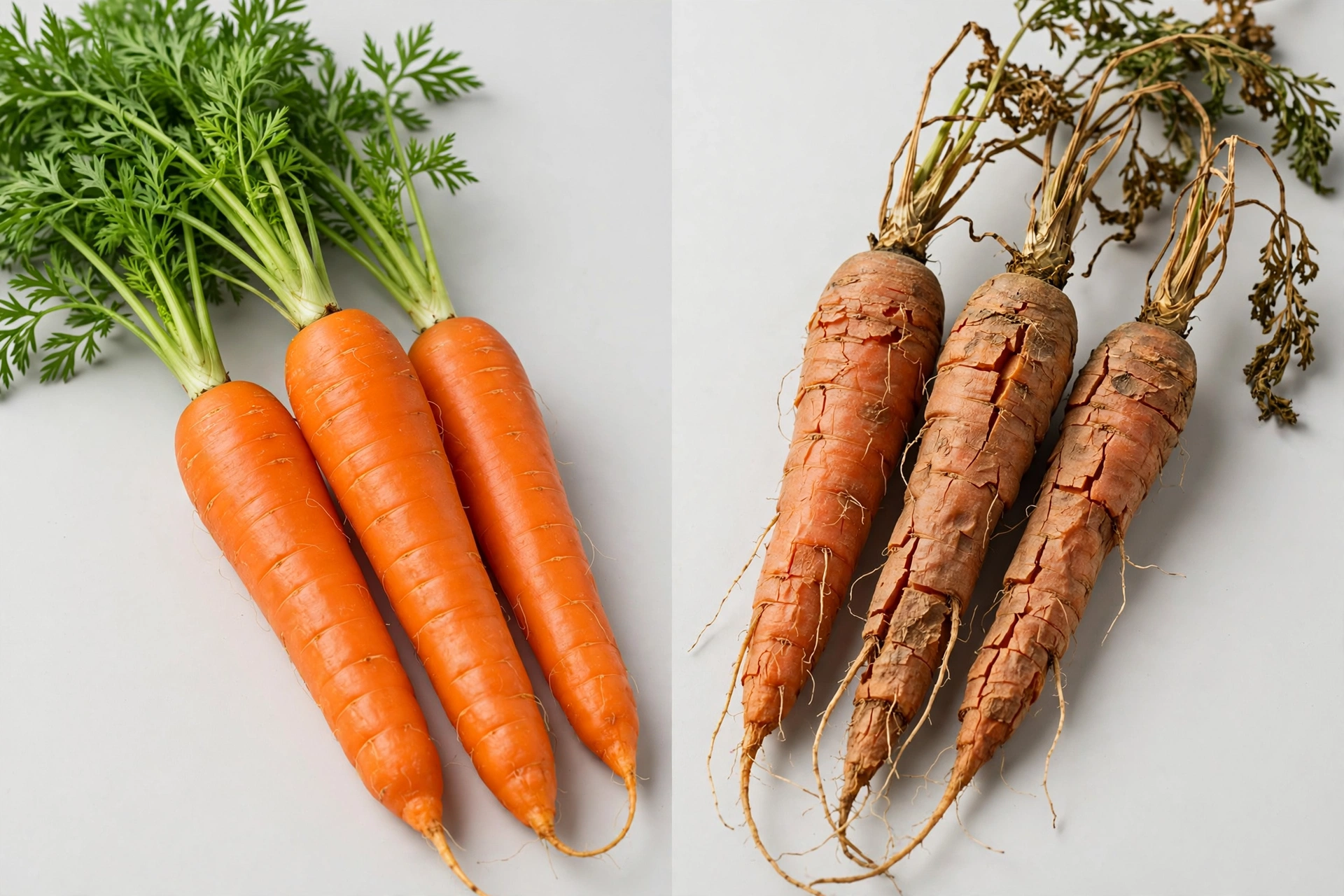
Prefer
- Vibrant, even orange color with smooth skin
- Firm, rigid roots that snap cleanly
- Fresh green tops when sold attached
- Medium-sized carrots, which tend to be sweeter than giants
Avoid / check more closely
- Limp, bendy, rubbery texture
- Cracks, splits, or heavy scarring
- Sprouting or hairy rootlets
- Green shoulders (sun-greened tops)
- Soft or slimy spots
The snap test and color cues
Fresh carrots are rigid — pick one up and it should feel stiff and snap crisply if bent. Limp, rubbery carrots have lost moisture through age or warm storage; they are still usable in cooked dishes but have lost their crunch and much of their sweetness. Color should be a vibrant, even orange from tip to top. Pale cores or faded color suggest age, while green shoulders mean the top was exposed to sunlight — the green part tastes bitter, so choose fully orange roots or trim the green away at home.
Tops, size, and surface check
When carrots are sold with their tops, the greens are a freshness calendar: bright, perky tops mean recent harvest, while wilted or yellowing tops mean the roots have been sitting around. (Remove the tops before storing — they draw moisture from the roots.) Medium carrots are usually the sweet spot for flavor; oversized ones can be woody in the center. Check the surface for cracks and heavy scarring, which invite decay, and skip any bag with slimy or soft roots.
Storing carrots at home
Remove any green tops, then refrigerate carrots in a perforated bag in the crisper drawer — they keep for several weeks when fresh. A little condensation in the bag is fine, but standing water causes rot. Baby-cut carrots dry out faster, so keep them sealed. For long-term storage, carrots freeze well after blanching. If carrots go slightly limp, an ice-water soak can restore some crunch for raw eating.
A simple carrot-shopping checklist
Before you buy, check three things: firmness (snaps, not bends?), color (vibrant and even?), and surface (smooth, no cracks?). When tops are attached, let them date the harvest for you. These quick checks work for orange, purple, and yellow varieties alike.
Common questions
Can I eat limp carrots?
Yes, if they are just dehydrated — they are safe but less crisp and sweet. Revive them with an ice-water soak for raw use, or cook them. Discard carrots that are slimy, mushy, or smell off.
Why do my carrots have green tops on the root?
The shoulder was exposed to sunlight during growth, producing bitter chlorophyll. It is harmless — just trim the green part off.
How long do carrots last?
Properly refrigerated in a perforated bag, fresh carrots keep for three to four weeks. Baby-cut carrots last about one to two weeks sealed.
References
U.S. Food and Drug Administration — Selecting and Serving Produce Safely. Reference for produce selection, handling, and visible damage. Storage guidance reflects standard kitchen practice.
Prepared October 10, 2026 with AI assistance. Cited sources do not endorse the entire article.