
To choose bell peppers, look for glossy, taut skin in a vibrant, even color — green, red, yellow, or orange depending on the variety. The pepper should feel firm and heavy for its size, with a fresh green stem. Avoid wrinkled skin, soft spots, or mold around the stem, which all signal age.
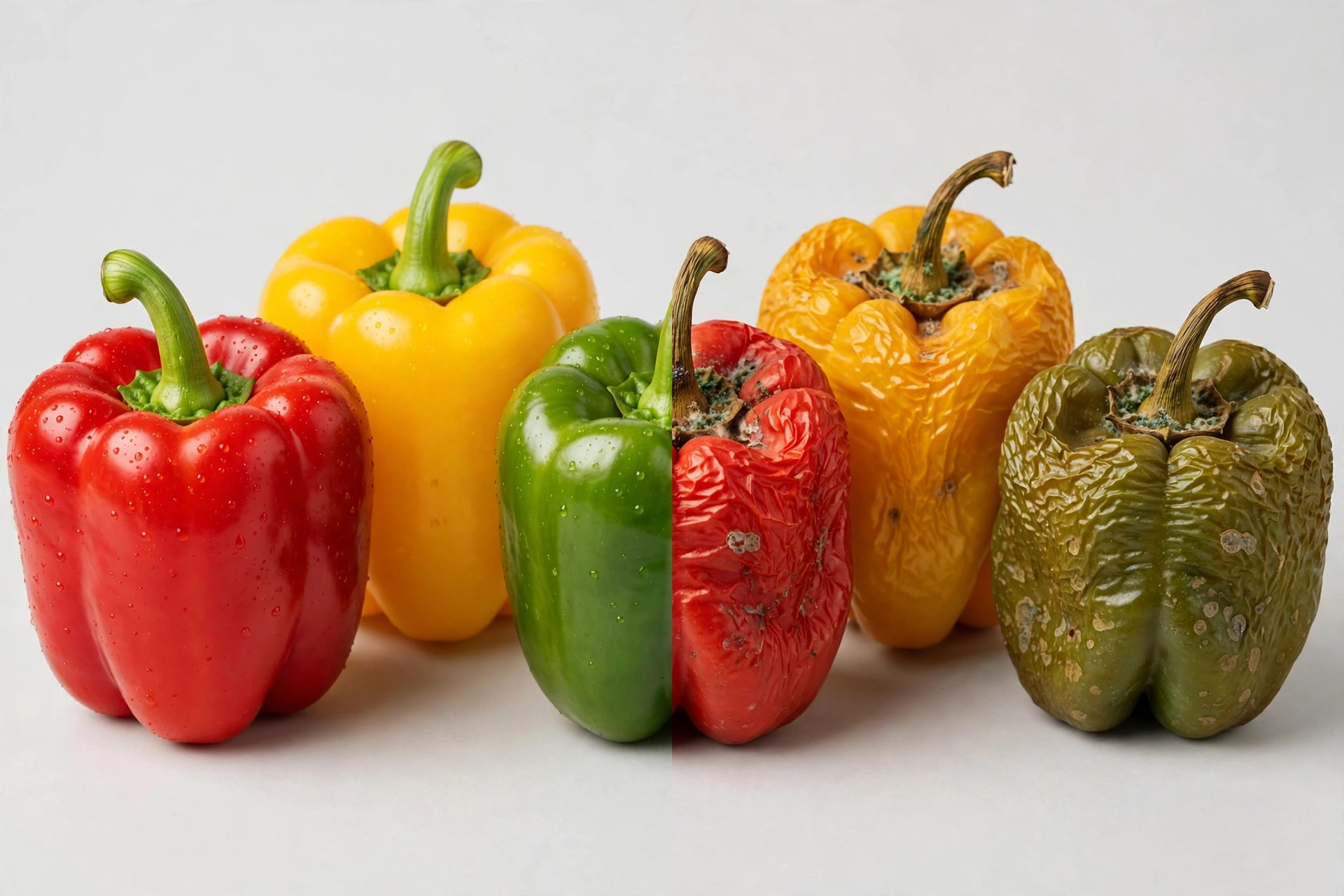
Prefer
- Glossy, smooth, taut skin with vibrant even color
- Firm flesh that gives only slightly to pressure
- Good weight — heavy for its size means juicy walls
- A fresh, green stem
- Blocky, well-shaped peppers (shape does not affect taste)
Avoid / check more closely
- Wrinkled or shriveled skin
- Soft, sunken, or mushy spots
- Mold or dark decay around the stem
- Peppers that feel light or hollow
- Cuts, punctures, or leaking areas
Skin, color, and what ripeness means
Bell peppers change color as they ripen — most start green and mature to red, yellow, or orange depending on variety. Green peppers are picked earlier: they taste slightly bitter and grassy, which many cooks actually prefer for certain dishes. Fully colored peppers are sweeter and typically richer in vitamin C. Neither is “better” in absolute terms, so choose by flavor preference and recipe. What does matter is the skin: fresh peppers have glossy, almost waxy skin stretched taut over firm flesh. As peppers age, the skin wrinkles and dulls as moisture escapes — a wrinkled pepper is still usable in cooked dishes but has lost its snap.
Weight, stem, and the squeeze test
Pick up the pepper: a fresh one feels dense and heavy, because thick, juicy walls weigh more. A pepper that feels surprisingly light is likely drying out inside. Press it gently — the walls should feel firm and spring back, not stay dented. Check the stem end closely: the stem should look green and fresh, and the area around it should be free of mold or dark soft patches, which is where decay usually starts. Give the pepper a quick once-over for punctures or cuts, since broken skin invites mold.
Storing bell peppers at home
Keep bell peppers unwashed in the refrigerator’s crisper drawer, ideally in a perforated bag — they keep well for one to two weeks when fresh. Do not wash them until just before use. Once cut, wrap the pieces tightly or seal them in a container and use within a few days. Bell peppers also freeze well for cooking: dice them, spread on a tray to freeze individually, then bag them up. Skip blanching — peppers freeze fine raw for cooked dishes.
A simple bell-pepper-shopping checklist
Before you buy, check four things: skin (glossy and taut?), color (vibrant and even?), weight (heavy for its size?), and stem (green and mold-free?). Choose the color that matches your recipe’s flavor needs. These quick checks work for every color and variety.
Common questions
Are green peppers less ripe than red ones?
Usually yes — most bell peppers ripen from green to red, yellow, or orange. Green peppers taste grassier and slightly bitter; fully colored ones are sweeter. Pick by the flavor you want.
Can I still use a wrinkled pepper?
Yes, in cooked dishes. Wrinkling means moisture loss, not spoilage — the pepper will be less crisp but fine sautéed or roasted. Discard it if there are soft, slimy, or moldy spots.
How long do bell peppers last?
Whole, refrigerated, and unwashed: about one to two weeks. Cut peppers keep a few days sealed in the fridge. Freeze diced peppers for several months of cooking use.
References
U.S. Food and Drug Administration — Selecting and Serving Produce Safely. Reference for produce selection, handling, and visible damage. Ripening behavior is established produce science.
Prepared October 9, 2026 with AI assistance. Cited sources do not endorse the entire article.