
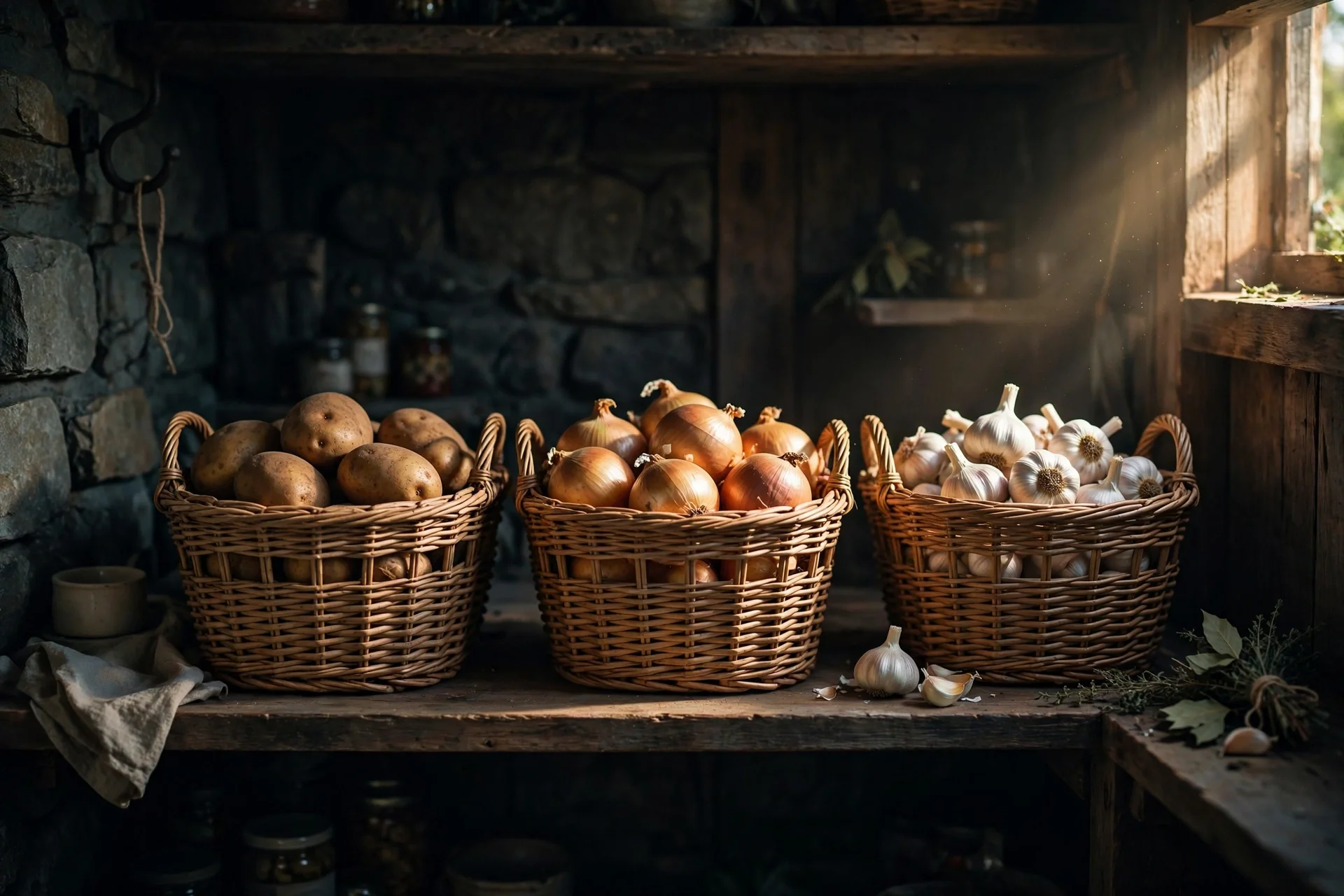
Store potatoes, onions, and garlic in a cool, dark, well-ventilated place — a pantry, cupboard, or cellar around 45–55°F (7–13°C) is ideal for potatoes — but keep potatoes and onions in separate bins. Onions release gases and moisture that make potatoes sprout and soften faster, while potatoes can make onions spoil sooner. Keep garlic dry with its papery skins on. Do not refrigerate raw whole potatoes: cold turns their starch to sugar and changes flavor and cooking color.
Prefer
- Cool, dark, ventilated storage
- Potatoes and onions in separate baskets
- Garlic dry with skins intact
- Checking weekly and removing spoiled items
- Paper or mesh bags that let air move
Avoid / check more closely
- Storing potatoes and onions together
- Sealed plastic bags that trap moisture
- Refrigerating raw whole potatoes
- Washing before long storage
- Keeping potatoes in sunlight
One pantry, three separate corners
These three staples like similar conditions — cool, dark, and dry — but not the same container. Give potatoes their own basket, onions theirs, and garlic a small mesh bag or open bowl. Airflow is the detail people miss: a ventilated basket, paper bag, or mesh sack beats a sealed tub every time, because trapped humidity is what starts mold and soft spots. If you are buying this week, how to choose potatoes covers picking firm, unsprouted tubers that will store the longest in the first place.
Potatoes: dark and cool, never the fridge
Light makes potatoes turn green and develop a bitter taste; discard green areas generously, and throw away potatoes that are extensively green or bitter. Warmth makes them sprout. Eyes that have just started to sprout can be cut away if the potato is still firm, but a soft, shriveled, heavily sprouted potato belongs in the bin or compost. The same cool-dark logic applies to their relatives — see how to choose sweet potatoes — though sweet potatoes prefer it slightly warmer and are damaged by fridge cold, so keep them in the pantry too, just not touching the onions.
Onions and garlic: dry skins are protection
Whole onions keep for weeks when their skins stay dry and air can circulate; hang mesh bags or use an open basket. Cut onions are different — refrigerate them in a sealed container and use within about a week. Garlic heads keep for months whole and dry; individual peeled cloves keep only days in the fridge. Never store garlic in oil at room temperature, a known safety risk; refrigerated garlic-in-oil should be used promptly. If your pantry runs warm, a note from organizing your fridge helps here too: the fridge is for the cut and peeled versions of all three, while whole produce stays outside it.
A weekly two-minute check
Storage success is mostly inspection. Once a week, run a hand over the baskets: remove any onion that has gone soft or moldy at the neck, any potato leaking or smelling earthy-sour, and any garlic head with green shoots pushing through soft cloves. One spoiling item really does accelerate its neighbors by releasing moisture. Cook the oldest stock first — a soup, roast tray, or stock pot is an easy landing spot for potatoes and onions approaching their limit. Properly stored, expect potatoes to last several weeks, onions several weeks, and whole garlic a few months, with quality gradually declining.
Common questions
Why should potatoes and onions be kept apart?
Onions give off gases and moisture that encourage potatoes to sprout and soften, and the moisture potatoes release can make onions spoil faster. Separate, ventilated containers in the same cool pantry solve it.
Can I refrigerate potatoes?
It is not recommended for raw whole potatoes: fridge cold converts starch to sugar, sweetening the flavor and causing darker, uneven cooking. Cooked potatoes, however, should be refrigerated and eaten within three to four days.
What should I do with sprouted potatoes?
If the potato is still firm, cut the sprouts and eyes away generously and cook it soon. If it is soft, shriveled, extensively sprouted, or has large green areas, discard it instead.
References
U.S. Food and Drug Administration — Selecting and Serving Produce Safely. Reference for selecting, storing, and serving fresh produce safely.
Prepared October 21, 2026 with AI assistance. Cited sources do not endorse the entire article.