
A great ribeye starts with marbling — those fine white flecks of fat running through the meat are what make it juicy and flavorful. Look for bright cherry-red color, a steak at least 1 to 1.5 inches thick, and a dry (not wet) surface. Creamy-white fat is a good sign; yellow, waxy fat suggests an older animal and tougher meat. Skip steaks that look brown or gray, feel mushy, or sit in a pool of liquid.
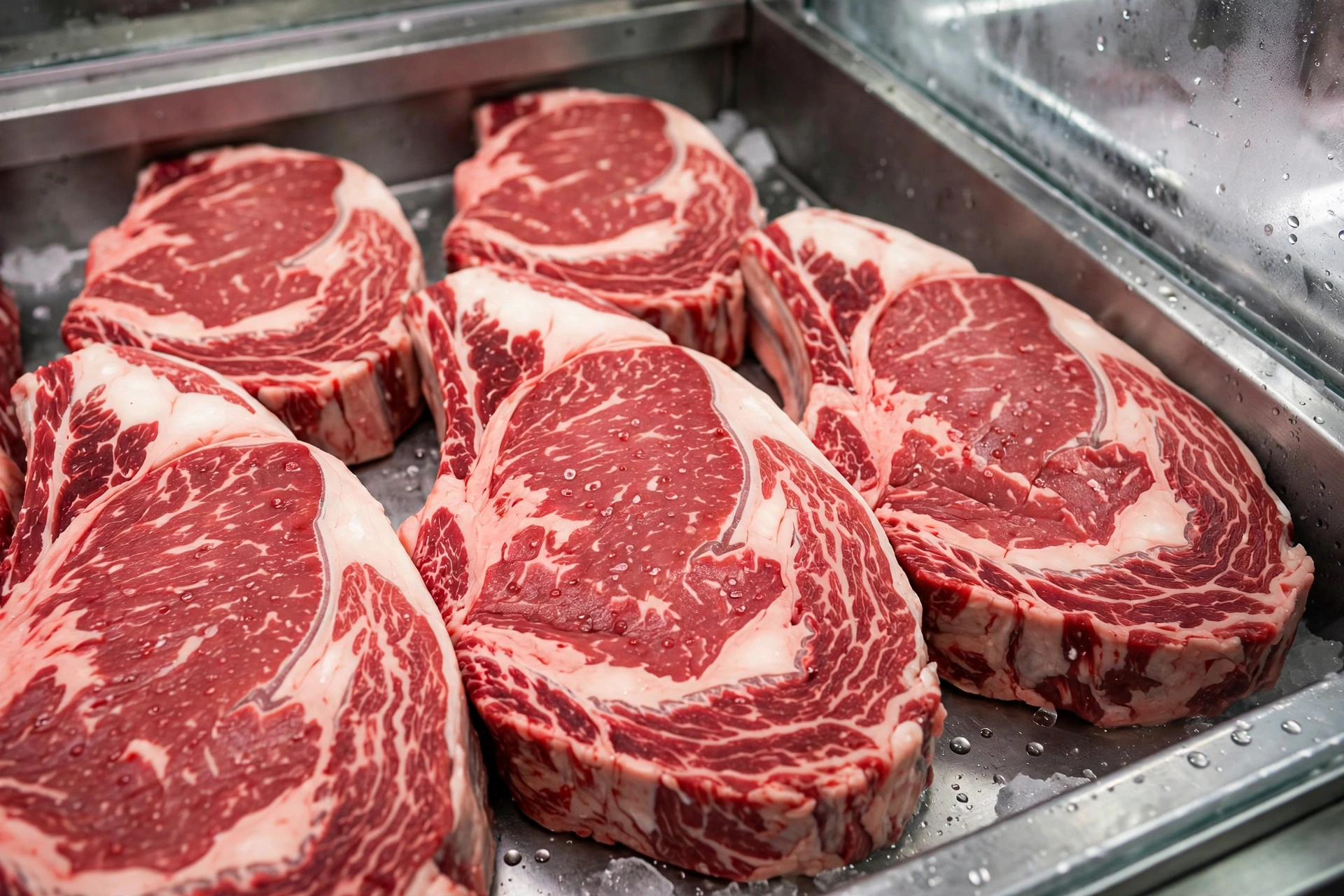
Prefer
- Abundant, fine marbling spread evenly through the meat
- Bright cherry-red color
- At least 1 to 1.5 inches thick
- Creamy-white, firm fat — not yellow or waxy
- A dry surface with no excess liquid in the package
- USDA grade on the label (Prime or Choice) matching the price
Avoid / check more closely
- Brown, gray, or dull color across the whole steak
- Little or no marbling — it will likely cook up lean and dry
- Thin steaks under 3/4 inch, which overcook easily
- Large pockets of gristle or a thick, hard fat seam through the middle
- Mushy texture or sour, off smells
- Torn packaging or a lot of purge (reddish liquid) in the tray
Marbling is the flavor map
Marbling — intramuscular fat — melts during cooking and bastes the meat from within, which is why a well-marbled ribeye eats so much juicier than a lean one. Look for thin, web-like flecks distributed evenly rather than a few thick streaks; even distribution means every bite stays moist. The ribeye’s signature is the “eye” of tender meat plus the fattier cap (spinalis) along the top — that cap is often the most flavorful part, so a steak with a generous, well-marbled cap is a prize. USDA grades reflect this: Prime has the most marbling, Choice is the everyday sweet spot, and Select is leaner. Buy the best grade your budget allows, but a well-marbled Choice often beats a poorly cut Prime.
Color, thickness, and the fat cap
Fresh ribeye should be a lively cherry red. Some darkening on the surface from brief air exposure is normal, but a steak that is brown or gray all the way through is past its prime. Thickness matters enormously: a 1.5-inch steak gives you a rosy interior with a good sear, while a thin steak goes from raw to overdone in moments — choose thick whenever you plan to sear or grill. Check the fat around the edges: it should look creamy white and firm. Very yellow fat can indicate an older animal, which tends to be tougher. Finally, the steak should feel cold and firm to the touch, and the package should be well sealed with little liquid.
Storing ribeye at home
Get steaks into the refrigerator promptly — at 40°F (4°C) or below — and plan to cook them within 3 to 5 days. Keep them in their original sealed packaging or rewrap tightly to limit air exposure, which causes browning. For longer storage, freeze them: press out as much air as possible, wrap tightly, and they generally keep good quality for several months. Thaw in the refrigerator, never on the counter. When cooking, use a food thermometer — the USDA recommends 145°F with a 3-minute rest for steaks — rather than judging doneness by color alone.
Common questions
Is Choice or Prime better for ribeye?
Prime has more marbling and is generally more tender and flavorful, but it costs significantly more. A well-marbled Choice ribeye is excellent for most cooks and the better value — inspect the actual marbling on the steak in front of you rather than buying grade alone.
Why did my steak turn brown in the fridge?
Browning from air exposure (oxidation) is usually harmless and does not by itself mean the steak is bad. What matters more is smell and texture — sour odors or sliminess mean it should be discarded.
How thick should a ribeye be?
About 1 to 1.5 inches is ideal for searing or grilling: thick enough to develop a crust while keeping a juicy interior. Thinner steaks are better suited to quick methods like stir-frying in strips.
References
U.S. Department of Agriculture — Cooking Meat: Is It Done Yet?. Reference for safe minimum internal temperatures and food thermometer use for meat.
Prepared October 12, 2026 with AI assistance. Cited sources do not endorse the entire article.