
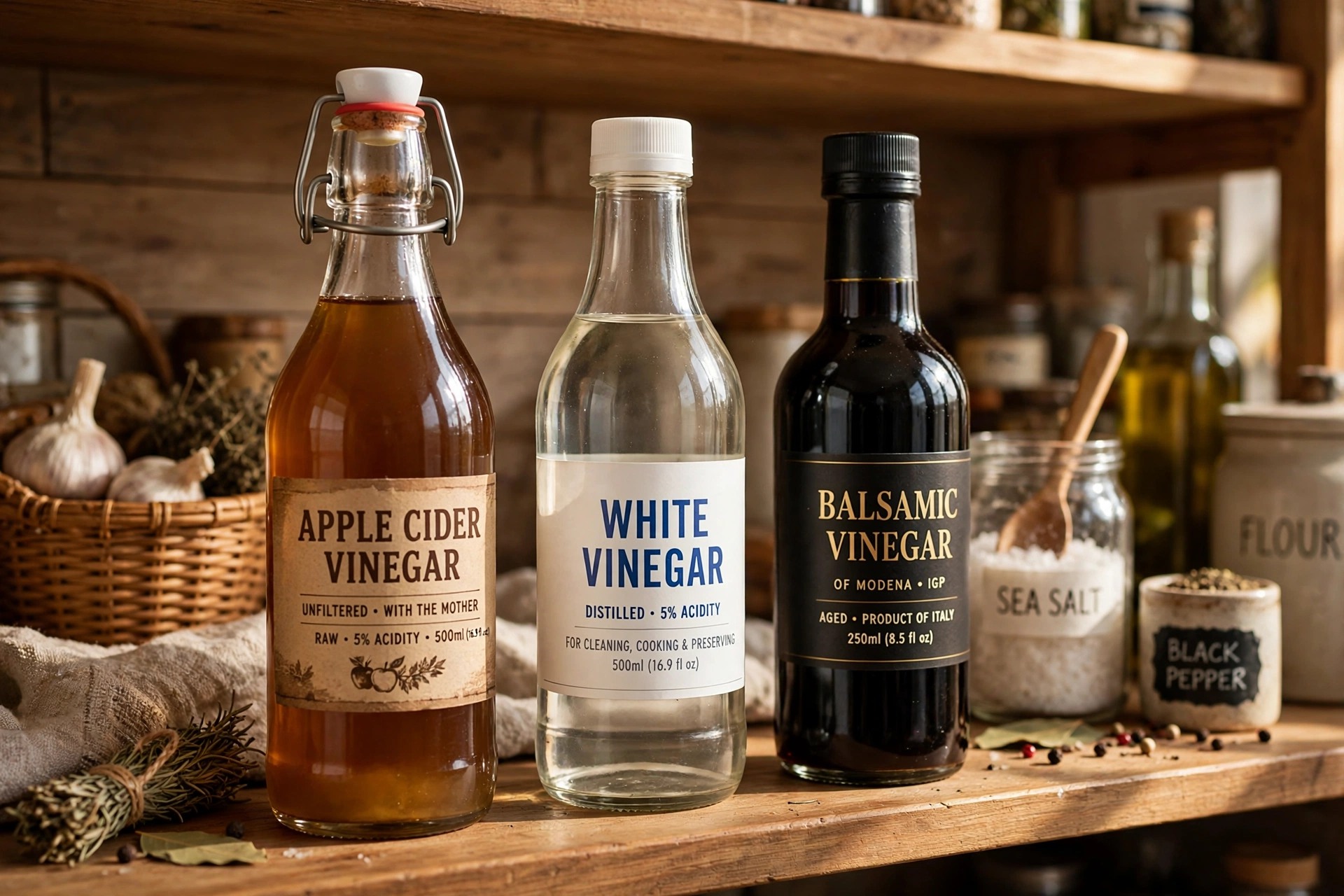
To choose good vinegar, match the type to the job — distilled white for cleaning and pickling, apple cider and wine vinegars for dressings, balsamic for finishing. Check the acidity percentage on the label (usually 5% for table vinegar) and look for clear, honest ingredient lists. Good vinegar smells bright and clean; dull or musty odors suggest age or poor storage.
Prefer
- The right type for your intended use
- Acidity clearly stated (5% standard for table vinegar)
- Simple ingredient lists (e.g. apples, wine, grapes)
- Bright, clean aroma appropriate to the type
- Well-sealed bottles stored away from heat in the store
Avoid / check more closely
- One “do-everything” vinegar for all cooking
- Balsamic with caramel color and no grape must listed
- Cloudy distilled vinegar (unusual; check the seal)
- Musty or flat smells
- Bottles stored in hot store displays
Types and their jobs
Distilled white vinegar is the workhorse: sharp, neutral, and cheap — best for pickling and cleaning. Apple cider vinegar brings fruity mildness to dressings and marinades. Red and white wine vinegars suit Mediterranean cooking. True balsamic (from Modena, aged) is sweet and syrupy for finishing; most supermarket “balsamic” is wine vinegar with coloring and sweetener — check for grape must on the label. Rice vinegar is mild and slightly sweet, ideal for Asian dishes.
Reading acidity and labels
Table vinegar is standardized at 5% acidity; pickling recipes depend on that strength for safety, so do not substitute weaker vinegars in canning. “Raw” and “unfiltered” apple cider vinegar contains the cloudy “mother” — harmless and traditional. For balsamic, look for “grape must” as the first ingredient and aging statements; “balsamic vinegar of Modena” with PGI labeling offers more assurance than generic bottles.
Storing vinegar at home
Vinegar is nearly indestructible — store it in a cool, dark pantry with a tight cap and it keeps for years. A slimy blob (“mother”) may form in unpasteurized vinegars; it is harmless cellulose you can strain out. Cloudiness or sediment in wine vinegars is usually fine. Discard only if it smells truly off or shows mold, which is rare.
Common questions
Does vinegar expire?
Practically no — its acidity preserves it. Flavor may fade over years, but it stays safe stored properly.
What is the “mother” in vinegar?
A harmless cellulose mat from fermentation bacteria. Strain it out if you like; it is not spoilage.
Can I use any vinegar for pickling?
Use 5% acidity vinegar for safe pickling. Weaker or homemade vinegars are not reliable for canning.
References
U.S. Food and Drug Administration — Food Labeling & Nutrition. Reference for how condiment labels present acidity, ingredients, and origin claims.
Prepared October 11, 2026 with AI assistance. Cited sources do not endorse the entire article.