
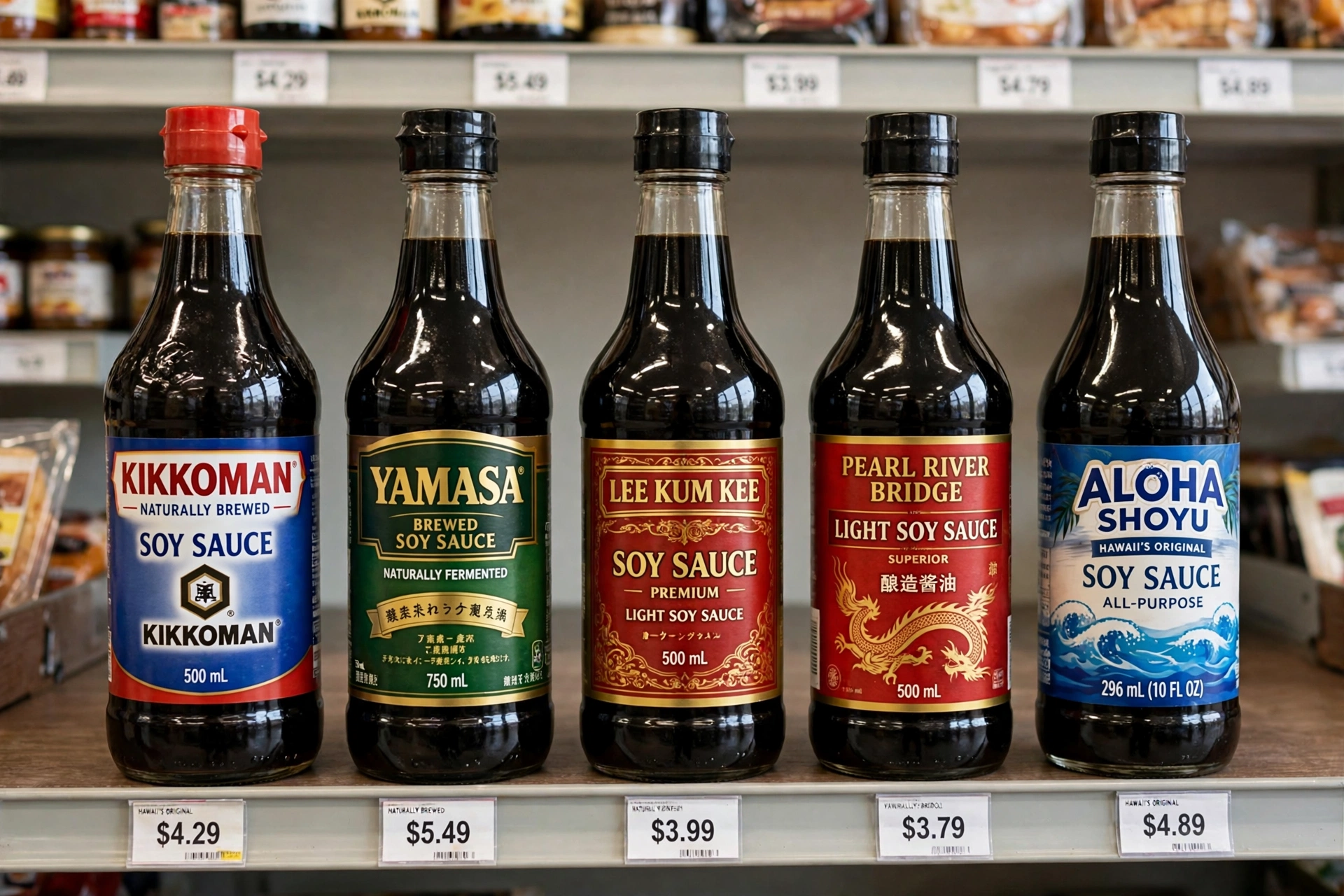
To choose good soy sauce, look for “naturally brewed” or “traditionally brewed” on the label — it means real fermentation, not quick chemical hydrolysis. The ingredient list should be short: soybeans, wheat, salt, and water. Dark, rich color and a complex savory aroma signal quality; harsh saltiness with little depth suggests a cheaper quick-brewed product.
Prefer
- “Naturally brewed” or “traditionally brewed” labeling
- Short ingredient lists: soybeans, wheat, salt, water
- Rich color and complex savory aroma
- Clear sodium information for your needs
- Glass bottles that protect flavor from light
Avoid / check more closely
- Hydrolyzed soy protein or caramel color high on the list
- Harsh, one-dimensional saltiness
- Vague “soy sauce” with no brewing method stated
- Cloudiness or sediment in standard soy sauce
- Damaged seals or sticky, leaking bottles
Naturally brewed vs quick-brewed
Traditional soy sauce ferments for months, developing hundreds of flavor compounds — that is the depth you taste in good brands. Cheaper “soy sauce” is made by acid-hydrolyzing soy protein in days, then coloring and flavoring it; the label may list hydrolyzed soy protein and caramel color. Naturally brewed costs more but tastes rounder and less harsh. Japanese-style (shoyu) and Chinese-style differ in wheat ratio and flavor — try both to find your preference.
Sodium and label notes
Regular soy sauce is very salty — about 900 mg sodium per tablespoon. “Less sodium” or “lite” versions cut roughly a quarter to a third of it; tamari (often wheat-free) tastes similar with its own sodium profile. Check the nutrition panel if sodium matters to you, and compare serving sizes. A little goes a long way: better sauce means you can use less.
Storing soy sauce at home
Unopened soy sauce keeps for years in a cool, dark pantry. Once opened, refrigerate for best flavor — it stays good for many months, though the aroma fades slowly over time. Keep the cap clean and tightly closed. Discard if it develops off smells or visible mold, which is rare but possible in low-sodium versions.
Common questions
Is tamari the same as soy sauce?
Similar but not identical — tamari is typically brewed with little or no wheat, giving a richer, slightly thicker sauce. Many are gluten-free, but check the label.
Does soy sauce go bad?
Rarely, thanks to salt. It loses aroma over time; refrigerate after opening and replace yearly for best flavor.
What is the white stuff in my soy sauce?
Occasionally harmless yeast sediment. If it smells normal, strain it; if it smells off, replace the bottle.
References
U.S. Food and Drug Administration — Food Labeling & Nutrition. Reference for how condiment labels present ingredients, brewing claims, and sodium information.
Prepared October 11, 2026 with AI assistance. Cited sources do not endorse the entire article.