
To choose good quinoa, look for grains that are whole and uniform with no broken bits, dust, or debris at the bottom of the bag. The package should be sealed and intact, and the grains should smell neutral or faintly nutty — never musty, stale, or sour. White, red, and black quinoa are all fine choices; pick by color preference rather than quality. Avoid bags with torn packaging, visible moisture, or an off smell.
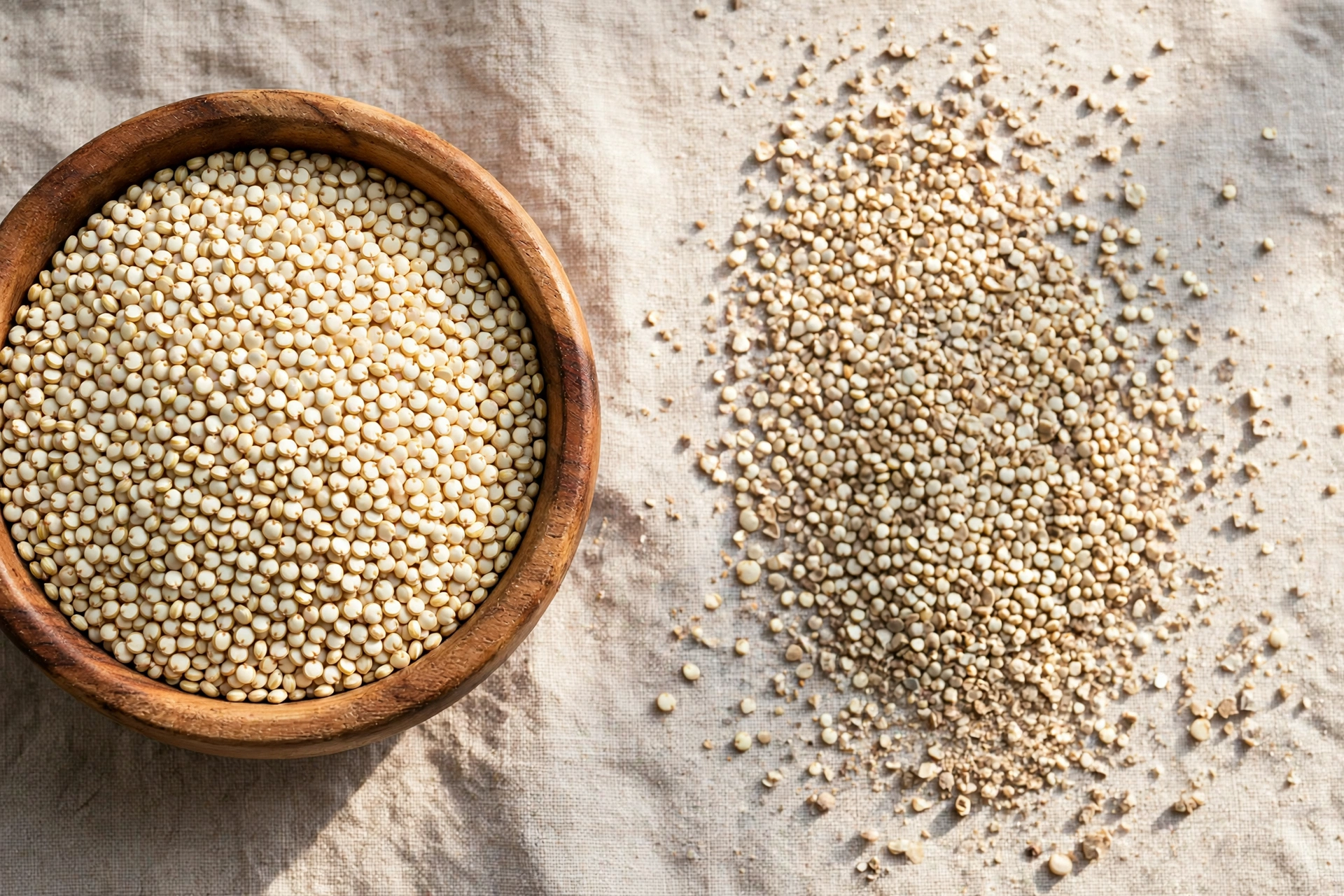
Prefer
- Whole, uniform grains with minimal broken bits
- No dust, debris, or foreign particles in the bag
- Sealed, intact packaging
- Neutral or faintly nutty smell
- Clear labeling of variety and origin
Avoid / check more closely
- Musty, stale, or sour smell
- Lots of broken grains or powdery dust
- Torn or open packaging
- Visible moisture or clumping in the bag
- Stones, husks, or dark specks mixed in
White, red, and black quinoa
The three common colors differ mainly in texture and looks. White quinoa is the mildest and fluffiest, cooking up soft in about 15 minutes — a good all-rounder. Red quinoa holds its shape better and has a slightly crunchier bite, which works well in salads. Black quinoa is the firmest and earthiest. Nutritionally they are very similar, so choose by the texture you want. Tri-color blends combine all three and look attractive in finished dishes, though the different types can cook at slightly different rates, so check for even doneness.
Pre-rinsed vs. unrinsed
Quinoa has a natural coating called saponin that tastes bitter and soapy if not rinsed off. Many brands sell pre-rinsed quinoa, which saves a step — check the package for wording like “pre-rinsed” or “no rinsing needed.” If the package does not say so, rinse the grains in a fine-mesh strainer under cold water for about 30 seconds before cooking. Even with pre-rinsed quinoa, a quick rinse does no harm and guarantees no bitterness. This one step makes the biggest difference between pleasant, nutty quinoa and a bitter batch.
Organic and fair-trade labels
Quinoa is widely available with organic certification, which means it was grown without synthetic pesticides. Whether organic matters to you is a personal choice — conventional quinoa is also thoroughly cleaned and rinsed before sale. Fair-trade labels indicate the farmers were paid under certified terms. These labels do not change how the quinoa cooks or tastes, so treat them as values-based choices rather than quality markers. Focus first on grain condition and freshness, which affect your meal far more.
Storing quinoa at home
Keep dry quinoa in an airtight container in a cool, dark pantry — it stays good for one to two years. Once opened, transfer the bag’s contents to a sealed jar or container to keep out moisture and pantry pests. In warm or humid climates, the refrigerator or freezer extends freshness. Cooked quinoa keeps in the fridge for four to five days in a sealed container; cool it quickly after cooking and refrigerate within two hours. Cooked quinoa also freezes well in portions for up to three months. Discard dry quinoa that smells musty or rancid.
Common questions
Why does my quinoa taste bitter?
Bitterness almost always comes from saponin, the natural coating on the grains. Rinse unrinsed quinoa thoroughly in a fine-mesh strainer before cooking, or buy pre-rinsed quinoa.
How can I tell if dry quinoa has gone bad?
Sniff it: fresh quinoa smells neutral or faintly nutty, while stale quinoa smells musty, sour, or rancid from its natural oils. Discard it if the smell is off or you see moisture or pests.
Is the dust at the bottom of the bag a problem?
A tiny amount of fine powder is normal, but a lot of dust and broken grains suggests rough handling or age. Choose bags where the grains look whole and clean.
References
U.S. Food and Drug Administration — Food Labeling & Nutrition. Reference for reading labels on packaged grain products.
Prepared October 13, 2026 with AI assistance. Cited sources do not endorse the entire article.