
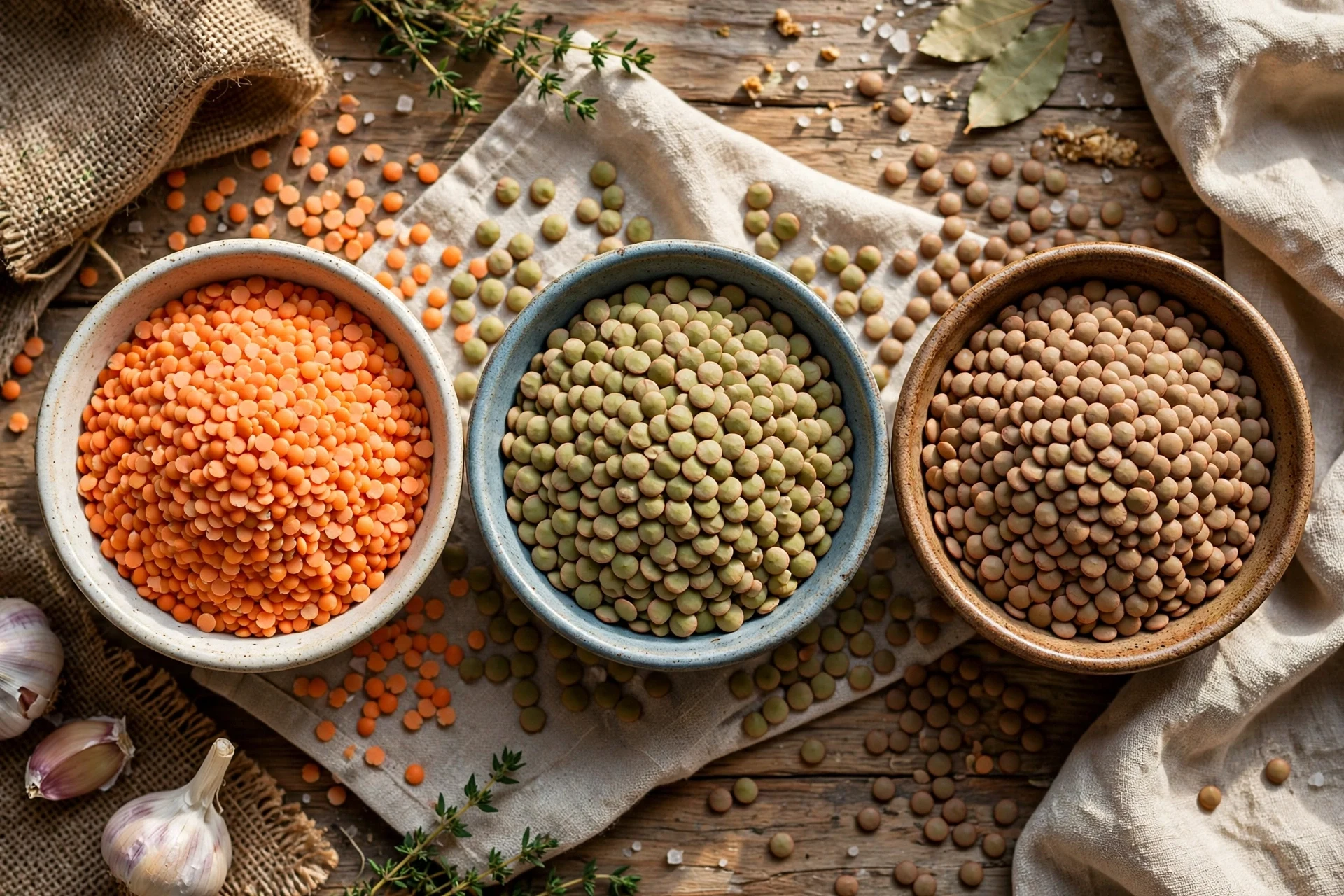
To choose lentils, match the type to the texture you want: red and yellow lentils cook fast and fall apart into a soft puree for soups and dals, while brown and green lentils hold their shape better for salads and side dishes. Look for bags of evenly colored, whole-looking lentils with no dust, shriveled pieces, or off smells, and check the packaging is intact and dry.
Prefer
- Evenly colored lentils with few broken or shriveled pieces
- Intact, dry packaging with a clear type and date
- The type that matches your dish — split for purees, whole for salads
- Bags with little dust or debris at the bottom
- A clean, neutral, earthy smell
Avoid / check more closely
- Torn bags or signs of pantry pests
- Lots of dust, stones, or discolored lentils
- Musty or sour smell
- Mixed, faded colors suggesting old stock
- Bags stored in damp conditions
Red, brown, green, and black: the practical differences
Red lentils are usually sold split and hulled, which is why they cook in as little as 15–20 minutes and soften completely — ideal for dals, curried soups, and thickening. Brown lentils are the everyday all-rounder: they hold a soft shape in about 25–30 minutes and suit soups, stews, and veggie burgers. Green lentils, including the smaller French-style type, stay firmer and slightly peppery, making them the salad and warm-side-dish choice. Black lentils are the firmest and most striking, holding a neat shape for grain bowls. If you shop the dried legume shelf regularly, our guide to how to buy dry beans covers the same quality checks in the neighboring bags.
Cooking behavior: time, water, and no soaking
Unlike most dried beans, lentils need no soaking, which makes them one of the fastest pantry proteins to get on the table. Rinse them, pick out any small stones or debris, then simmer gently rather than boiling hard, which can split firmer types unevenly. Salt and acidic ingredients like tomatoes can slow softening slightly, so for the most predictable texture, season nearer the end — though in practice home cooks make delicious lentil soups both ways. Canned lentils also exist alongside other canned legumes, and the can-condition advice in our guide to how to choose canned beans applies when you pick up the ready-to-use version.
Bag checks, storage, and value
A good bag of lentils feels like a small thing to check, but it pays off: look through the window or packaging for uniform color, few split or powdery pieces (unless you are buying split red lentils, where splitting is the point), and no webbing or insects. At home, decant lentils into a sealed jar in a cool, dry cupboard and use older stock first, since very old lentils take noticeably longer to soften. Lentils pair naturally with grains in the same pantry, and the storage habits in our guide to how to choose rice — dry, sealed, and dated — keep both staples in good condition for months.
Matching lentils to dishes
Think in terms of final texture. Want a soup that thickens itself? Red lentils. A stew with distinct, tender pieces? Brown. A salad that stays defined under a dressing? Green or black, cooked just until tender and cooled before dressing. Lentils also stretch ground-meat dishes, bulk out shepherd’s pie fillings, and make a quick base for sloppy-joe-style sandwiches. Because the types are inexpensive, keeping two kinds — one fast and soft, one firm — covers almost every recipe you are likely to meet.
Common questions
Do lentils need to be soaked like beans?
No. Lentils cook quickly without soaking. A rinse and a quick sort to remove debris or small stones is all the prep they need.
Why are my lentils still hard after long cooking?
Very old lentils, hard water, and acidic ingredients added early can all slow softening. Give them more time at a gentle simmer, and next time try a fresher bag and season acidic ingredients later.
Which lentil is best for salads?
Green and black lentils hold their shape best, so they stay distinct and pleasantly firm in salads and grain bowls. Cook them just until tender, then drain and cool before dressing.
References
U.S. Food and Drug Administration — Safe Food Handling. Reference for safe handling, storage, and spoilage signs.
Prepared October 21, 2026 with AI assistance. Cited sources do not endorse the entire article.