
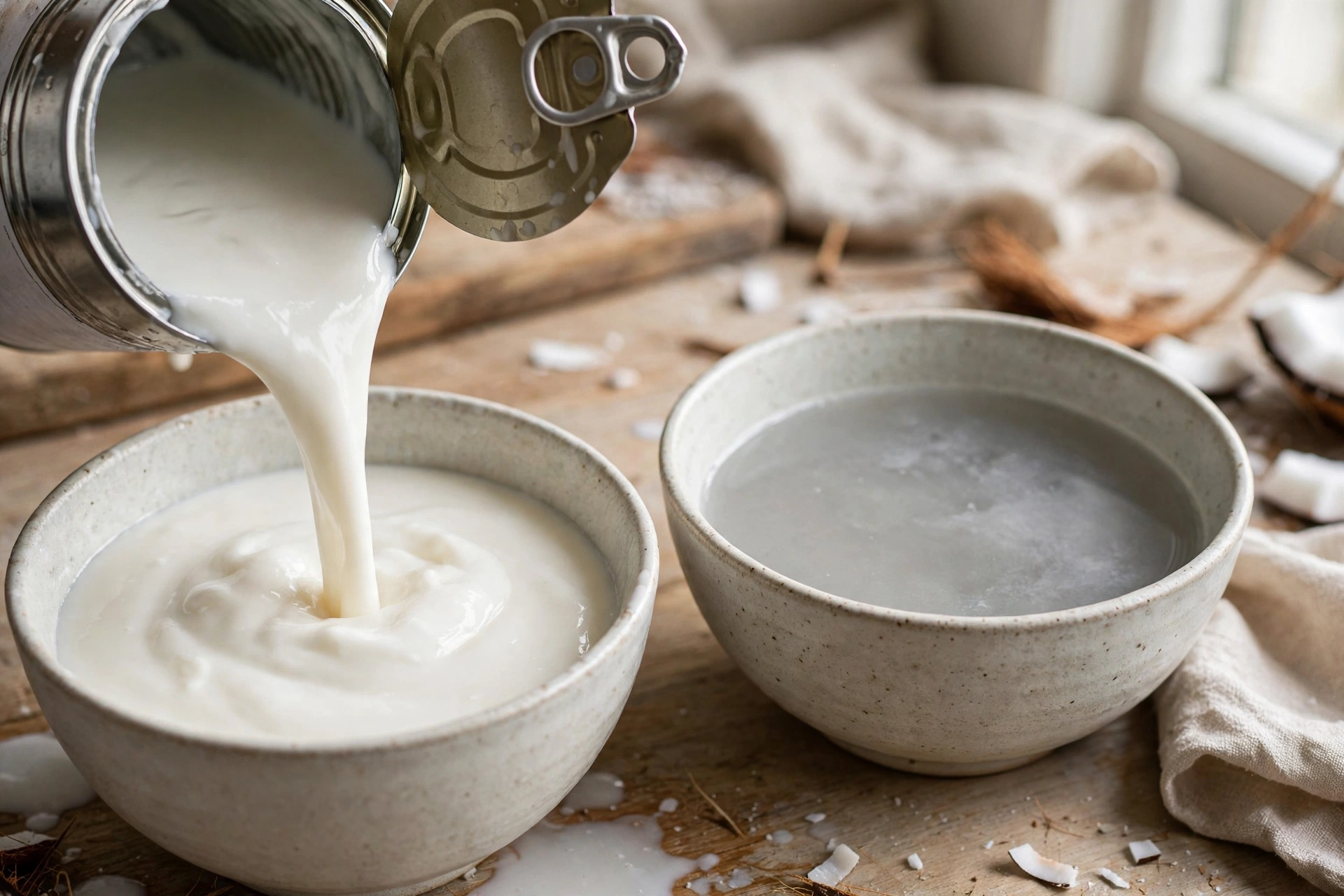
To choose good coconut milk, pick cans or cartons that are undented and intact, with a date well in the future. Shake the can gently: it should feel full and liquid, not sloshing thin like water. Good coconut milk smells cleanly of coconut and tastes rich and creamy — never sour, metallic, or soapy. Check the ingredient list: coconut and water are the essentials, and fewer additives usually means a more natural product. Avoid cans that are swollen, leaking, or deeply dented along the seams.
Prefer
- Undented, intact cans or sealed cartons
- Rich, creamy texture with clean coconut smell
- Short ingredient list: coconut and water first
- Full-fat versions for cooking, light for drinking
- A date well in the future
Avoid / check more closely
- Swollen, leaking, or deeply dented cans
- Sour, metallic, or soapy smell or taste
- Pinkish or gray discoloration
- Cans that slosh thinly like water when shaken
- Curdled texture that will not smooth out
Canned vs. carton coconut milk
These are different products for different jobs. Canned coconut milk is thick and rich, made for cooking curries, soups, and desserts — the full-fat kind separates into a solid cream layer and liquid, which is normal. Carton coconut milk, sold in the refrigerated or shelf-stable dairy alternative section, is much thinner and meant for drinking or cereal. Do not substitute one for the other without adjusting: carton coconut milk will make a watery curry, while canned coconut milk is too rich for a glass. Buy the format that matches your recipe.
Full-fat vs. light
Full-fat canned coconut milk delivers the classic rich flavor and creamy body that most recipes expect. Light coconut milk is simply diluted, with a thinner texture and milder taste — fine for lighter dishes but less satisfying in curries. If a recipe calls for coconut milk without specifying, full-fat is the safer choice. You can always thin full-fat coconut milk with water, but you cannot make light coconut milk richer. Check the label for the fat content per serving if you are comparing brands.
Reading the ingredient list
The simplest coconut milk lists only coconut extract and water. Many brands add guar gum or other stabilizers to keep the cream and liquid from separating — these are safe and make the texture smoother, though purists prefer gum-free versions. Some products add sweeteners or flavorings, so check if you want unsweetened. “Cream of coconut,” sold for cocktails, is a different sweetened product — do not confuse it with coconut milk. For the most natural choice, pick the can with the shortest ingredient list.
Storing coconut milk at home
Unopened cans keep in the pantry until their printed date; store them in a cool, dry place. Once opened, transfer the coconut milk to a sealed glass or plastic container — do not store it in the opened can — and refrigerate. Use within four to five days. The cream may firm up in the fridge; stir or warm gently to smooth it. Leftover coconut milk freezes well in ice cube trays for up to three months. Discard coconut milk that smells sour, tastes off, or shows pink or gray discoloration.
Common questions
Why did my coconut milk separate?
Separation is normal, especially in full-fat canned coconut milk without stabilizers — the cream rises and the liquid sinks. Shake or stir to recombine. Only worry if it smells sour or looks discolored.
Can I use coconut milk past its date?
An undamaged can is often fine past its best-by date if the contents smell and taste normal. Once opened, use within a few days regardless of the date.
Is the solid layer at the top of the can coconut cream?
Essentially, yes. That thick layer is the richest part and is excellent for whipping or adding body to curries. Stir it in or scoop it out depending on your recipe.
References
U.S. Food and Drug Administration — Food Labeling & Nutrition. Reference for reading labels on packaged foods.
Prepared October 13, 2026 with AI assistance. Cited sources do not endorse the entire article.