
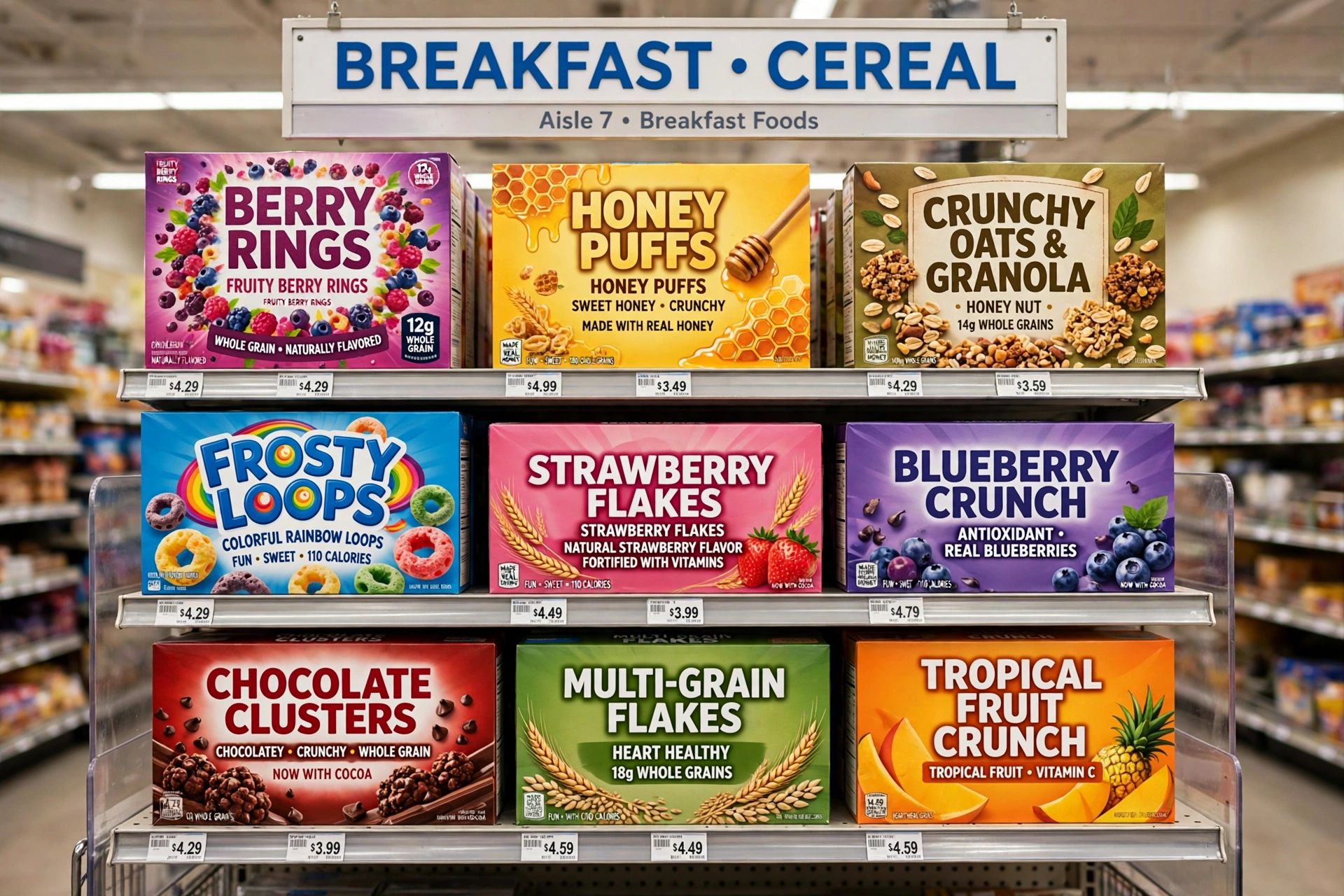
To choose better cereal, flip the box and read the nutrition panel first — compare sugar per serving across brands, not the front-of-box claims. Whole grain should be the first ingredient, and fiber of at least 3 grams per serving is a good sign. Serving sizes are often smaller than what people pour, so scale the numbers to your real bowl.
Prefer
- Whole grain as the first ingredient
- Lower sugar per serving (single digits is a good target)
- At least 3 grams of fiber per serving
- Short, recognizable ingredient lists
- Comparing serving sizes before comparing numbers
Avoid / check more closely
- Sugar (or syrups) among the first ingredients
- “Made with whole grains” that are mostly refined flour
- Health halos from added vitamins on sugary cereal
- Serving sizes that understate a real bowl
- Stale boxes past their best-by date
Sugar: the number that matters most
Many popular cereals pack 12+ grams of sugar per serving — dessert territory. Aim for single-digit sugar per serving, and watch for sugar hiding under names like corn syrup, honey, dextrose, and fruit juice concentrate. “Lightly sweetened” has no legal definition, so check the grams. Remember the serving size: if you eat two cups of a 3/4-cup serving, triple the sugar.
Whole grains and label smarts
“Made with whole grains” can mean a dusting of whole wheat in refined flour — the first ingredient tells the truth. Look for “100% whole grain” or a whole-grain stamp with grams per serving. Fiber matters too: whole-grain cereals with 3–5+ grams of fiber keep you fuller longer. Fortification (added vitamins and iron) is common and fine, but it does not turn sugary cereal into health food.
Storing cereal at home
Keep cereal in its box inside a sealed container or clip the bag tightly — it goes stale fast in humid air. Store in a cool, dry pantry; the refrigerator is unnecessary. Use by the best-by date for peak crunch. Stale cereal can be revived briefly in a low oven, or repurposed in baking.
Common questions
How much sugar is too much in cereal?
Single-digit grams per serving is a reasonable target. Double-digit sugar per small serving is best treated as an occasional food.
Is granola healthier than cereal?
Not automatically — granola is often high in sugar and fat per serving. Compare the nutrition panels directly.
Does “whole grain” on the box guarantee quality?
No. Check that whole grain is the first ingredient and look at the sugar and fiber numbers too.
References
U.S. Food and Drug Administration — Food Labeling & Nutrition. Reference for how cereal labels present sugar, whole-grain claims, and serving sizes.
Prepared October 11, 2026 with AI assistance. Cited sources do not endorse the entire article.