
To choose good canned tomatoes, start with the type: whole peeled tomatoes are the most versatile and usually the best quality, since producers pack their best fruit whole. Read the ingredient list — tomatoes, juice, salt, and maybe basil or citric acid is all you need. Avoid cans with dents on the seams, and prefer BPA-free linings if that matters to you.
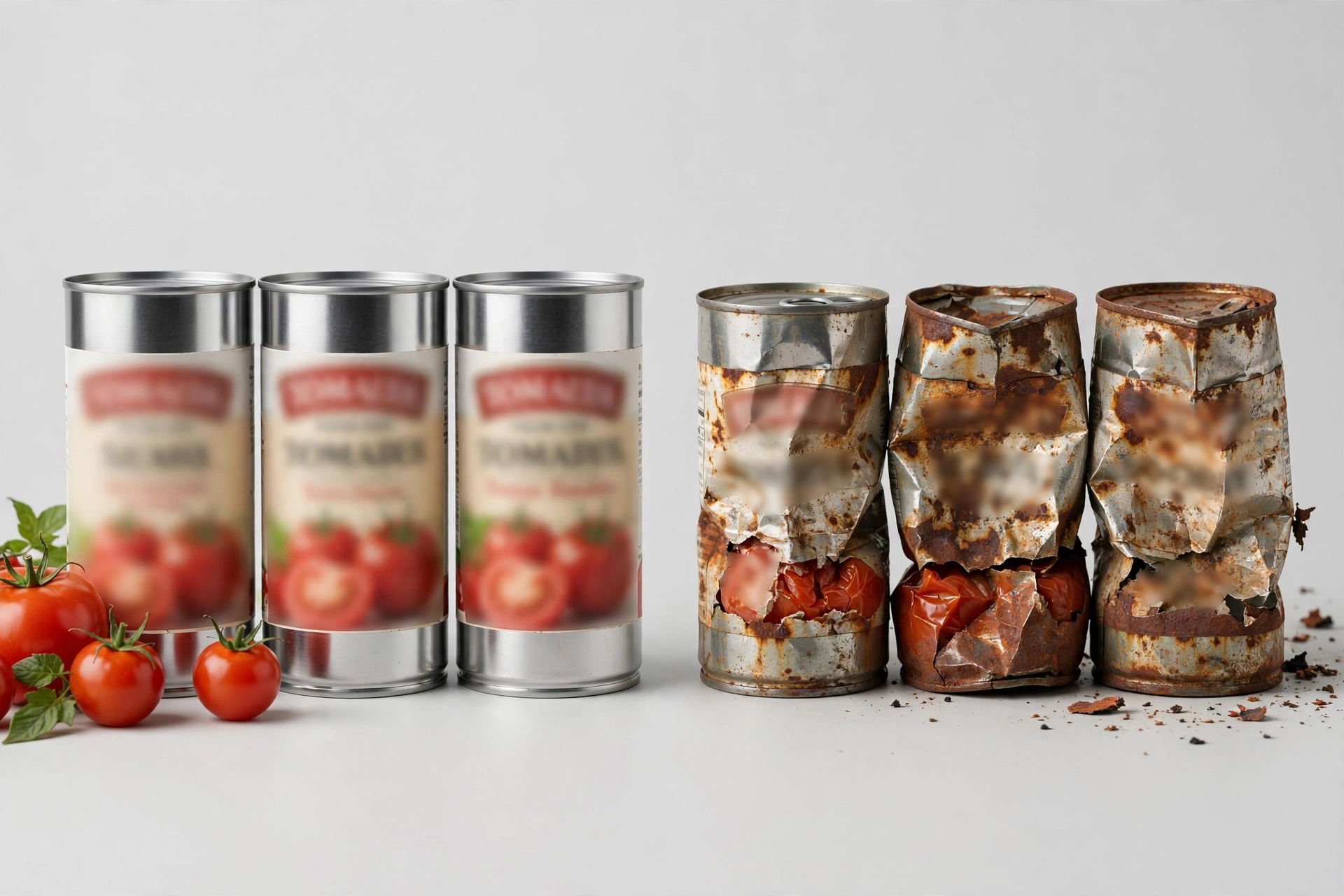
Prefer
- Whole peeled tomatoes for best quality and versatility
- Short ingredient lists: tomatoes, juice, salt
- No added sugars or unnecessary flavorings
- BPA-free lining labels if that matters to you
- Smooth cans with no dents, swelling, or rust
Avoid / check more closely
- Dented cans, especially on seams (botulism risk)
- Swollen, bulging, or leaking cans
- Added sugars, calcium chloride overload, or mystery flavorings
- Deeply discounted cans past their best-by date
Type matters: whole, diced, crushed
Whole peeled tomatoes are packed from the best fruit and give you control — crush them yourself for sauces with real texture. Diced tomatoes contain calcium chloride to hold their shape, which means they never fully melt into a sauce. Crushed and pureed are convenient but hide quality differences. San Marzano-style (D.O.P. or American-grown) is worth trying once to calibrate your taste.
Reading the can and label
Ingredients should be minimal: tomatoes, tomato juice, salt, and sometimes basil or citric acid (a safe acidity regulator). “No salt added” versions exist if you season yourself. Check the can itself: reject deep dents, especially along seams and rims, plus any swelling, rust, or leaking. “Best by” dates are about quality, not safety — but very old cans can develop metallic off-flavors.
Storing canned and opened tomatoes
Unopened cans keep for years in a cool, dry pantry. Once opened, transfer leftovers to a glass or plastic container — never store in the opened can — and refrigerate for up to four days. Leftover canned tomatoes freeze well in portions. Discard any can that spurts, smells off, or shows signs of swelling when opened.
Common questions
Are dented cans safe?
Small dents on the side are usually fine, but dents on seams can compromise the seal — when in doubt, throw it out.
What does BPA-free mean?
The can lining does not use bisphenol-A. Many brands now use alternative linings; it is a personal preference.
How long do canned tomatoes last?
Years unopened in the pantry. Once opened, refrigerate in another container for up to four days.
References
U.S. Food and Drug Administration — Food Labeling & Nutrition. Reference for how food labels and ingredient lists work.
Prepared October 10, 2026 with AI assistance. Cited sources do not endorse the entire article.