
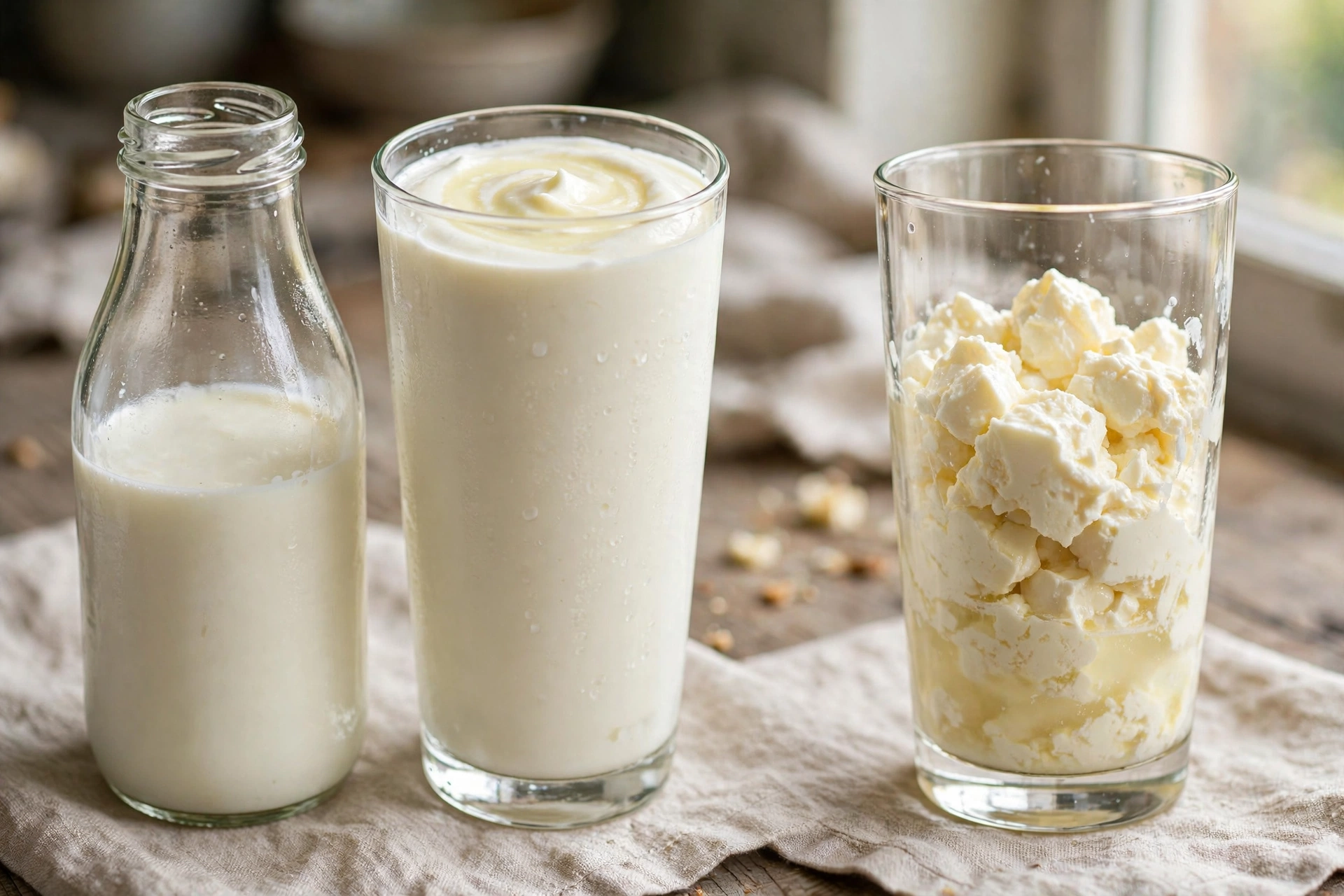
To choose good kefir, pick a bottle that feels cold, is sealed tight with no bloating or leaking, and shows a date well in the future. Kefir should smell pleasantly tangy like yogurt, never sharp or yeasty in an unpleasant way. Give the bottle a gentle shake: it should look smooth and pourable, not lumpy or separated into thick curds and thin whey. Avoid bottles that hiss excessively when opened or taste bitter.
Prefer
- Pleasantly tangy, clean yogurt-like smell
- Smooth, pourable texture after a gentle shake
- Sealed bottle with no swelling or leaks
- A date well in the future
- Bottle feels cold in the refrigerated case
Avoid / check more closely
- Bloated, puffy, or leaking bottles
- Sharp, bitter, or unpleasant yeasty smell
- Thick curds floating in thin watery liquid
- Excessive fizzing when opened
- Bitter or off taste
Plain vs. flavored kefir
Plain kefir is the most versatile: tangy, lightly sour, and unsweetened, good for smoothies, dressings, or drinking straight. Flavored versions add fruit and sweeteners, which makes them more approachable but also higher in sugar. If you want the classic kefir taste and the most control over sweetness, start with plain. Check the nutrition label on flavored bottles — some contain as much added sugar as a dessert. Low-fat and whole-milk versions also differ in body: whole-milk kefir is creamier and less sharp, while low-fat kefir is thinner and tangier.
Dairy kefir vs. water kefir
Most bottles in the dairy case are milk kefir, made by fermenting milk. Water kefir, sold in some health-food stores, is made by fermenting sugar water and is dairy-free with a lighter, soda-like fizz. They are different drinks with different flavors — do not expect one to taste like the other. If you avoid dairy, look specifically for water kefir or coconut-based kefir and check the label for milk ingredients. Milk kefir generally contains very little lactose because fermentation consumes most of it, but it is not lactose-free, so read labels carefully if that matters to you.
What normal separation looks like
A little separation is normal in kefir — it is a live fermented drink, and some whey may rise to the top. A gentle shake should bring it back together into a smooth drink. What is not normal is thick, cottage-cheese-like curds floating in thin liquid that will not remix, or a smell that is sharp and unpleasant rather than cleanly tangy. Kefir continues to ferment slowly in the fridge, so a bottle near its date may taste tangier than a fresh one. That extra tang is usually fine, but a bitter or harsh flavor means it has gone too far.
Storing kefir at home
Keep kefir refrigerated at or below 40°F (4°C) and do not leave it out at room temperature for long. An unopened bottle generally keeps until its printed date. Once opened, reseal tightly and use within five to seven days. Shake gently before each serving. Discard kefir that smells sharply sour, tastes bitter, or shows mold around the cap or neck. Do not freeze milk kefir if you plan to drink it — thawing makes the texture grainy, though frozen kefir works in smoothies.
Common questions
Is kefir supposed to be fizzy?
A very light fizz can be normal because kefir is fermented and produces a little carbonation. But strong fizzing, a popping cap, or a bloated bottle suggests over-fermentation, so choose another bottle.
Can I drink kefir past its date?
An unopened, properly refrigerated bottle is often fine for a few days past the date if it smells and tastes normal. Once it turns bitter or unpleasant, discard it regardless of the date.
Does kefir need to be refrigerated before opening?
Yes. Milk kefir is a perishable dairy product and should be kept refrigerated at all times, both in the store and at home.
References
U.S. Food and Drug Administration — Safe Food Handling. Reference for buying, handling, and storing dairy foods safely.
Prepared October 13, 2026 with AI assistance. Cited sources do not endorse the entire article.