
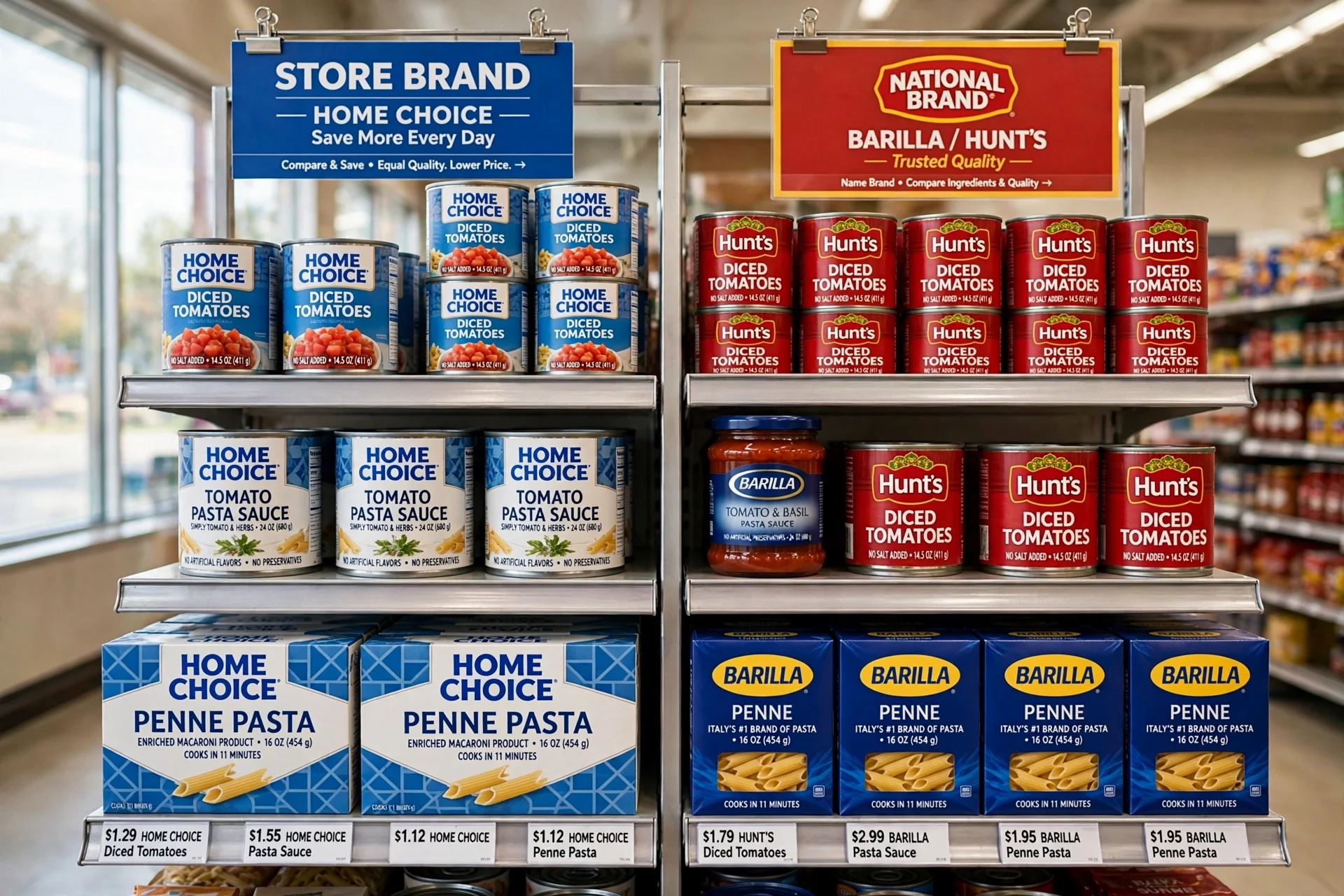
Store-brand foods are often made to similar recipes — sometimes in the same facilities — as name brands, but they usually cost less because there is less advertising behind them. The honest answer to store brand vs. name brand is: it depends on the product. Compare the ingredient list, the unit price, and the nutrition panel side by side, then let taste decide on the items you buy every week. For staples like flour, canned beans, and frozen vegetables the store brand is frequently indistinguishable; for a few favorites, the name brand may still win.
Prefer
- Comparing ingredient lists, not just front labels
- Checking the unit price on the shelf tag
- Trying the store brand once on staples
- Reading nutrition panels for sugar and sodium
- Keeping the name brand only where taste differs
Avoid / check more closely
- Assuming price always equals quality
- Brand loyalty without ever testing alternatives
- Ignoring different pack sizes when comparing
- Overlooking higher sugar or sodium in either brand
- Buying bulk of an untested store brand
Why store brands usually cost less
The price gap is mostly marketing, not ingredients. Name brands fund national advertising, promotions, and shelf placement, and those costs are built into the price. Store brands skip most of that and rely on the retailer reputation instead. Quality has converged a lot: many retailers now set strict specifications for their own-label products. That does not mean every store brand matches every name brand — sauces, cereals, and snacks with distinctive flavors are where differences show up most — but for basics the gap is often zero. Learning how to compare unit prices is the fastest way to see the real difference, because headline prices hide different net weights.
Compare labels like-for-like
Turn both packages around. A fair comparison uses three checks: the ingredient list in order (the first two or three ingredients matter most), the nutrition panel per 100g rather than per serving (serving sizes differ), and any quality marks that matter to you. Practicing reading food labels makes this a 20-second habit instead of guesswork. Watch for quiet trade-offs: a cheaper product may carry more added sugar, more sodium, or a lower proportion of the headline ingredient — for example, less actual cheese in a cheese sauce.
A simple taste-test strategy that saves money
Do not switch everything at once. Pick your five highest-volume staples — milk, eggs, pasta, canned tomatoes, frozen vegetables, or whatever your household uses most — and buy the store brand once. Cook as usual and note honestly whether anyone noticed. Most families find two or three painless swaps, and those repeat savings add up far faster than clipping occasional coupons. This test-and-keep approach is one of the most reliable habits in how to save money on groceries without feeling like you have downgraded every meal.
Keep the name brand where it clearly earns its price for you — a favorite coffee, a specific sauce your kids will actually eat — and be unsentimental everywhere else. Food thrown away because nobody liked it is the most expensive option of all.
When the name brand is worth it
There are fair reasons to pay more: a flavor you have tested and prefer, a formulation that suits a dietary need, better sourcing information, or a product where the store version genuinely underperforms — some shoppers find this with cola, ketchup, or breakfast cereal. Baby formula and specialized products deserve extra caution and professional guidance rather than price experiments. For everything else, let side-by-side evidence, not habit, decide. Retailers also run promotions that temporarily make the name brand cheaper than the store brand, so the cheapest choice can flip week to week.
Common questions
Are store-brand foods lower quality?
Not automatically. Many meet the same safety standards and similar specifications as name brands; differences are usually in flavor details, not safety. Comparing ingredient lists and doing a one-time taste test tells you more than price does.
Who makes store-brand products?
Retailers contract manufacturers — sometimes the same companies behind name brands, sometimes dedicated producers — to make products to the retailer specification. The maker is not always disclosed, so judge the product in front of you.
How much can I actually save?
It varies by category and store, but store brands are commonly priced noticeably below name-brand equivalents on staples. The saving only counts if your household happily eats the product, which is why testing before stocking up matters.
References
U.S. Food and Drug Administration — Safe Food Handling. Reference for safe food storage, refrigeration, and handling at home.
Prepared October 21, 2026 with AI assistance. Cited sources do not endorse the entire article.