
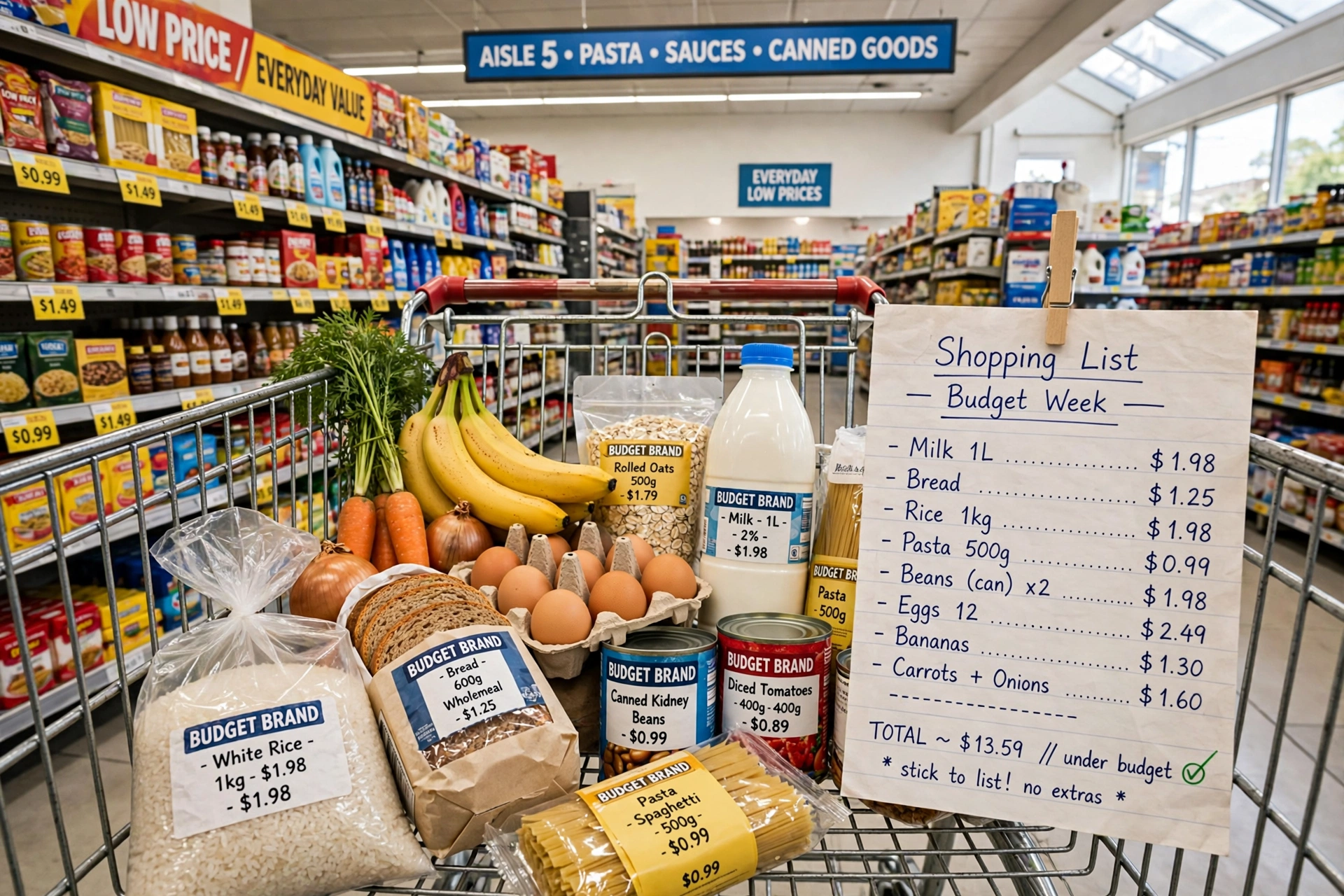
To save money on groceries, plan before you shop — a weekly meal plan and a list cut impulse buys, which are the biggest budget leak. Swap store brands for name brands on staples, compare unit prices instead of package prices, and treat food waste as money in the trash: the average household wastes a surprising share of what it buys. Small habits compound into real savings.
Prefer
- Planning meals and shopping from a list
- Store-brand staples (often identical quality, lower price)
- Comparing unit prices on shelf tags
- Buying seasonal produce at peak abundance
- Using up what you have before buying more
Avoid / check more closely
- Shopping hungry or without a list
- Assuming bulk is always cheaper (check unit price)
- Letting perishables expire unused
- Paying premium prices for out-of-season produce
- Ignoring your freezer as a savings tool
Planning: the highest-return habit
A 10-minute weekly plan — checking what you have, planning 4–5 dinners, and writing a list — prevents the two costliest behaviors: impulse buying and duplicate buying. Plan around sales and what is already in your fridge. “Shop your kitchen first” before making the list; you will be amazed how many meals are already half-planned in your pantry.
Smart swaps and waste cutting
Store brands save 15–30% on staples like milk, eggs, pasta, and canned goods with little quality difference — try them blind and judge honestly. Frozen fruits and vegetables match fresh nutritionally at lower prices and zero waste. And the freezer is your anti-waste weapon: freeze bread, leftovers, and ripe produce before they turn. The cheapest food is the food you actually eat.
Storing savings at home
Good storage protects your grocery budget: refrigerate perishables promptly, use a “eat me first” box for items nearing their date, and label freezer items with dates. Rotate stock — new items go behind old ones. A quick weekly fridge audit before shopping prevents buying duplicates of what is already there.
Common questions
Are store brands really as good?
Often yes for staples — many are made in the same facilities as name brands. Try them on basics first and compare.
How much can meal planning save?
It varies, but cutting impulse buys and waste typically saves households a noticeable share of their grocery bill within weeks.
Is frozen produce nutritious?
Yes — frozen at peak ripeness, it generally matches fresh nutritionally, often at a lower price with no spoilage risk.
References
U.S. Food and Drug Administration — Selecting and Serving Produce Safely. Reference for produce handling and storage that reduces waste.
Prepared October 11, 2026 with AI assistance. Cited sources do not endorse the entire article.