
Marked-down meat can be a smart way to save money, but only if you buy it carefully and use it quickly. Look for packages with a sell-by date of today or tomorrow, firm texture, normal color for that cut, intact packaging, and no sour or off smell — and plan to cook or freeze it the same day you buy it. A discount does not fix poor quality, so if the meat looks gray and slimy, the package is bloated or torn, or the case feels warm, leave it regardless of the price.
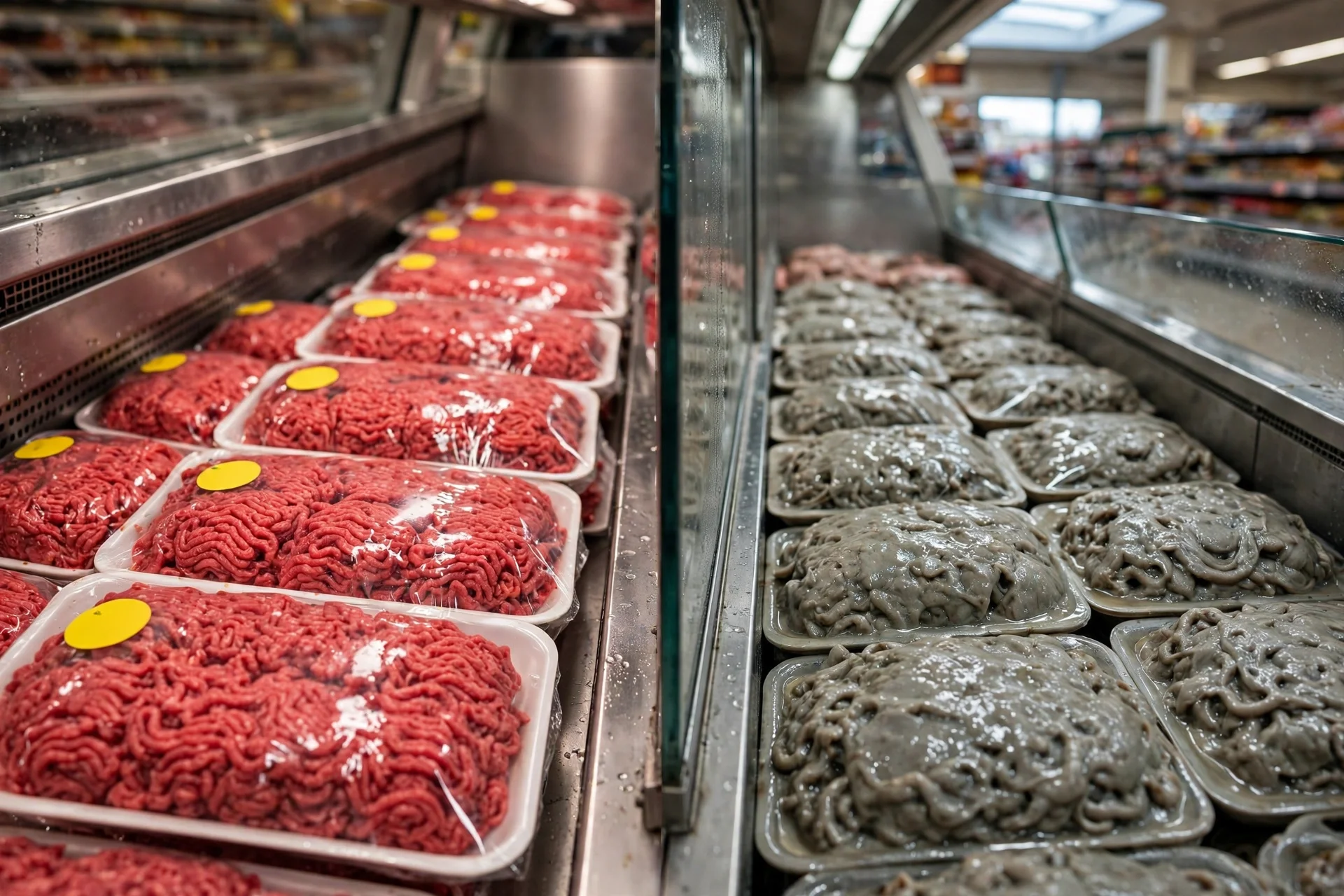
Prefer
- Sell-by date today or tomorrow, not past
- Normal color and firm, springy texture
- Intact, cold packaging with no tears
- A plan to cook or freeze it today
- Checking the unit price against regular packs
Avoid / check more closely
- Meat past its sell-by or use-by date
- Gray, green, or slimy surfaces
- Bloated, torn, or leaking packages
- Sour, ammonia-like, or strong off smells
- Discounts so deep the quality is doubtful
Why meat gets marked down — and what that really means
Stores mark meat down as it approaches its sell-by date to sell it before it has to be removed. That date is about store inventory and peak quality, not an instant safety switch, but it does mean the remaining fridge life is short. Treat every marked-down pack as a same-day decision: cook it tonight or freeze it as soon as you get home. If you are comparing cuts, the same eye you use when learning how to choose ground beef — bright color, minimal liquid, clean smell — applies here, just with less margin for error.
The discount percentage matters less than the condition of the meat itself. A 30% reduction on a pack that still looks fresh is a genuine saving; a 70% reduction on meat that is already dull and tacky is money spent on food you should not eat. Trust your senses over the sticker.
Check dates, color, smell, and packaging in the store
Start with the date, then work through the pack visually. Fresh beef is cherry-red, pork is pink, and poultry is pale pink — some darkening at edges where meat touches meat is normal, but widespread gray, green, or brown patches are a warning. Press the film gently; the surface underneath should look moist but not slimy. Check that the tray is cold, the film is sealed, and there is no excessive liquid pooling, which can signal temperature abuse or age.
Smell through the package is limited, but a strong sour odor that escapes when you handle the pack is reason enough to put it back. Also do the math before you celebrate: learning how to compare unit prices helps you confirm the marked-down pack really is cheaper per pound than a larger regular-price pack or a different cut on promotion that week.
Get it home cold, then cook or freeze it today
Marked-down meat should be the last thing into your cart and the first thing into your fridge. Keep the fridge at or below 40°F (4°C) and store raw meat on the lowest shelf in a tray to catch drips. If dinner plans change, freeze rather than gamble: portion the meat, wrap it tightly, label it with the date, and use it within a few months for best quality. Following the same rules covered in how to store meat — cold, sealed, and briefly — keeps a bargain from becoming waste.
When you cook marked-down meat, cook it thoroughly to the recommended temperature for that type of meat and do not rely on color alone. Use a food thermometer for ground meats, steaks, and poultry. Leftovers should be refrigerated within two hours and eaten within three to four days.
When to walk away from a deal
Some discounts are simply not worth the risk. Skip any pack that is past its date, has a swollen or damaged package, feels warm or sticky, or smells off in the store. Skip meat from a case that looks poorly refrigerated — frost-free warm spots, overfilled shelves, and packs sitting above the load line are all bad signs. Finally, only buy what you can realistically cook or freeze that day; a cheap pack that spoils in your fridge saves nothing.
Common questions
Is marked-down meat safe to eat?
It can be, provided it is still within its date, has been kept cold, looks and smells normal, and is cooked or frozen promptly. The discount reflects a short remaining shelf life, not a quality guarantee, so inspect each pack individually.
How long does marked-down meat keep in the fridge?
Plan on cooking it the same day. At most, use ground meat and poultry within one day and whole cuts within one to two days, kept at or below 40°F (4°C). When in doubt, freeze it immediately instead.
Can I freeze marked-down meat?
Yes — freezing on the day of purchase is the best way to preserve a bargain. Wrap portions tightly, label with the purchase date, and thaw later in the fridge, in cold water, or in the microwave, never on the counter.
References
U.S. Department of Agriculture, Food Safety and Inspection Service — Safe Food Handling and Preparation. Reference for meat storage, safe thawing, and refrigerator temperatures.
Prepared October 21, 2026 with AI assistance. Cited sources do not endorse the entire article.