
To choose good tomato paste, look for a deep, rich red color and a thick texture that holds its shape on a spoon. It should smell cleanly of cooked tomatoes — sweet and concentrated, never sour or fermented. Tubes and small cans both work; tubes are easier to store after opening. Avoid paste that looks brown or brick-colored, separates into watery liquid, or smells sharp. Check that cans are undented and the date is comfortably in the future.
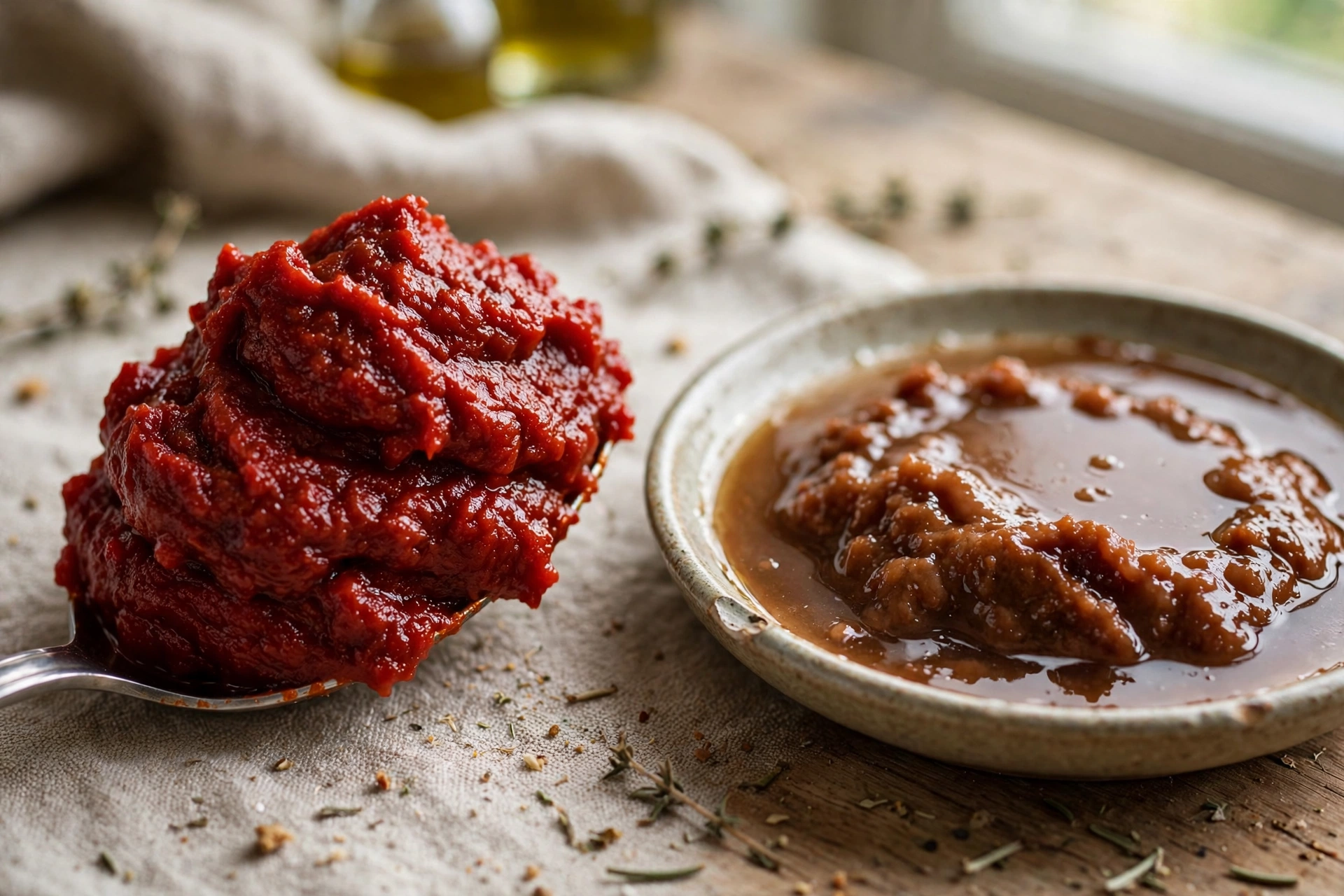
Prefer
- Deep, rich red color
- Thick texture that holds its shape
- Clean, sweet, concentrated tomato smell
- Undented cans or sealed tubes
- Simple ingredients: tomatoes, maybe salt and citric acid
Avoid / check more closely
- Brown, brick, or dull coloring
- Watery separation that will not stir back
- Sour or fermented smell
- Dented, swollen, or leaking cans
- Mold around an opened tube cap
Tube vs. can
The biggest practical difference is what happens after opening. Tubes let you squeeze out a tablespoon at a time and reseal, keeping the rest fresh in the fridge for weeks — ideal if your recipes only need small amounts. Cans are cheaper per ounce but commit you to the whole can at once, which leads to waste unless you freeze the remainder. If you cook with tomato paste often and in larger amounts, cans are economical. For occasional use, the tube usually wins on convenience and less waste.
Double-concentrated and other labels
Many imported brands, especially Italian ones, sell “double-concentrated” (doppio concentrato) tomato paste, which is thicker and more intensely flavored than standard paste — a little goes further. Standard American-style paste is slightly looser but works the same way; just use a touch more. Some labels say “no salt added,” useful if you control seasoning carefully. Beyond that, tomato paste is a simple product: tomatoes cooked down, sometimes with salt and citric acid. A long ingredient list is a reason to pick a different brand.
Color tells the story
Color is the quickest quality signal. Good tomato paste is a vivid, deep red — the sign of ripe tomatoes cooked down properly. Brownish or brick-colored paste suggests overcooking, age, or lower-quality tomatoes, and it usually tastes flatter and slightly bitter. The surface may darken a little after opening from air exposure; scrape off the darkened top layer and check that the paste underneath is still bright red. If the whole portion has turned brown or smells off, discard it.
Storing tomato paste at home
Unopened tubes and cans keep in the pantry until their printed date. Once opened, refrigerate: tube paste keeps for several weeks with the cap on, while canned paste should be transferred to a sealed container and used within five to seven days — never store it in the opened can. For long-term storage, freeze tablespoon-sized dollops on a tray, then bag them; frozen paste keeps for months and goes straight into hot dishes. Discard paste that smells sour, tastes fermented, or shows mold.
Common questions
Can I substitute tomato sauce for tomato paste?
In a pinch, yes, but they are different: paste is highly concentrated, so you need about three times as much sauce, and you should cook it down to thicken. The flavor will be milder.
Why did my opened tomato paste turn dark?
Air exposure darkens the surface, which is usually harmless — scrape it off and check the rest. If the paste underneath is still red and smells fine, it is usable.
Is tomato paste in a tube worth the higher price?
If you regularly throw away half-used cans, yes. The tube’s longer fridge life and no-waste portions often make it cheaper in practice for small-quantity cooks.
References
U.S. Food and Drug Administration — Food Labeling & Nutrition. Reference for reading labels on packaged foods.
Prepared October 13, 2026 with AI assistance. Cited sources do not endorse the entire article.