
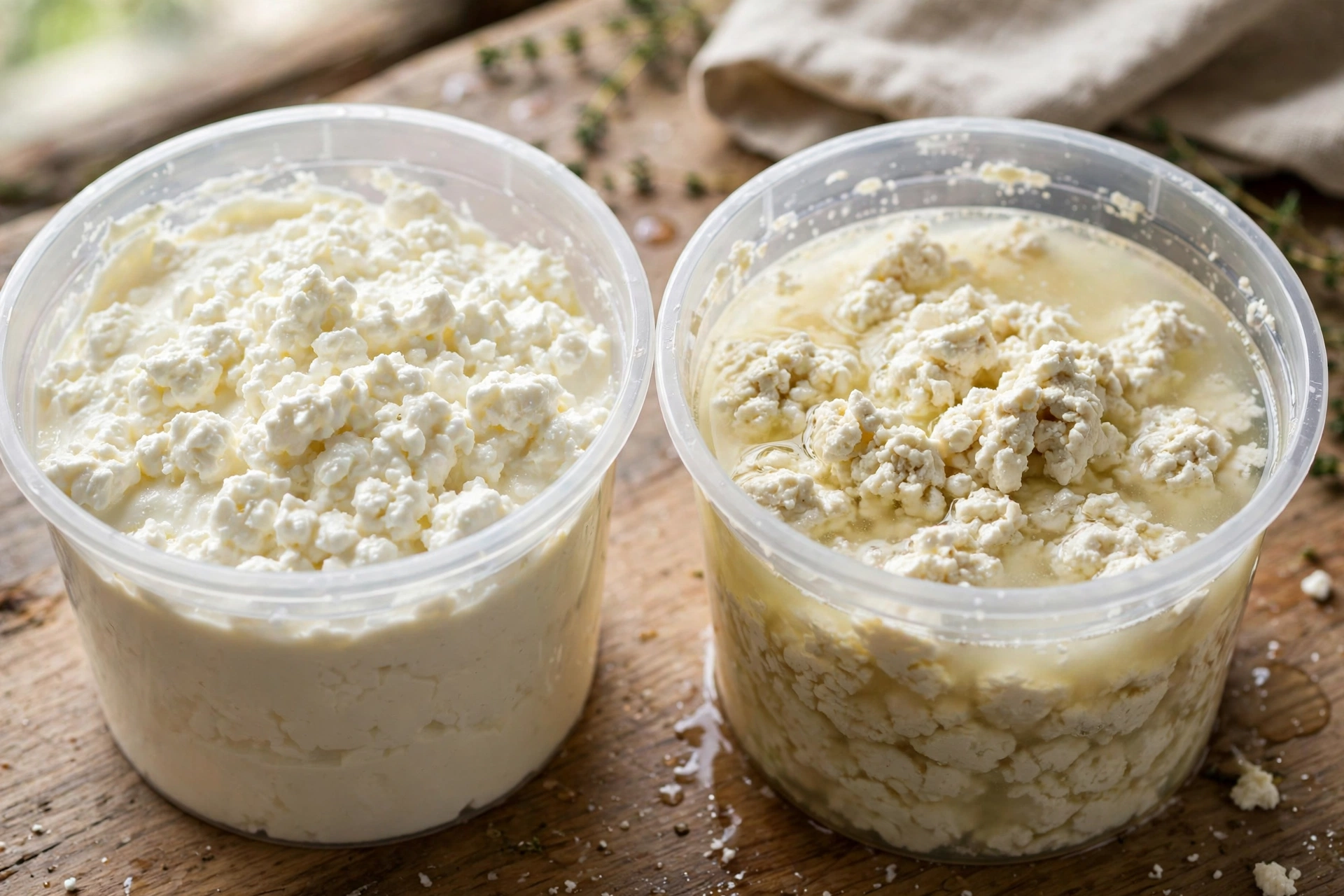
To choose good ricotta, look for cheese that looks creamy white with small, soft curds and a fresh, mild milky smell. The container should be sealed with no puffing or leaking, and the date on the lid should be comfortably in the future. Give the tub a gentle tilt: a little liquid on top is normal, but a pool of watery whey or a sour, sharp smell means it is past its prime. Avoid ricotta with yellowing, pinkish spots, or a bitter taste.
Prefer
- Creamy white color with small, soft, moist curds
- Fresh, mild, milky smell
- Sealed container with no puffing, dents, or leaks
- A use-by date comfortably in the future
- Refrigerated display case, cold to the touch
Avoid / check more closely
- Sour, sharp, or fermented smell
- Yellowing curds or pinkish spots
- Large pools of watery whey on top
- Bloated or leaking containers
- Bitter or acidic taste
Whole milk vs. part-skim ricotta
The first choice is the milkfat level, and it changes the texture noticeably. Whole-milk ricotta is richer and creamier, with a soft, spoonable body that works well in both sweet and savory dishes. Part-skim ricotta is lighter and a bit grainier, which some shoppers prefer for everyday cooking. Check the label for the milkfat percentage if it matters to you. Neither is inherently better — pick based on the dish. For lasagna and baked pasta, whole-milk ricotta generally gives a creamier result, while part-skim holds up fine in cooked fillings where other ingredients add richness.
Fresh ricotta vs. tub ricotta
Most supermarkets sell ricotta in sealed plastic tubs, which is convenient and consistent. Deli counters and specialty shops sometimes sell fresh ricotta, often looser and more delicate, with a shorter shelf life. Fresh ricotta usually tastes sweeter and milder but should be used within a few days. Tub ricotta is pasteurized and sealed, so it keeps longer unopened. Whichever you buy, keep it cold from store to home — use an insulated bag on warm days. Once opened, both types should be used within about five to seven days, and always trust the smell test over the date if something seems off.
Reading the label
A short ingredient list is a good sign: milk, whey, and an acid such as vinegar or citric acid are all that traditional ricotta needs. Some brands add gums or stabilizers for a smoother texture; these are safe but change the mouthfeel slightly. If you avoid additives, look for labels that list only milk, whey, and acid. Also check whether the ricotta is made from whey or whole milk — true whey ricotta is lighter and more delicate, while many supermarket versions are made directly from milk. The nutrition panel can help you compare sodium and fat if those matter to your cooking.
Storing ricotta at home
Refrigerate ricotta immediately and keep it at or below 40°F (4°C). Once opened, press plastic wrap directly onto the surface before replacing the lid — this limits air contact and slows spoilage. Use opened ricotta within five to seven days. If you see a little clear whey on top, you can stir it back in or drain it off; it is normal. Discard ricotta that smells sour, tastes bitter, or shows any pink or yellow discoloration. Ricotta can be frozen, though the texture becomes grainier — it works best in cooked dishes after thawing. Freeze in portion-sized containers for up to two months.
Common questions
Is watery ricotta bad?
Not necessarily. A thin layer of whey on top is normal and can be stirred back in or drained. But if the whole tub looks watery and separated with a sour smell, it is past its best and should be discarded.
Can I eat ricotta past the date on the tub?
An unopened tub kept cold is often fine for a few days past its sell-by date if it looks and smells fresh. Once opened, stick to about a week. When in doubt, throw it out — dairy is not worth the risk.
What is the difference between ricotta and cottage cheese?
Both are fresh cheeses, but ricotta has smaller, softer curds and a milder, sweeter flavor, while cottage cheese has larger, distinct curds and a tangier taste. They are not identical, though they can substitute for each other in some cooked dishes.
References
U.S. Food and Drug Administration — Safe Food Handling. Reference for buying, handling, and storing dairy foods safely.
Prepared October 13, 2026 with AI assistance. Cited sources do not endorse the entire article.