
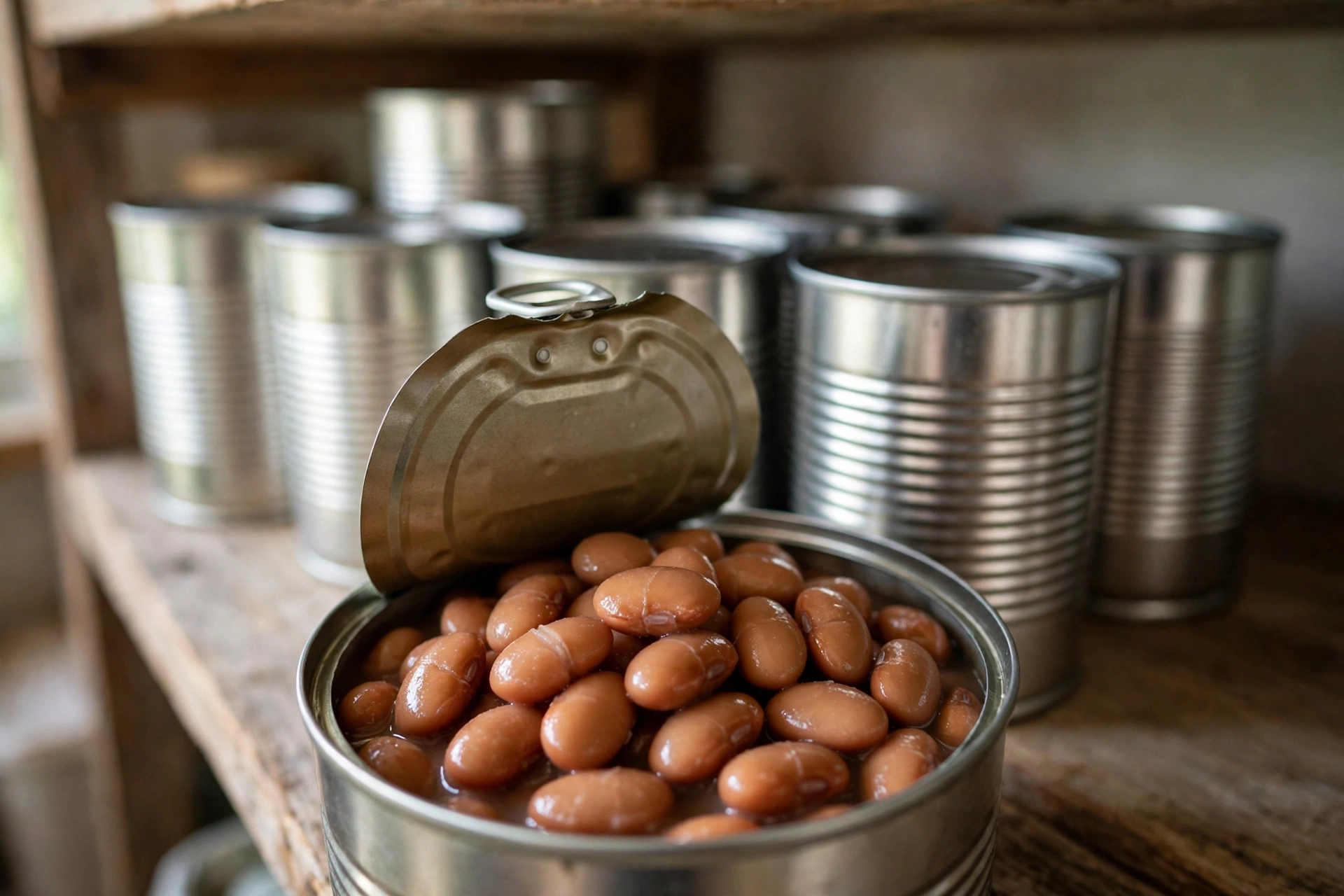
To choose good canned beans, inspect the can before you read the label: it should be smooth and intact, with no swelling, deep dents, rust, or leaks. Dents along the seams or rims matter more than small dings on the side. Then check the date and the label — look for the bean variety you want, and consider low-sodium or no-salt-added options if you watch your salt intake. Never buy a can that bulges or spurts when opened.
Prefer
- Smooth, intact cans with no swelling
- No dents on seams, rims, or lids
- Clear best-by or use-by date
- Low-sodium or no-salt-added options when preferred
- Clean labels naming the exact bean variety
Avoid / check more closely
- Swollen or bulging cans or lids
- Deep dents along seams or rims
- Rust, especially around seams
- Leaking, sticky, or spurting cans
- Missing or unreadable labels and dates
Inspect the can first
The can is doing the preserving, so its condition is your first quality check. A swollen or bulging can is a hard no — it can indicate gas from spoilage inside, and the contents should be discarded, not tasted. Deep dents, particularly on the seams or the rim where the lid seals, can compromise the seal even if the can looks otherwise fine; small, shallow dings on the body are less concerning but still worth avoiding when you have a choice. Rust around the seams is another reason to pass, since it can weaken the metal over time.
Read the label
Once the can passes inspection, the label tells you what is inside. Beans are usually packed in water with salt, and sometimes calcium chloride to keep them firm — all normal. If sodium matters to you, “no salt added” and “low sodium” versions are widely available, and rinsing regular canned beans under water washes away a good portion of the sodium too. Check the variety matches your recipe: kidney, black, pinto, chickpeas, and cannellini all behave differently in cooking. A clear best-by date helps you rotate your pantry so older cans get used first.
Storing canned beans at home
Unopened cans keep for years in a cool, dry pantry — heat and humidity are the enemies, so avoid storing them above the stove or in a damp garage. Once opened, do not store beans in the can: transfer leftovers to a covered glass or plastic container and refrigerate, where they generally keep for 3 to 4 days. For longer keeping, cooked or canned beans freeze well in portion-sized containers. And remember the golden rule: if a can ever hisses, spurts, or smells off when opened, discard it without tasting.
Common questions
Are dented cans safe?
It depends on the dent. Shallow dings on the body of the can are usually cosmetic, but deep dents on seams or rims can break the seal — skip those. When in doubt, choose an undamaged can.
Should you rinse canned beans?
Rinsing is a good idea if you want less sodium and a cleaner flavor — it washes away much of the packing liquid’s salt and starch. If a recipe relies on that starchy liquid for body, you can use it as is.
How long do opened canned beans last?
About 3 to 4 days in the refrigerator in a covered container. For longer storage, freeze them in portions — they thaw well for soups, salads, and sides.
References
U.S. Food and Drug Administration — Buy, Store & Serve Safe Food. Reference for canned food selection and storage.
Prepared October 12, 2026 with AI assistance. Cited sources do not endorse the entire article.