
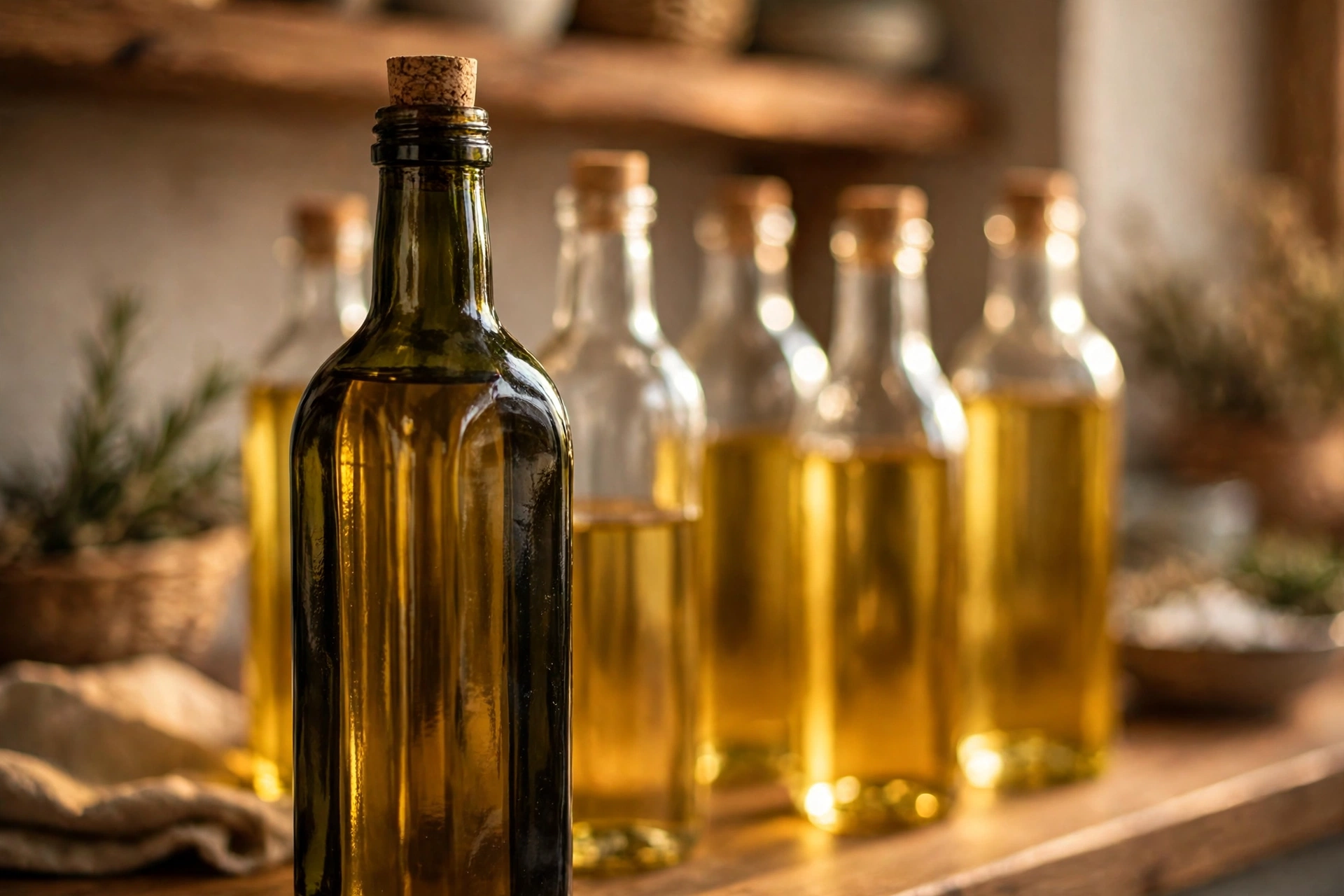
To choose good cooking oil, smell it first if you can: fresh oil smells neutral or pleasantly nutty, never sharp, paint-like, or like crayons — those are signs of rancidity. The oil should look clear (for refined oils), and bottles of olive oil are best in dark glass that blocks light. Check the date, and match the oil to your cooking: high smoke point for searing and frying, flavorful oils for finishing. Avoid dusty old bottles, damaged seals, and any oil with a stale or chemical smell.
Prefer
- Fresh, neutral, or pleasantly nutty smell
- Clear appearance (for refined oils)
- Dark glass bottles for light-sensitive oils like olive oil
- A printed date — harvest date is ideal for olive oil
- Smoke point matched to your cooking method
Avoid / check more closely
- Sharp, paint-like, or crayon-like smells (rancidity)
- Cloudiness in refined oils at room temperature
- Clear plastic bottles for extra-virgin olive oil
- Dusty bottles that suggest long shelf time
- Broken seals or leaking caps
Smell for rancidity first
Oil does not “spoil” the way milk does, but its fats oxidize over time into unpleasant flavors — and eventually into rancidity you can taste in food. The tell is smell: fresh oil smells clean and neutral (or grassy and peppery, for good olive oil), while old oil smells waxy, paint-like, or like old crayons. If a bottle has been open for many months, especially near heat, give it a sniff before cooking. Buying smaller bottles you will actually finish is one of the simplest ways to always cook with fresh oil.
Match the oil to the job
Smoke point — the temperature where oil starts to smoke and break down — should guide your choice. High-smoke-point oils like avocado, refined peanut, or light olive oil suit searing, stir-frying, and deep-frying. Extra-virgin olive oil, with its lower smoke point and bold flavor, shines in dressings, drizzles, and gentle sautéing. For olive oil specifically, look for dark glass (light degrades it), a harvest date within the last year or so, and origin labeling you can read. “Light” olive oil refers to flavor and color, not calories — it is more refined and more heat-tolerant than extra-virgin.
Storing cooking oil at home
Store oil in a cool, dark place — a cabinet away from the stove beats the countertop next to it, since heat and light speed up rancidity. Keep caps screwed on tight to limit air exposure. Most cooking oils keep for months unopened and several months after opening, though delicate oils like flaxseed or walnut oil do better refrigerated. If oil ever smells sharply off or tastes bitter and stale, replace it; rancid flavors will carry straight into your food.
Common questions
Does cooking oil expire?
It does not become unsafe overnight, but it goes stale and eventually rancid. Follow best-by dates as a freshness guide, and trust your nose — off smells mean it is past its best.
Why did my olive oil turn cloudy in the fridge?
Cloudiness at cold temperatures is normal — some fats in the oil solidify when chilled and clear up again at room temperature. It is not a sign of spoilage.
Can you reuse frying oil?
Yes, within limits: strain out food particles, store it cool and dark, and reuse it a few times for similar foods. Discard it if it smells off, smokes at low heat, or looks dark and thick.
References
U.S. Food and Drug Administration — Buy, Store & Serve Safe Food. Reference for pantry food selection and storage.
Prepared October 12, 2026 with AI assistance. Cited sources do not endorse the entire article.