
To choose real maple syrup, read the ingredients first: they should list one thing — maple syrup. Anything labeled “maple-flavored,” “pancake syrup,” or “breakfast syrup” is usually corn syrup with flavoring, not the real thing. Real syrup should look clear and consistent in the bottle, with a color that matches its grade, from light golden to deep amber. Avoid cloudy bottles, mold around the cap, and vague labels that never say “100% pure.”
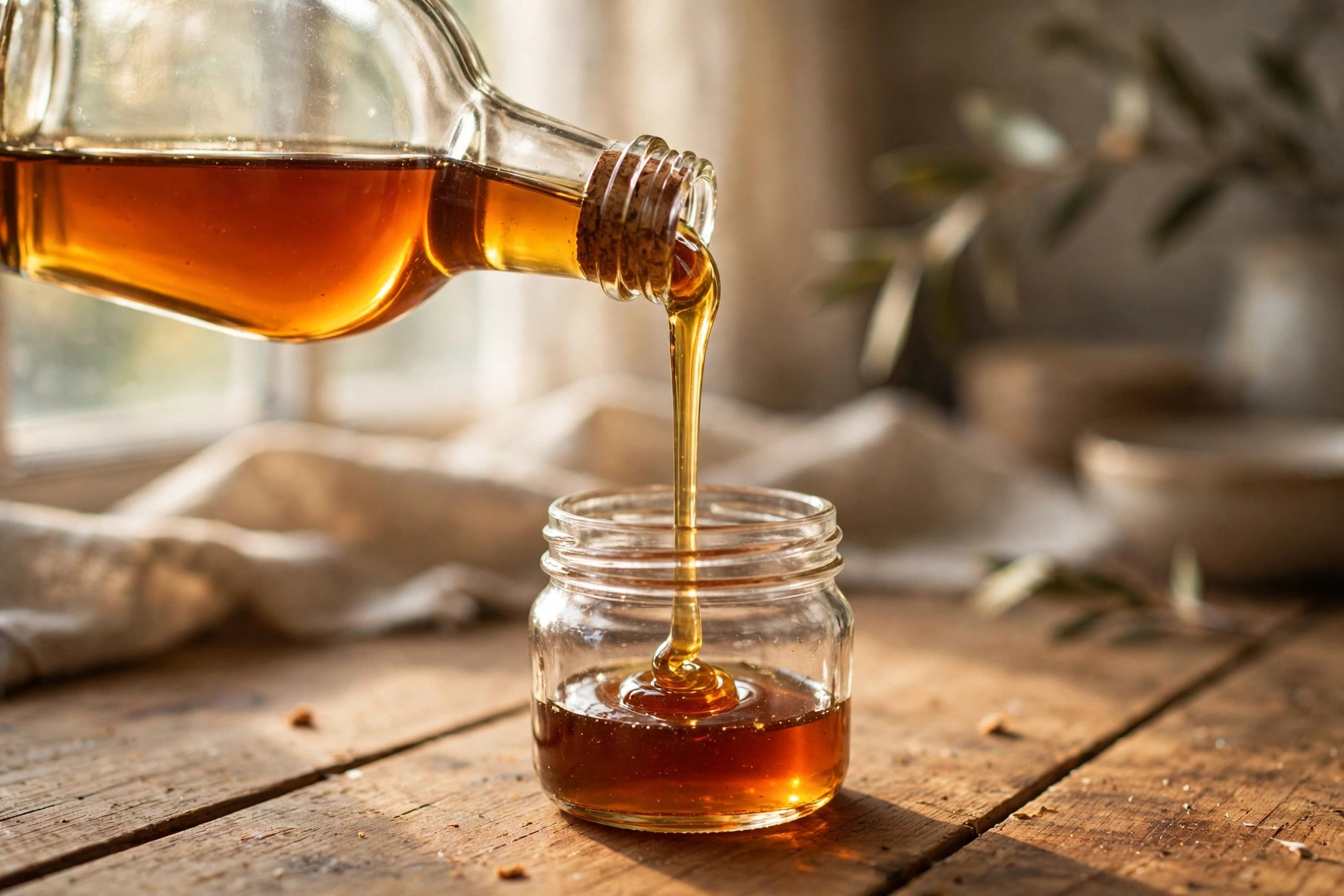
Prefer
- Ingredients list showing only maple syrup (“100% pure”)
- Clear, consistent color appropriate to the grade
- A grade that matches your use (golden for delicate, dark for robust)
- Clean cap and neck with no stickiness or mold
- Sealed bottle from a reputable producer or brand
Avoid / check more closely
- “Maple-flavored,” “pancake,” or “breakfast” syrup (mostly corn syrup)
- Cloudy or murky appearance in the bottle
- Mold on or under the cap
- Labels that avoid saying “pure” or “100%”
- Sticky, leaking, or damaged bottles
Pure vs. flavored: read the ingredients
This is the single most important check. Real maple syrup is simply boiled-down maple sap, and the label will say so plainly — look for “100% pure maple syrup” in the ingredients. Imitation syrups list corn syrup, high-fructose corn syrup, or sugar first, with “natural and artificial flavors” doing the maple impression. They cost less, but they are a different product entirely. If the front of the bottle leans on maple-leaf imagery and cozy words while the ingredients tell another story, trust the ingredients.
Pick the right grade
Maple syrup grades describe color and flavor strength, not quality — all grades are pure syrup. Golden (delicate taste) is light and mild, good for drizzling over yogurt or fresh fruit. Amber (rich taste) is the all-rounder most people reach for on pancakes. Dark (robust taste) has a stronger maple punch that stands up in baking and glazes, and very dark (strong taste) is mostly used commercially. Hold the bottle up to light if you can: the syrup should look clear and luminous, not cloudy or murky. Cloudiness can occasionally be harmless sediment, but combined with off smells it is a reason to choose another bottle.
Storing maple syrup at home
Unopened maple syrup keeps well in a cool, dark pantry. Once opened, refrigerate it — the natural sugars can grow mold at room temperature over time. For long-term storage, maple syrup freezes beautifully; pour it into a freezer-safe container and thaw in the fridge when needed. If sugar crystals form, that is normal — warm the syrup gently and they will dissolve. If you ever find mold on the surface, the safest move is to discard it rather than skimming.
Common questions
Are sugar crystals in maple syrup normal?
Yes. Crystals form naturally as moisture evaporates, especially in pure syrup. Gentle warming dissolves them, and the syrup is fine to use.
Does maple syrup expire?
Unopened, it keeps for a very long time in the pantry. Once opened, refrigeration keeps it good for many months. Off smells, fermentation, or mold mean it is time to replace it.
What is the difference between syrup grades?
Grade reflects when in the season the sap was collected: earlier sap makes lighter, milder syrup; later sap makes darker, stronger syrup. All are 100% pure — pick by flavor preference, not by a quality ranking.
References
U.S. Food and Drug Administration — Buy, Store & Serve Safe Food. Reference for pantry food selection and storage.
Prepared October 12, 2026 with AI assistance. Cited sources do not endorse the entire article.