
To choose fresh cottage cheese, look for distinct, plump curds in a creamy white base — not a watery, broken-down mush. It should smell mildly fresh and clean, never sour or yeasty. Check that the container is sealed and the lid is flat, not bloated, and pick a date well within range. Avoid tubs with pink or yellow tints, excessive liquid pooling, or curds that have dissolved into a uniform paste.
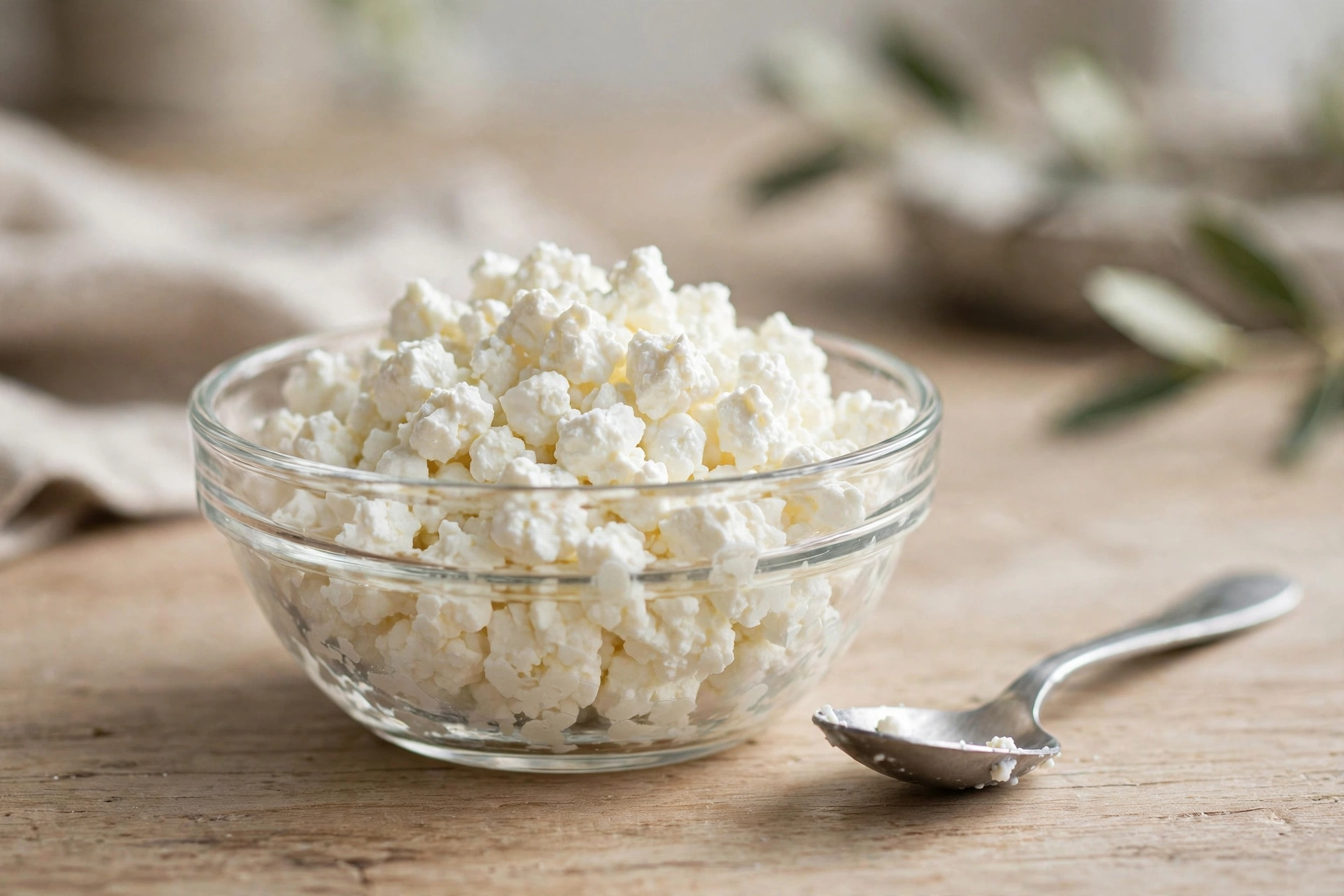
Prefer
- Distinct, plump curds that hold their shape
- Creamy white color with no pink or yellow tint
- Mild, fresh, clean smell
- Sealed container with a flat, unbloated lid
- A date well within the printed range
Avoid / check more closely
- Pink, yellow, or gray discoloration
- Sour, yeasty, or bitter smells
- Excessive watery liquid separating from the curds
- Bloated or domed lids
- Curds broken down into a mushy, uniform paste
Look closely at the curds
The curds are the whole point of cottage cheese, so inspect them. Fresh curds look plump and separate, suspended in just enough cream to coat them — you should be able to see individual pieces. If the contents look like a uniform, watery porridge, the product is likely old or was temperature-abused. A small amount of thin liquid (whey) on top is normal and can simply be stirred back in, but a tub swimming in watery liquid deserves a pass. Any pink or yellow tint is a warning sign, since fresh cottage cheese should be white to creamy-white.
Smell, date, and container
Fresh cottage cheese smells mild — faintly milky and clean. Sour, sharp, or yeasty odors mean it has turned. Because it is a fresh, high-moisture cheese, the printed date matters more here than for aged cheeses, so choose the freshest date on the shelf. Check the container too: the seal should be intact and the lid flat. A bloated lid can indicate gas from spoilage organisms. If the tub feels warm in the store case, pick another one — cottage cheese should be kept cold from dairy to home.
Storing cottage cheese at home
Refrigerate cottage cheese promptly and keep the lid tightly closed. Once opened, it is generally best within 5 to 7 days. Store it in the main body of the fridge rather than the door, where temperatures swing. Some people store the tub upside down to create a slight vacuum that may slow spoilage — it does not hurt, but the date and cold temperature matter far more. If you spot mold or pink discoloration, discard the whole container rather than scooping around it.
Common questions
Is liquid on top of cottage cheese normal?
A thin layer of whey on top is normal — just stir it back in. Large amounts of watery liquid, especially with sour smells, suggest the cheese is past its prime.
What do pink spots mean?
Pink or reddish spots can indicate spoilage organisms and are a reason to discard the product. Fresh cottage cheese should be white to creamy-white throughout.
Can you freeze cottage cheese?
Freezing is possible but the texture usually becomes watery and grainy after thawing. It works in cooked dishes like lasagna, but it is not great for eating fresh with a spoon.
References
U.S. Food and Drug Administration — Buy, Store & Serve Safe Food. Reference for dairy selection, handling, and storage.
Prepared October 12, 2026 with AI assistance. Cited sources do not endorse the entire article.