
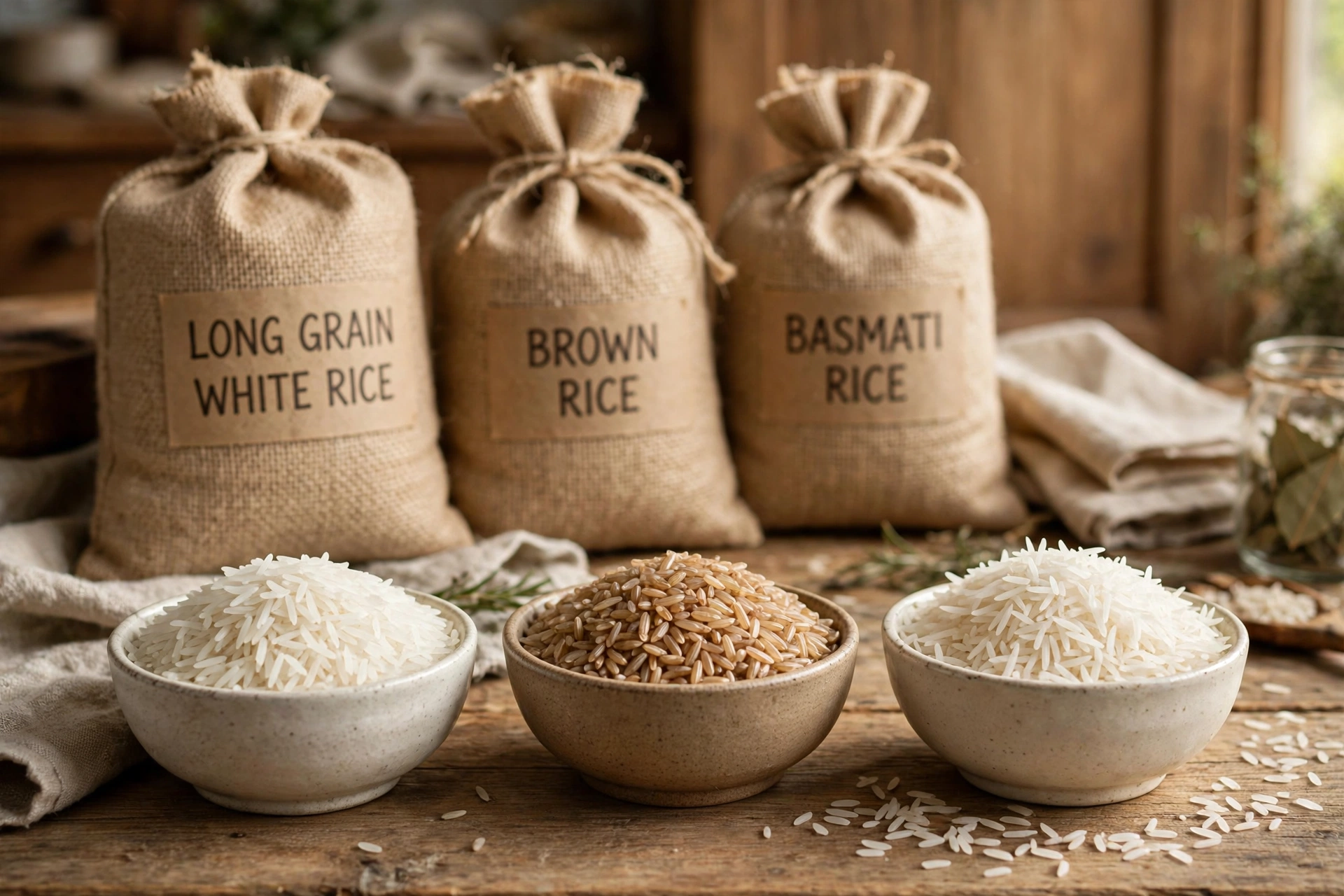
To choose good rice, match the grain to the dish — long-grain for fluffy pilafs, medium-grain for everyday bowls, short-grain for sticky sushi and risotto. Check the bag for intact packaging, clear variety labeling, and no dust, broken grains, or off smells. White rice keeps for years; brown rice has a shorter pantry life because of its oils.
Prefer
- The right grain length for your cooking plan
- Intact, sealed packaging with clear variety labels
- Whole, uniform grains with minimal breakage
- Clean smell — rice should smell neutral, never musty
- Trusted brands with consistent quality
Avoid / check more closely
- Torn bags or signs of pantry pests
- Musty, stale, or chemical smells
- Excessive broken grains and powdery dust
- Vague “rice” labeling with no variety named
- Brown rice past its best-by date (its oils go rancid)
Grain types and what they are for
Long-grain rice (jasmine, basmati) cooks up separate and fluffy — ideal for pilafs and fried rice. Medium-grain is tender and slightly clingy, great for everyday eating. Short-grain (sushi rice, arborio) is starchy and sticky, built for sushi and risotto. Brown versions of each keep the bran layer: chewier, nuttier, and more nutritious, but they need more water and time. “Enriched” white rice has some nutrients added back after milling.
Reading the bag
Look for the specific variety name, not just “long grain rice” — named varieties like jasmine or basmati signal better quality control. Check the best-by date, especially on brown rice, which lasts about six months in the pantry versus years for white rice. Country of origin matters to some cooks for aroma and texture. Avoid bags with fine dust at the bottom, which suggests old or roughly handled grain.
Storing rice at home
Keep white rice in a sealed container in a cool, dry pantry — it lasts for years. Store brown rice in the refrigerator or freezer to protect its oils from going rancid. Cooked rice needs care: cool it quickly, refrigerate within two hours, and eat within three to four days. Reheat leftovers to steaming hot.
Common questions
Should I rinse rice?
Rinsing removes surface starch for fluffier grains — recommended for basmati and jasmine. Skip it for risotto and sushi rice, where starch is the point.
How long does brown rice last?
About six months in the pantry; longer refrigerated or frozen thanks to its perishable bran oils.
What is parboiled rice?
Rice steamed in the husk before milling — it keeps more nutrients than white rice and cooks firm and separate.
References
U.S. Food and Drug Administration — Food Labeling & Nutrition. Reference for how grain labels present variety, enrichment, and nutrition information.
Prepared October 11, 2026 with AI assistance. Cited sources do not endorse the entire article.