
To choose good milk, start with the date — pick the carton or jug with the latest sell-by date and check it is cold all the way through the store’s case. Whole, reduced-fat, and skim differ mainly in fat content and calories, not in basic quality, so pick by taste and nutrition goals. Give the container a look: it should be well sealed, undamaged, and stored at the back of a well-chilled case.
Prefer
- The latest sell-by or best-by date on the shelf
- Cartons and jugs that feel cold and are undamaged
- Clear labeling of fat percentage and type (whole, 2%, 1%, skim)
- Milk stored at the back of the case, where it stays coldest
- Pasteurized milk from reputable brands or dairies
Avoid / check more closely
- Swollen, leaking, or damaged containers
- Milk left out in warm display areas
- Cartons with the earliest dates when fresher ones are available
- Sour or off smells when opened
- Unlabeled or repackaged milk from unknown sources
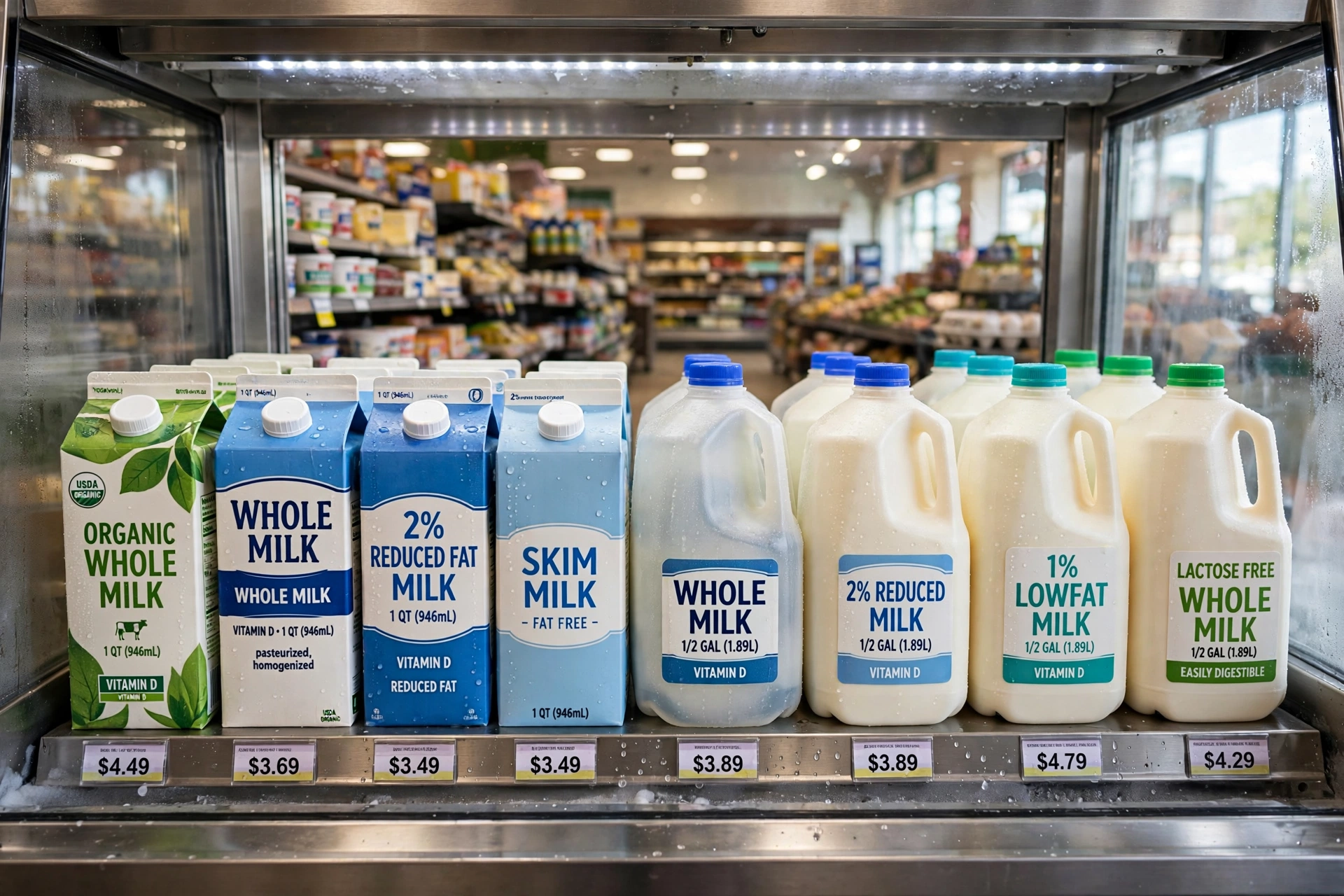
Whole vs low-fat: reading the label
Milk labels list the fat content clearly: whole (about 3.25% fat), reduced-fat (2%), low-fat (1%), and fat-free/skim. Protein, calcium, and vitamin D levels are broadly similar across types, so the choice comes down to taste and calories. “Organic” and “grass-fed” describe production methods, not freshness — they do not mean the milk lasts longer. Ultra-pasteurized (UHT) milk keeps longer unopened but tastes slightly different; check the label if that matters to you.
Dates and freshness checks
The date on milk is usually a sell-by date, not a hard expiration — properly stored milk often stays good for several days past it, but always trust your senses first. Choose milk from the back of the case, where temperatures are most stable, and get it into your refrigerator quickly — milk should not sit at room temperature. Once opened, sour smell, off taste, or curdling means it is done, even if the date has not passed.
Storing milk at home
Refrigerate milk at or below 40°F and keep it on an interior shelf, not the door, where temperatures swing. Return it to the fridge promptly after pouring — every minute at room temperature counts. Do not freeze milk in its original carton unless there is headspace, since it expands. Once opened, use within about a week for best quality.
Common questions
Does whole milk have more calcium?
Not meaningfully — calcium levels are similar across fat percentages. Whole milk has more calories and fat, which is the real difference.
Can I drink milk past the sell-by date?
Often yes, if it was kept cold and smells and tastes normal. When in doubt, throw it out.
Is ultra-pasteurized milk better?
It lasts longer unopened thanks to higher-heat treatment. Some people notice a slightly cooked flavor; nutrition is comparable.
References
U.S. Food and Drug Administration — Food Labeling & Nutrition. Reference for how dairy labels present fat content, dates, and nutrition information.
Prepared October 11, 2026 with AI assistance. Cited sources do not endorse the entire article.