
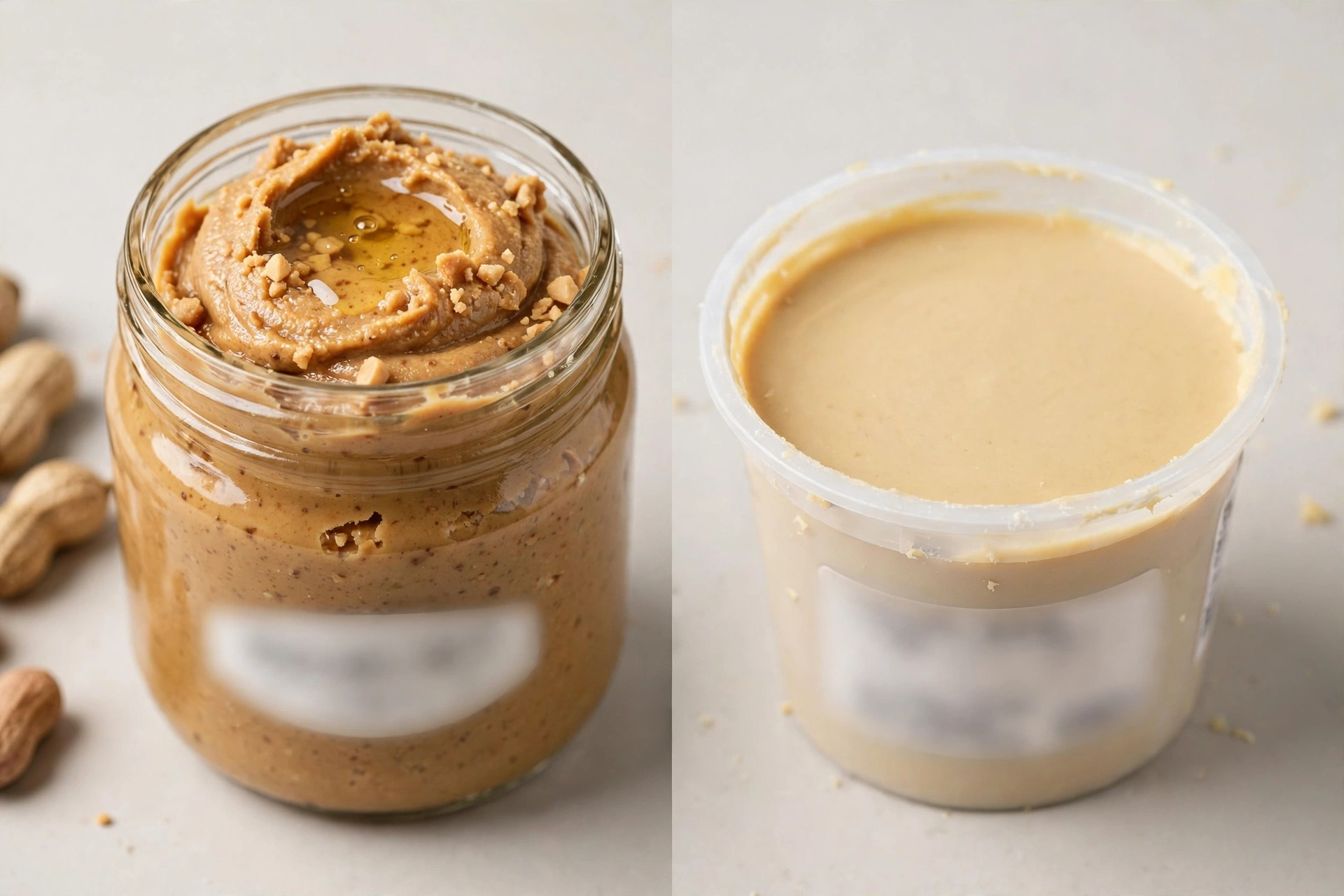
To choose good peanut butter, read the ingredient list — the best natural versions list just peanuts and salt. Oil separation on top is normal for natural peanut butter, not a flaw; stir it once and store upside down. “No-stir” versions add palm oil and sugar for convenience — pick by your priority: purity or spreadability.
Prefer
- Peanuts as the first (ideally only) ingredient
- Short ingredient lists you recognize
- Clear labeling of added oils and sugars
- Good value per ounce, not just per jar
Avoid / check more closely
- Peanut butter where sugar or oils come before peanuts
- Hydrogenated oils high on the ingredient list
- Leaking or damaged safety seals
- Rancid, paint-like smells
Natural vs no-stir: the real trade-off
Natural peanut butter (peanuts + salt) separates — that oil layer is just peanut oil, and stirring it back in is the whole ritual. Store the jar upside down to slow separation. No-stir versions add palm oil, sugar, and emulsifiers so the jar stays creamy and sweet. Neither is unsafe; natural wins on ingredient purity, no-stir on convenience. Watch sugar content if it matters to you — some “creamy” brands are surprisingly sweet.
Reading the label
Ingredients are listed by weight: peanuts should be first, by a wide margin. “Peanut butter spread” (vs “peanut butter”) legally contains less peanut content — check the percentage. Compare sodium and sugar per serving across brands, and note serving sizes (usually two tablespoons) when judging the numbers. For allergies, check for “may contain” warnings about tree nuts if that matters in your household.
Storing peanut butter
Unopened jars keep for months in the pantry. Once opened, natural peanut butter does fine in the pantry for a few weeks but lasts longer refrigerated (it will firm up — let it warm before spreading). No-stir versions are pantry-stable after opening. Discard peanut butter that smells rancid, paint-like, or tastes sharply bitter.
Common questions
Is the oil on top bad?
No — it is natural peanut oil separating, and it is a sign of minimal processing. Stir it in.
Does peanut butter need refrigeration?
Natural versions last longer refrigerated after opening; no-stir is fine in the pantry. Unopened jars are pantry-safe either way.
What does “peanut butter spread” mean?
It contains less peanut content than the legal standard for “peanut butter” — check the label percentage.
References
U.S. Food and Drug Administration — Food Labeling & Nutrition. Reference for how food labels and ingredient lists work.
Prepared October 10, 2026 with AI assistance. Cited sources do not endorse the entire article.