
To choose good bread, read the ingredient list — “whole wheat” should mean whole-wheat flour is the first ingredient, not just caramel-colored white bread. Check the date, squeeze gently for softness (without crushing), and look for a well-formed loaf with no mold. For the freshest bread, buy from bakeries with high turnover or bake-day labeling.
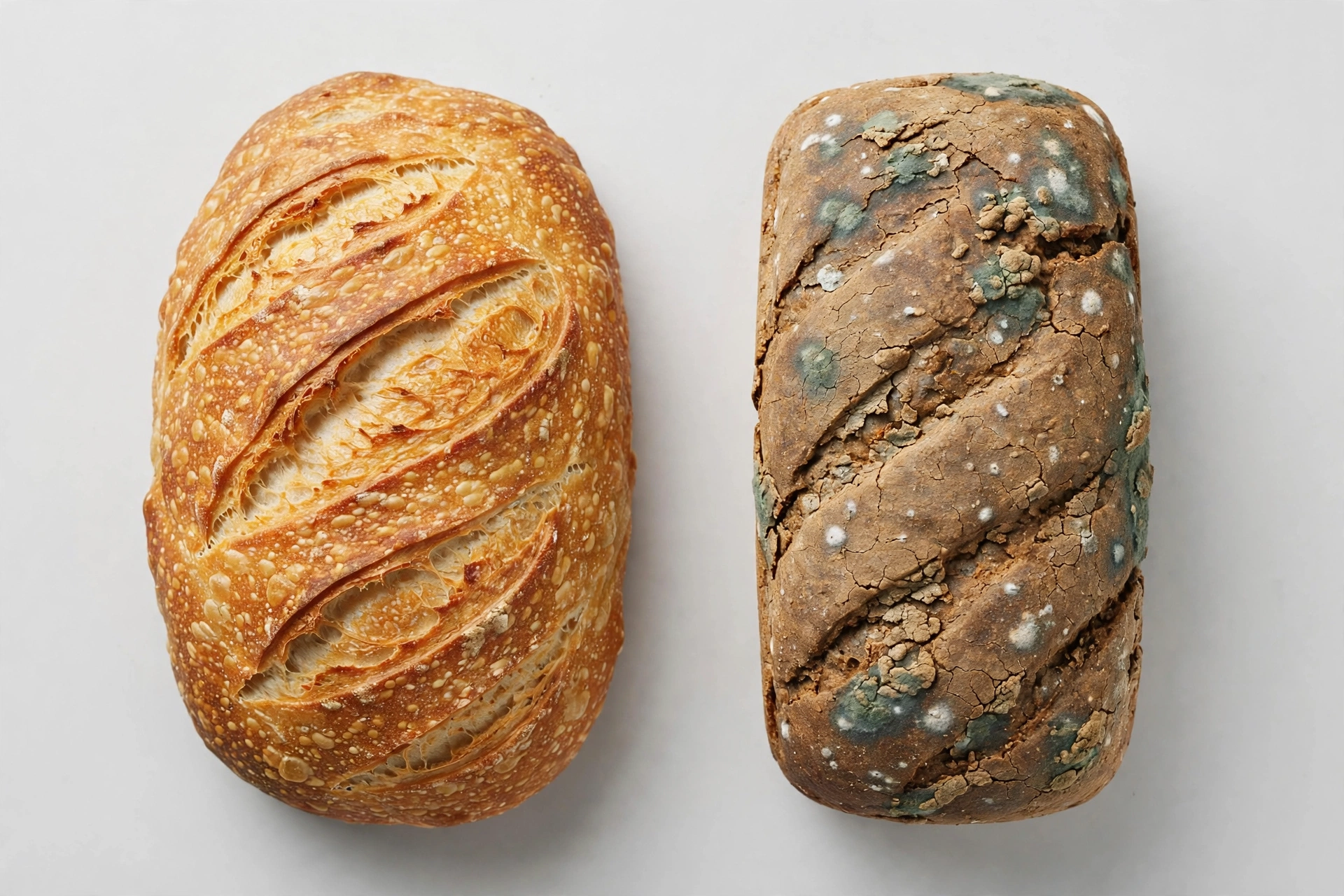
Prefer
- Whole grains as the first ingredient when buying whole-grain bread
- Fresh dates and soft, springy texture
- Well-shaped loaves with even crust color
- Short, recognizable ingredient lists
- High-turnover bakeries or bake-day labels
Avoid / check more closely
- “Wheat bread” that is mostly white flour with coloring
- Any mold, even a small spot (roots spread invisibly)
- Stale, hard loaves past their date
- Crushed or damaged packaging
- Suspiciously long shelf life with no preservatives listed
Whole grain or whole trick?
“Made with whole grains” can mean a sprinkle of whole wheat in mostly white flour. For real whole-grain bread, whole-wheat (or other whole-grain) flour should be the first ingredient, and the label may carry a whole-grain stamp with grams per serving. “Multigrain” just means multiple grains — not necessarily whole ones. Color proves nothing; caramel coloring makes white bread look hearty.
Freshness checks
Check the date and give the loaf a gentle squeeze — fresh bread springs back; stale bread stays dented or feels hard. Look at the crust: even golden color is good, while pale spots can mean underbaking. Inspect for mold, especially around the twist tie and bottom. Any mold means the whole loaf goes — mold roots spread invisibly through soft bread.
Storing bread at home
Keep bread at room temperature in a bread box or paper bag for two to three days — refrigeration actually speeds staling. For longer keeping, slice and freeze in a sealed bag; toast slices straight from frozen. Revive day-old bread with a few minutes in a hot oven. Never eat moldy bread, even toasted.
Common questions
Should I refrigerate bread?
No — cold speeds up starch recrystallization (staling). Room temperature or the freezer are the two good options.
Is brown bread always whole grain?
No. Color can come from caramel coloring or molasses. Read the ingredient list for whole-grain flour first.
Can I eat bread with a little mold?
No — cut it out is not enough for soft bread, since mold roots spread invisibly. Discard the loaf.
References
U.S. Food and Drug Administration — Food Labeling & Nutrition. Reference for how food labels and ingredient lists work.
Prepared October 10, 2026 with AI assistance. Cited sources do not endorse the entire article.