
To choose good ice cream, read the ingredient list — the best ones lead with cream and milk, with short, recognizable ingredients. “Light,” “reduced fat,” and “frozen dessert” are regulated terms that tell you what is (and is not) in the tub. For the richest texture, look for higher fat content and fewer gums and fillers.
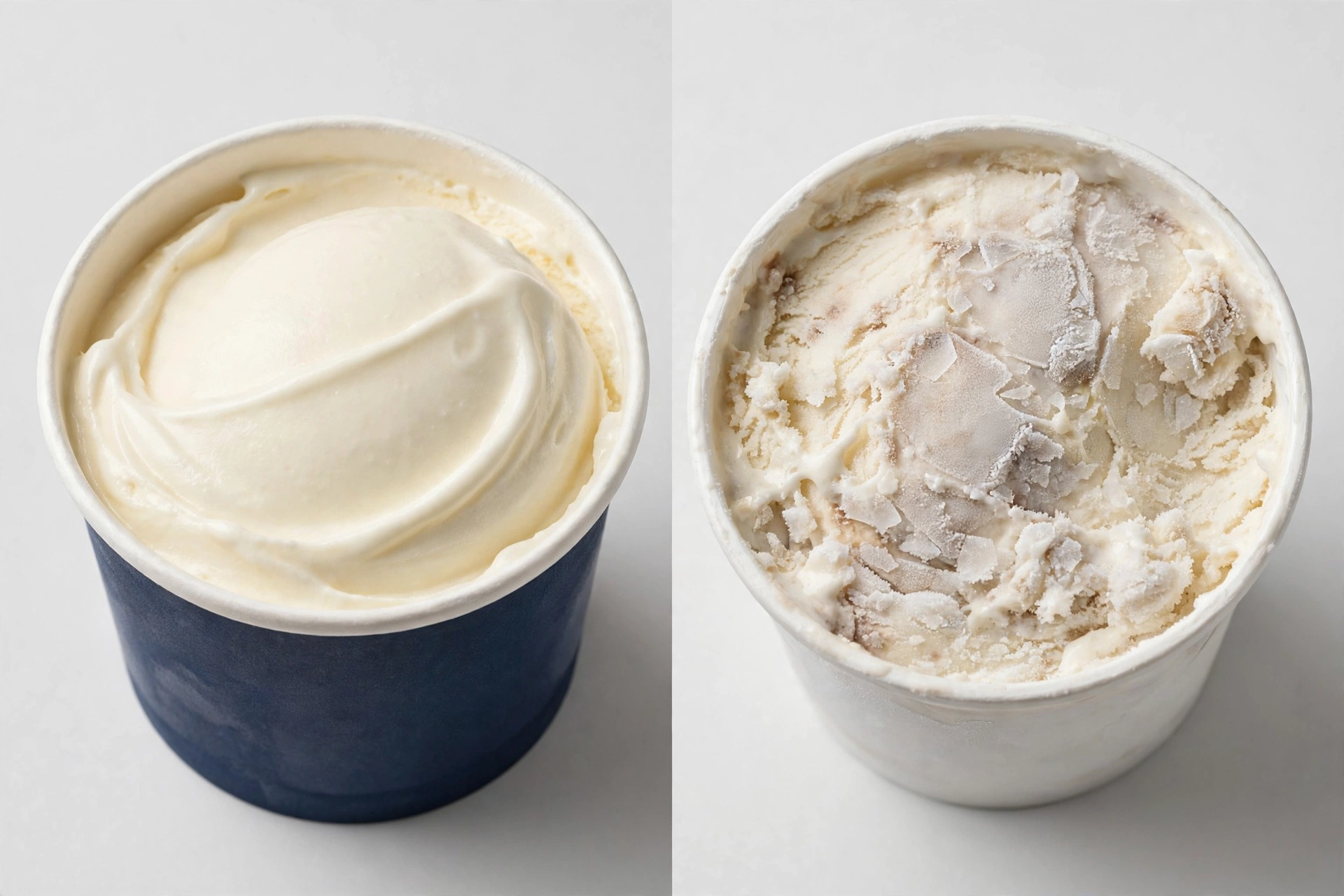
Prefer
- Cream and milk as the first ingredients
- Short, recognizable ingredient lists
- Clear labeling of flavor sources (real vanilla, real fruit)
- Smooth, dense texture with no ice crystals
- Well-sealed lids with no freezer burn
Avoid / check more closely
- Long lists of gums, starches, and syrups
- “Frozen dessert” when you wanted real ice cream
- Visible ice crystals or freezer burn
- Melted-and-refrozen tubs (uneven texture, icy layers)
- Vague “natural flavors” as the only flavor cue for premium prices
Ingredients: cream first
By regulation, ice cream must contain a minimum amount of milk fat — products below that are labeled “frozen dessert” instead. Premium ice creams list cream first and keep the list short: cream, milk, sugar, eggs, flavor. Economy tubs often lead with milk and load up on corn syrup, gums, and whey — they are cheaper and icier. Neither is unsafe; you are choosing texture and taste.
Labels: light, slow-churned, and serving sizes
“Light” ice cream has significantly less fat or calories than the regular version; “slow-churned” is a texture technology, not a nutrition claim. Check the serving size on the nutrition panel — it is often half a cup, smaller than most people scoop. Comparing two tubs? Line up fat, sugar, and serving size, not just the front-of-pack badges.
Texture clues and storage
In the store, pick tubs that feel rock-hard — soft tubs may have partially melted in transit, which ruins texture. Avoid visible ice crystals or frost inside the lid (freezer burn). At home, store at 0°F or below, press plastic wrap on the surface before resealing to prevent ice crystals, and keep the tub in the back of the freezer, not the door.
Common questions
What is the difference between ice cream and frozen dessert?
Milk-fat content, regulated by law. “Ice cream” meets the minimum fat standard; “frozen dessert” does not — it is usually made with less dairy fat or alternative fats.
Why is my ice cream icy?
Partial melting and refreezing, or long storage. Buy rock-hard tubs and press wrap on the surface at home.
How long does ice cream last?
Several months frozen at 0°F if unopened and well sealed. Quality fades with time and temperature swings.
References
U.S. Food and Drug Administration — Food Labeling & Nutrition. Reference for how food labels and ingredient lists work.
Prepared October 10, 2026 with AI assistance. Cited sources do not endorse the entire article.