
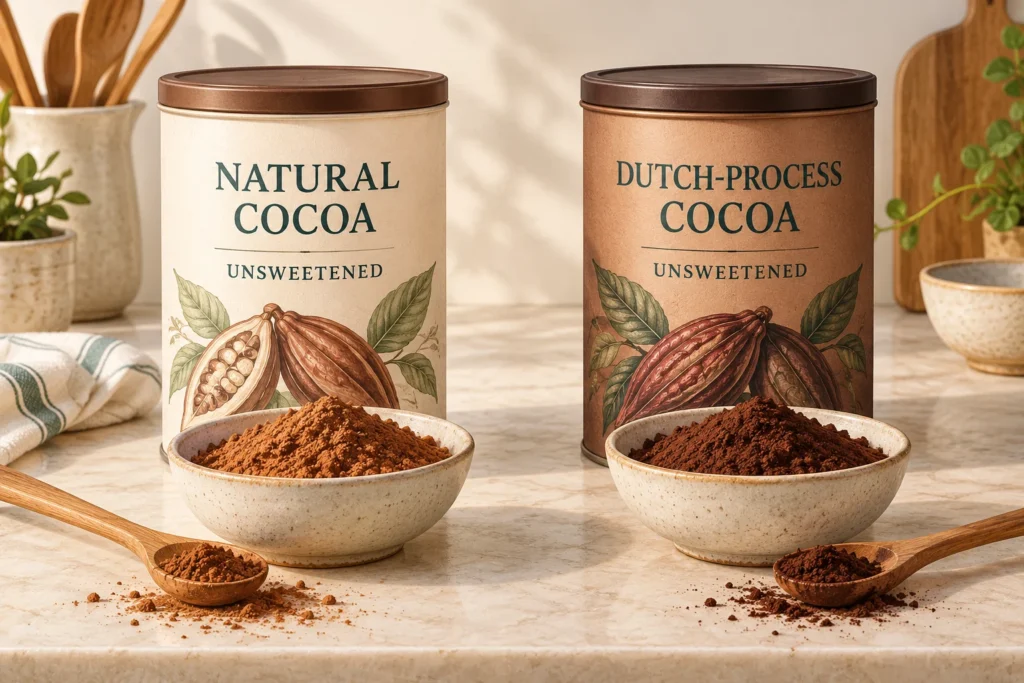
Natural and Dutch-process cocoa are different forms of cocoa powder, and either can be the right purchase for a particular recipe. Read the product description rather than judging by the darkest powder or the most dramatic cake photograph. Also check that you are buying the unsweetened ingredient your recipe requests.
Prefer
- A stated cocoa type and complete ingredient list
- Unsweetened wording when required by the recipe
- A pantry label that preserves the original product identity
Avoid / check more closely
- Assuming darker powder is always better
- Substituting drink mix without checking ingredients
- Treating every brownie or sauce recipe as identical
Processing, not a universal quality ranking
King Arthur’s cocoa guide explains that natural cocoa retains cocoa’s inherent acidity, while Dutch-process cocoa is alkalized to reduce it. That processing distinction helps explain why recipe instructions can name one type. It does not make one product universally better, healthier, or safer. Identify the stated type first; then decide whether it fits the specific job you have in mind.
Three details to find on the package
Look for the product’s cocoa type, its sweetening description, and the complete ingredient list. If the front says only cocoa, check the manufacturer’s fuller description rather than assigning a type from the powder’s appearance. If you still cannot identify it, choose a clearly described product for a recipe that names a type. Retain that description if you transfer powder into a pantry jar; a brown powder in an unmarked jar provides little useful shopping information.
Distinguish recipe cocoa from a hot-drink product
Compare the recipe’s request with the ingredient list of the item in your hand. A product sold as a chocolate drink mix may include ingredients beyond cocoa; do not assume its spoonfuls satisfy a request for unsweetened cocoa powder. This is a label-checking step, not a judgment that drink mixes are bad products. A mix can be appropriate for its own preparation directions while being the wrong purchase for the cake you planned.
When a recipe gives you a choice
King Arthur’s substitution article describes recipes that explicitly accept either natural or Dutch-process cocoa. Its broader cocoa guide identifies preparations without baking soda or baking powder, such as certain beverages and sauces, as opportunities to choose by preference. The result can still differ in flavor and appearance. Read your actual recipe: the word brownie, for example, does not tell you whether that particular formula uses a leavener.
A two-recipe shopping example
Imagine your list includes a cake that specifies natural unsweetened cocoa and a sauce that explicitly allows either type. Choose a clearly labeled natural powder if you want one purchase for both. Reverse the decision if your cake instead specifies Dutch-process and the sauce remains flexible. These are hypothetical planning examples, not tested recipes. If two recipes demand different types, buy the needed types or change the recipe plan instead of promising one bag will perform identically in both.
Keep a useful pantry record
Label a storage container with the exact product name and cocoa type, and keep the original preparation and storage information. Before buying another pack, check what is already available and which recipes you expect to make. A small note linking a product to its intended recipe is more informative than arranging powders from lightest to darkest. Do not use the illustration, color, or smell as evidence that a real packet is safe to use.
Common questions
Does Dutch-process mean sweetened?
No. Processing type and sweetening are separate details. Read the full product description and ingredients.
Can natural cocoa replace Dutch-process cocoa?
Sometimes. Follow the recipe’s explicit flexibility or its developer’s substitution advice; do not assume every formula accepts the same change.
References and scope
- King Arthur Baking: Types of Cocoa, Explained — processing and recipe applications
- King Arthur Baking: Dutch-process vs. Natural Cocoa — substitution guidance
Sources support the specific factual points attributed to them. Shopping scenarios and checklists are Fresh Decoded editorial suggestions; the sources do not endorse this article. Prepared October 9, 2026 with AI assistance. No product testing or medical review is claimed.