
Buy oats for the meal you plan to make. Rolled, quick, and steel-cut oats differ in physical form and preparation, so one packet is not automatically a substitute for another. Check the exact product and recipe before choosing a large bag.
Prefer
- The oat type named by your recipe
- Directions for the equipment and time you have
- Price comparisons using equivalent dry weights
Avoid / check more closely
- Treating all oat forms as identical baking ingredients
- Choosing a large pack before checking its method
- Guessing product contents from the illustration
Recognize the three forms
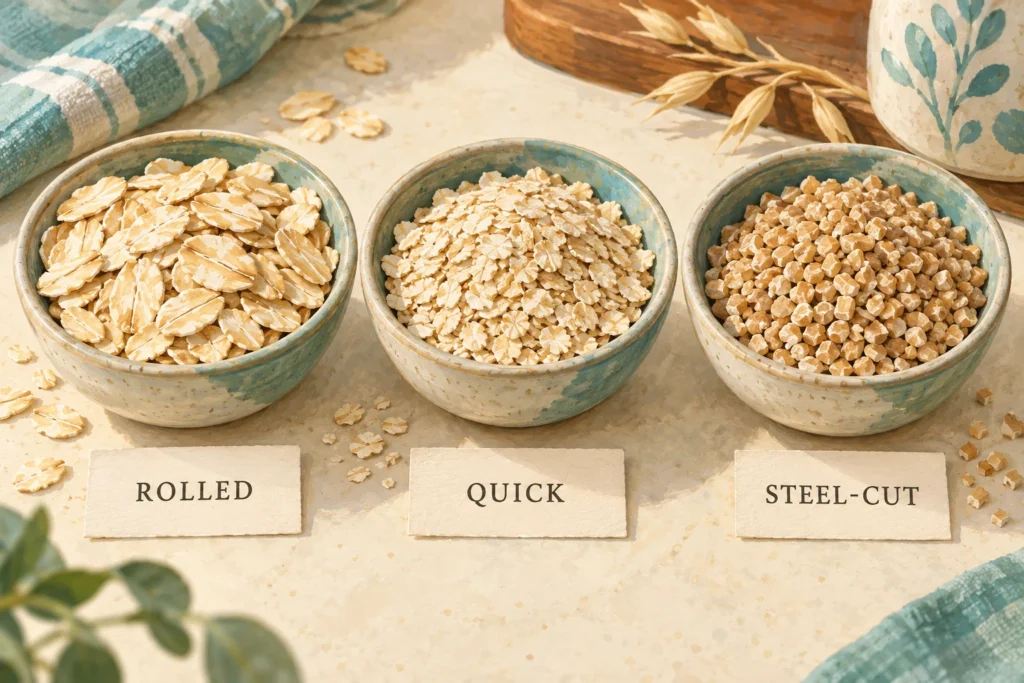
Quaker describes old-fashioned oats as flattened grains, quick oats as thinner grains with a smoother cooked texture, and steel-cut oats as chopped grains with a chewier texture. These are useful distinctions when shopping, not a ranking of which product is best. The drawing shows the general forms; read the label to identify the contents of your own packet.
Choose the preparation you can actually follow
Before buying, find the directions for your intended method: stovetop, microwave, or another preparation specified for that product. Check the time, liquid amount, serving quantity, and required equipment together. A short cooking time is not helpful if the only instructions provided are for equipment you do not have. Do not apply the directions from your old packet to a new variety.
For baking, let the recipe name the oats
Quaker recommends using steel-cut oats in recipes designed for them and notes texture differences between its quick and old-fashioned oats in baking. Its baking guidance does not recommend instant oatmeal for this use. Start with the type your recipe specifies. If substitutions are permitted, follow that recipe’s measurements and instructions rather than assuming every oat product can be exchanged cup for cup.
Separate oat form from extra ingredients
Read the full product description and ingredient list, particularly when comparing a plain bag with a flavored sachet or breakfast cup. The word quick describes a preparation category; it does not list everything inside a particular product. Decide whether you want to add your own flavorings or use a prepared mixture, then compare like products. For general grain-ingredient checks, see our separate whole-grain label guide.
Three practical shopping scenarios
For a rushed morning, look for a product with a preparation method you can complete within your available time. For a cookie recipe specifying old-fashioned oats, put that exact type on your list; a promotion on steel-cut oats is not a reason to change the recipe without instructions. For a breakfast recipe designed around steel-cut oats, buy that type and plan its method before the morning you want to serve it. These are planning examples, not results from kitchen testing.
Compare price using the same dry weight
Pack size can make the cheaper-looking container misleading. Suppose one plain oat bag costs $3 for 500 g and another costs $4 for 1,000 g. Their costs per 100 g are $0.60 and $0.40 respectively. Those are fictional numbers to demonstrate the arithmetic. First confirm that both products meet your intended use; paying less per gram for the wrong oat form does not solve the recipe problem.
Keep the directions with your oats
If you transfer suitable oats to a food-storage container, retain the original product details and preparation instructions. Label separate types clearly rather than repeatedly topping up one jar from whatever packet is available. Buy a manageable quantity while learning a new preparation. For damaged packaging, moisture, or signs of pantry insects, stop and investigate rather than using this grain-form comparison as a safety verdict.
Common questions
Are old-fashioned oats rolled oats?
Yes. Quaker’s old-fashioned oats are rolled flakes. Check the full product name when other terms or preparation claims appear.
Can I replace rolled oats with steel-cut oats in any cookie recipe?
Do not assume that swap will work. Use a recipe designed for steel-cut oats or specific substitution instructions.
Does this comparison identify a healthier type for everyone?
No. It addresses shopping and preparation. The complete product ingredients and your intended use still matter.
References and scope
- Quaker: The Difference Between Steel Cut, Old Fashioned, Quick Cook and Instant Oats
- Quaker: Baking Ingredients and Substitutions — oats section
Sources support the specific factual points attributed to them. Shopping scenarios and checklists are Fresh Decoded editorial suggestions; the sources do not endorse this article. Prepared October 9, 2026 with AI assistance. No product testing or medical review is claimed.