
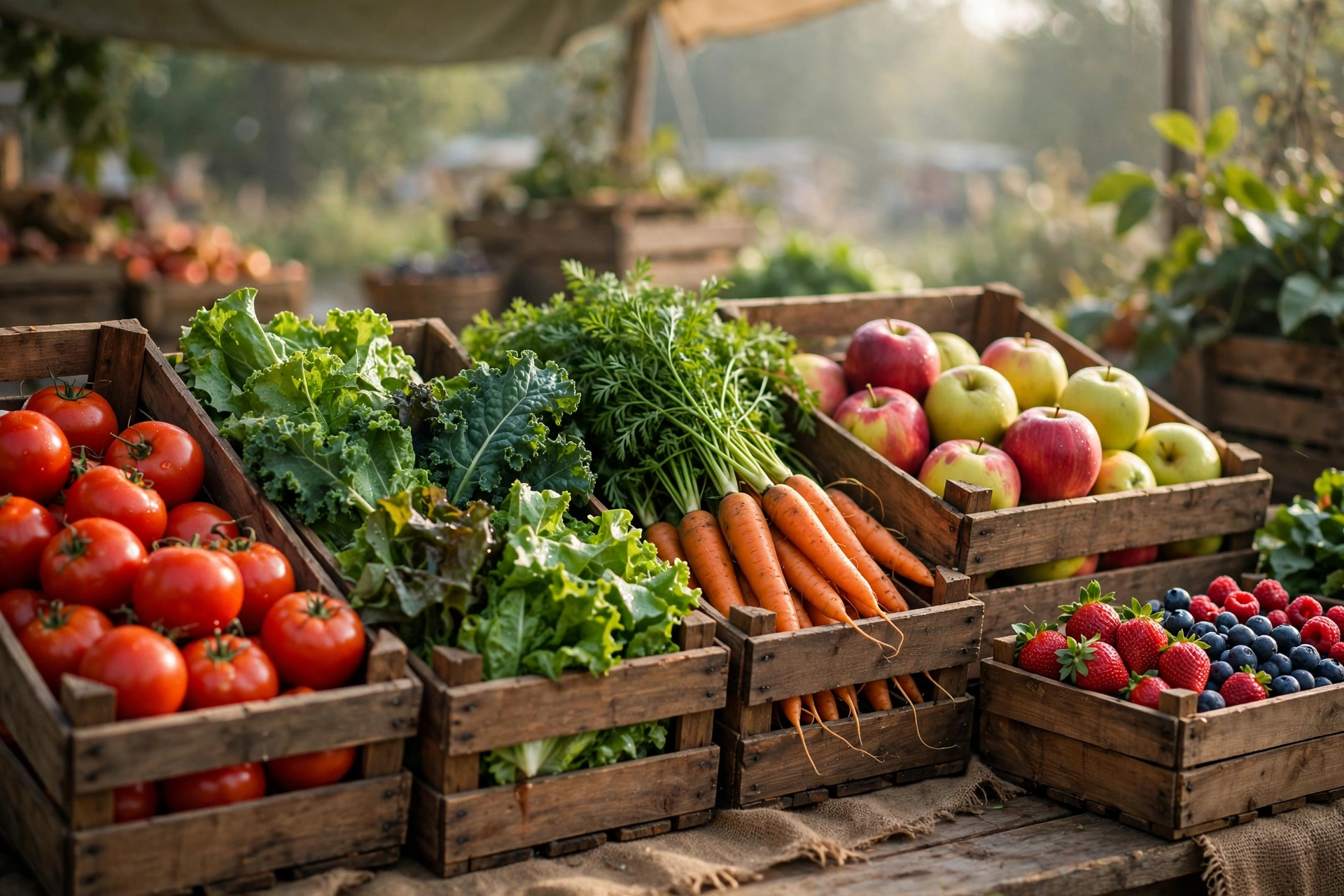
To shop seasonal produce well, start by learning what is in season where you live — fruits and vegetables bought at their natural peak tend to taste better and cost less. Farmers markets are the easiest classroom: whatever is piled high and priced to move is in season. Talk to the growers, taste samples when offered, and buy the abundant stuff rather than the flown-in exceptions. Avoid paying premium prices for out-of-season produce that traveled far and tastes like it.
Prefer
- Produce that is abundant and well-priced right now
- Farmers markets and farm stands for peak-season picks
- Asking vendors what was just picked
- Vibrant color, firm texture, and fresh smell
- Buying in realistic quantities you will actually use
Avoid / check more closely
- Premium prices on out-of-season imports
- Limp, dull, or wax-heavy produce past its prime
- Buying bulk perishables with no plan to use them
- Assuming “local” always means “in season”
- Ignoring frozen options for out-of-season cravings
How to find what’s in season
Seasonality varies by region, so a national chart is only a starting point — your local market tells the real story. Walk a farmers market and notice what every stall is selling: when ten vendors all have tomatoes, it is tomato season. Ask growers what is peaking this week and what is coming next; they love this question and their answers beat any app. Many cooperative extension services and state agriculture departments publish regional seasonality charts online — bookmark yours. Over a year of paying attention, you will build an instinct for the rhythm: asparagus and peas in spring, berries and stone fruit in summer, squash and apples in fall, citrus and roots in winter.
Seasonal buying tactics that save money
Abundance is your discount signal. When a crop peaks, supply surges and prices drop — that is the week to buy extra and preserve it: freeze berries, roast and freeze tomatoes, or pickle cucumbers. Compare the per-pound price of the seasonal star against the out-of-season alternative; the gap is often dramatic. Shop the “ugly” bin too — cosmetically imperfect seasonal produce tastes the same and costs less. And do not overlook frozen produce for out-of-season cravings: it is typically frozen at peak ripeness and can be the better-value, better-tasting choice in February than a fresh berry flown across the world.
Storing your seasonal haul
Seasonal produce is often sold riper than supermarket stock, so store it promptly. Refrigerate berries, greens, and anything cut; keep tomatoes, stone fruit, and avocados at room temperature until ripe, then refrigerate. Do not wash berries until just before eating — moisture speeds up mold. If you bought extra at peak season, freeze it properly: spread berries on a tray to freeze individually before bagging, and blanch vegetables briefly before freezing to protect color and texture.
Common questions
Is seasonal produce more nutritious?
Produce picked ripe and eaten soon after harvest may retain more of certain nutrients than produce picked early and shipped far, but the differences vary by crop. Eating plenty of vegetables and fruit matters far more than perfect seasonality.
Is frozen produce as good as fresh out-of-season?
Often yes — sometimes better. Frozen produce is usually processed at peak ripeness, while out-of-season “fresh” produce may have traveled for days or weeks. For cooking, frozen is frequently the smarter pick.
Where can I find a seasonality chart for my area?
Check your state agriculture department or local cooperative extension website — many publish free regional charts. Farmers market vendors are also excellent living guides.
References
U.S. Food and Drug Administration — Selecting and Serving Produce Safely. Reference for produce selection, handling, and visible damage.
Prepared October 12, 2026 with AI assistance. Cited sources do not endorse the entire article.