
To choose good dried pasta, read the ingredient list — classic quality pasta lists just durum wheat semolina and sometimes water. Look for pasta with a rough, matte surface (often labeled “bronze-cut”), which grips sauce far better than shiny, smooth pasta. Match the shape to your sauce: ridges and tubes catch chunky sauces, while long strands suit smooth, oily ones.
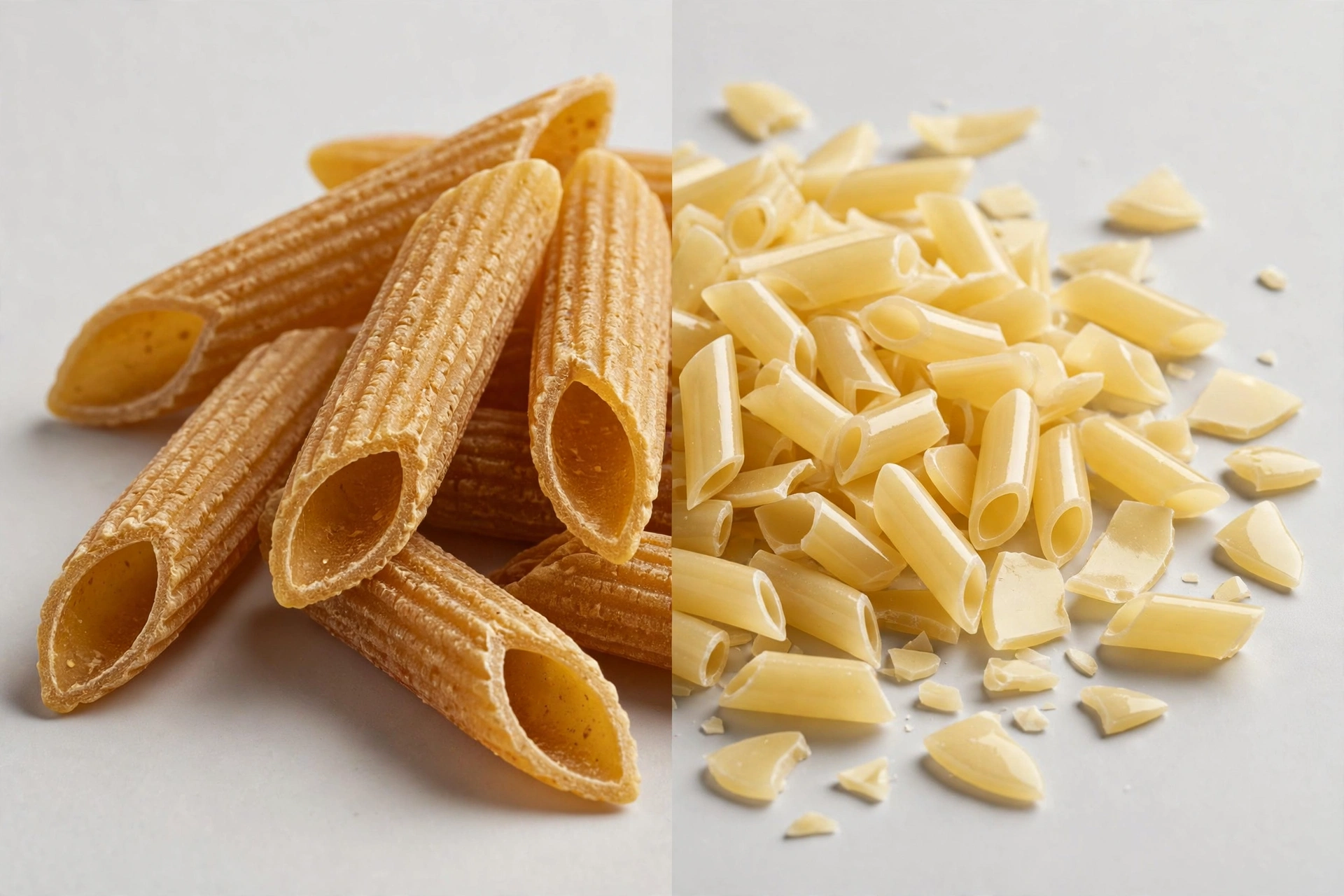
Prefer
- Simple ingredients: durum wheat semolina (and water)
- Bronze-cut or rough-textured pasta for better sauce grip
- Even color with no white spots or cracks
- Shapes matched to your sauce style
- Clear labeling of wheat type and origin
Avoid / check more closely
- Very pale, shiny, slippery-looking pasta (often Teflon-die)
- Cracked or broken pieces filling the bottom of the box
- Vague ingredient lists with unidentified flours
- Dusty old boxes or damaged packaging
- Stale or musty smells when opened
Ingredients and the bronze-cut difference
Traditional dried pasta is beautifully simple: durum wheat semolina, a hard wheat high in protein that gives pasta its bite and golden color. That is the benchmark — long ingredient lists with fillers are a step down. The other quality marker is how the pasta was shaped. Bronze dies leave a rough, porous, matte surface that sauce clings to; cheaper Teflon dies produce shiny, slippery pasta that sauce slides off. You can see and feel the difference: hold a piece up — matte and slightly rough wins. “Bronze-cut” or “trafilata al bronzo” on the label is worth seeking out.
Match the shape to the sauce
Shape is not just decoration — it is engineering. Tubes and ridged shapes (penne, rigatoni, fusilli) trap chunky, hearty sauces in their hollows and grooves. Long strands (spaghetti, linguine, fettuccine) suit smooth, oily, or light cream sauces that coat evenly. Small shapes (orzo, ditalini) belong in soups. Delicate filled pastas need gentle handling and simple sauces. Buying with the sauce in mind is the fastest upgrade to your pasta dinners, and it costs nothing extra.
Fresh vs dried, and storing pasta
Dried pasta is the pantry workhorse: stored in a cool, dry place, it keeps for a year or more past its best-by date, though flavor is best within that window. Fresh refrigerated pasta cooks in minutes but lasts only days and costs more. Whole-grain and legume pastas offer different nutrition profiles — check the protein and fiber on the label if that matters to you, and note they cook faster and can turn mushy if overdone. Keep all dried pasta sealed against pantry moths; a glass jar or sealed container beats an open box.
A simple pasta-shopping checklist
Before you buy, check three things: ingredients (durum semolina?), texture (rough and matte?), and shape (right for your sauce?). Bronze-cut pasta from a reputable maker is the single easiest quality upgrade. These label habits take seconds and improve every plate.
Common questions
Does bronze-cut pasta really matter?
Yes, noticeably. The rough surface grips sauce instead of letting it pool at the bottom of the bowl — the difference is visible on the plate and tangible in the bite.
How long does dried pasta last?
Stored cool and dry in sealed packaging, dried pasta stays good for a year or more beyond its best-by date. Discard it if it smells musty or shows pantry pests.
Is fresh pasta better than dried?
Different, not better. Fresh pasta is tender and cooks fast — lovely with delicate sauces. Dried pasta has more bite and a longer, cheaper pantry life. Use each where it shines.
References
U.S. Food and Drug Administration — Food Labeling & Nutrition. Reference for how food labels and ingredient lists work. Pasta quality guidance reflects established food practice.
Prepared October 10, 2026 with AI assistance. Cited sources do not endorse the entire article.