
To choose good olive oil, look for a harvest date (not just a best-by date) within the last 12 to 18 months, sold in a dark glass bottle that protects the oil from light. “Extra virgin” means the oil was mechanically pressed without heat or chemicals — the highest grade. Skip clear plastic bottles and dusty old stock: light, heat, and age are what turn olive oil rancid.
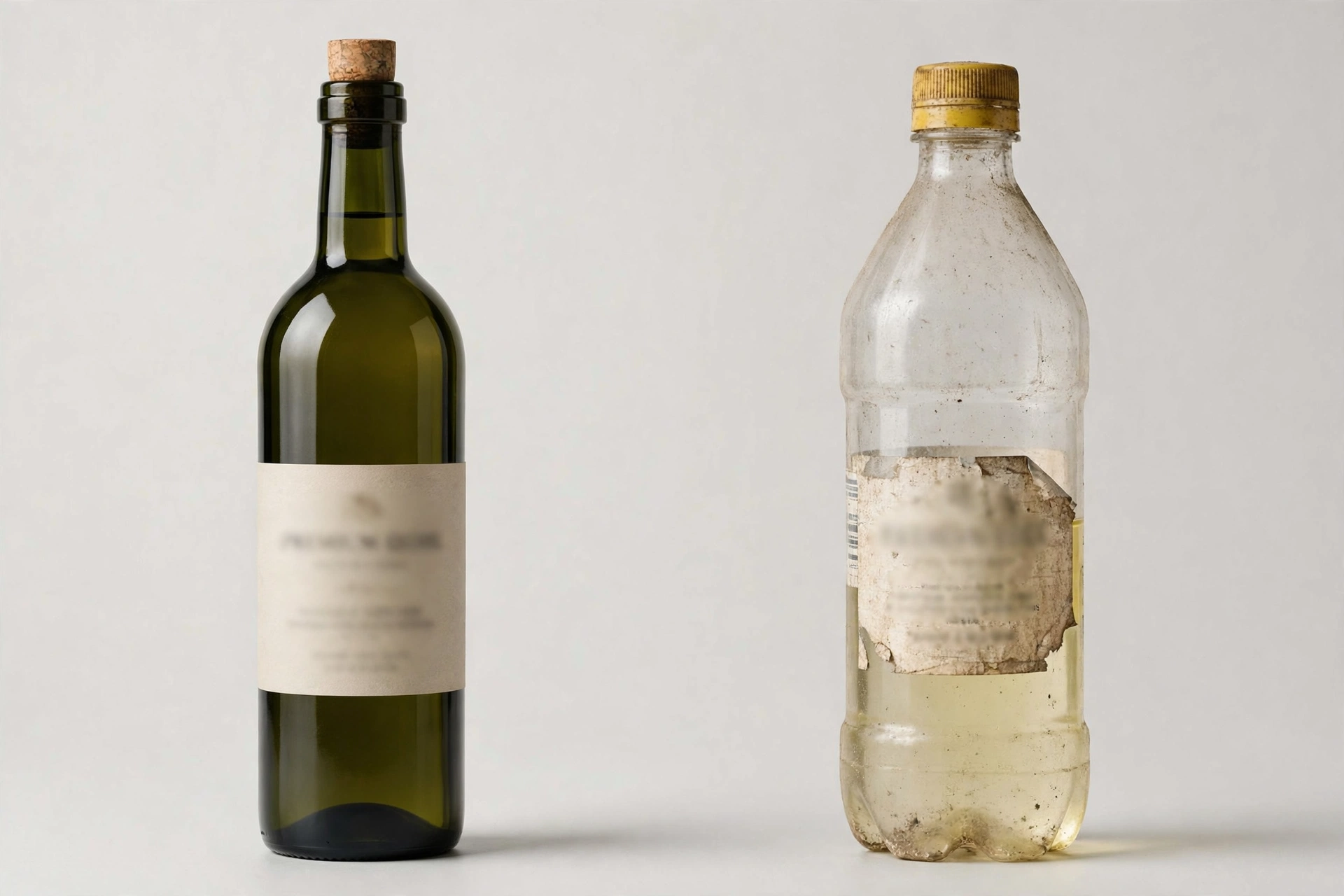
Prefer
- A harvest date (or “pressed on” date) within the last year or so
- Dark green or amber glass bottles that block light
- “Extra virgin” on the label for the least-processed grade
- Specific origin details (estate, region, or single varietal)
- Smaller bottles if you use oil slowly — fresher turnover
Avoid / check more closely
- No harvest or best-by date anywhere on the label
- Clear glass or plastic bottles sitting under bright store lights
- Dusty bottles or stock that looks like it has sat for years
- Vague terms like “light” or “pure” without extra virgin grading
- Suspiciously cheap “extra virgin” oil in large clear jugs
Harvest date beats best-by date
Olive oil does not improve with age — it is freshest within about a year of harvest, and most experts suggest using it within 12 to 18 months of the harvest date. That is why the harvest (or “pressed on”) date matters more than the best-by date, which manufacturers can set generously. If a bottle shows only a best-by date two years out and no harvest date, you cannot tell whether the oil is three months or three years old. Bottles that name an estate, region, or olive varietal tend to come from producers who track freshness carefully — a good sign, though not a guarantee.
What “extra virgin” actually means
“Extra virgin” is the top grade: oil extracted purely by mechanical pressing, without heat or chemical refining, and meeting strict standards for acidity and flavor. “Virgin” is a step down, while terms like “pure,” “light,” or simply “olive oil” usually mean refined oil — processed with heat or chemicals and milder in flavor. “Light” refers to flavor and color, not calories. None of these grades is unsafe; they are about processing and taste. For dressings and finishing, extra virgin’s flavor shines; for high-heat searing, a refined olive oil’s higher smoke point can be the practical pick.
Spotting rancid oil and storing it right
Rancid olive oil smells like crayons, putty, or old peanuts, and tastes flat or greasy rather than fresh and peppery. At home, store oil in a cool, dark cupboard — never next to the stove, where heat and steam age it fast. Contrary to a common habit, the refrigerator is not ideal for daily use (the oil clouds and thickens, though it clears at room temperature). Buy sizes you will finish within a couple of months of opening, keep the cap tightly closed, and remember that a dark bottle is doing real work protecting your oil every day it sits on the shelf.
A simple olive-oil-shopping checklist
Before you buy, check four things: date (harvest within the last year?), bottle (dark glass?), grade (extra virgin for flavor?), and turnover (does the store move stock, or is the bottle dusty?). Match the grade to your cooking — everyday extra virgin for most uses, refined for high heat. These label habits take seconds and pay off every time you cook.
Common questions
Does the color of olive oil matter?
Not for quality. Color ranges from pale gold to deep green depending on olive variety and ripeness, and professional tasters actually use colored glasses so color does not bias them. Judge by harvest date and taste, not hue.
Should I refrigerate olive oil?
For daily use, a cool dark cupboard is better — refrigeration makes the oil cloudy and thick (harmless, and it clears when warmed). Only refrigerate if you must store it for very long periods, and expect the texture change.
How long does olive oil last once opened?
Try to finish an opened bottle within one to two months for the best flavor. Unopened, it keeps reasonably until its best-by date if stored cool and dark — but fresher is always better.
References
U.S. Food and Drug Administration — Food Labeling & Nutrition. Reference for how food labels work. Grading and freshness guidance reflects industry standards and established food-science practice.
Prepared October 9, 2026 with AI assistance. Cited sources do not endorse the entire article.