
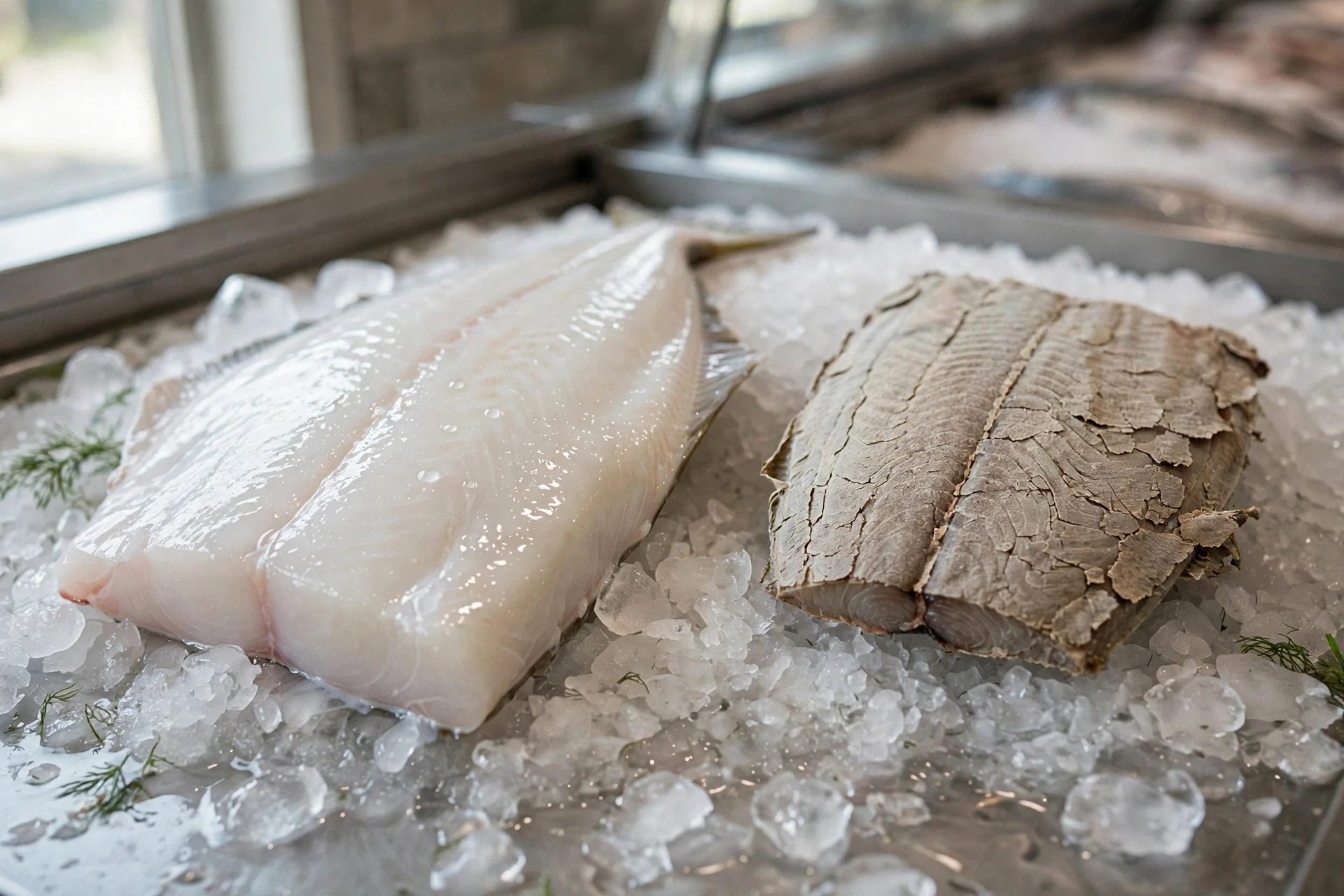
To choose good halibut, look for bright, glossy white flesh that looks moist and slightly translucent, with a clean, mild smell. The fillet should feel firm and spring back when pressed, with tight flakes and no gaping seams. Avoid pieces that look dull, yellowed, dry at the edges, or that smell sour or strongly fishy.
Prefer
- Bright white, glossy flesh with a moist surface
- Firm texture that springs back when pressed
- Tight, intact flakes with no gaping
- Mild, clean smell with no sour notes
- Evenly cut fillets or steaks of similar thickness
Avoid / check more closely
- Dull, grayish, or yellowed flesh
- Dry, chalky, or cracked edges
- Soft flesh that leaves a fingerprint
- Strong fishy or ammonia-like odor
- Excess liquid pooling in the package
What good halibut looks and feels like
Halibut is a lean, white-fleshed flatfish prized for its mild flavor and firm, flaky texture. A fresh fillet should look almost luminous — white to slightly ivory, moist, and smooth, rather than matte and dry. Run your eye along the cut surface: the flakes should sit tightly together. Gaping, where the flesh separates into loose layers, often means rough handling or older fish, and it can make the fillet fall apart in the pan. These same checks apply to many white fish, and our guide to how to choose cod covers very similar firmness and color cues if you are comparing the two at the counter.
Fillets, steaks, and portion size
Halibut is sold as skinless fillets, skin-on portions, and bone-in steaks. Fillets are the most versatile for pan-searing and roasting, while steaks hold together well on the grill. Halibut dries out more easily than fattier fish because it is so lean, so thicker pieces — around an inch or more — are generally more forgiving to cook. Try to pick portions of similar thickness so they finish at the same time. If you enjoy richer fish as well, comparing halibut with the advice in our guide to how to choose salmon is a helpful way to see how fat content changes what “fresh” looks like from one species to another.
Fresh versus frozen halibut
Because halibut is often caught far from where it is sold, frozen-at-sea halibut can be an excellent choice and is sometimes in better condition than a “fresh” fillet that has traveled for days. A good frozen fillet should be solid, well-wrapped, and free of white, dried patches of freezer burn or heavy ice crystals. Thaw it slowly in the refrigerator overnight and pat it dry before cooking. Our overview of fresh vs. frozen fish explains why the frozen option is not automatically second best. At home, keep halibut refrigerated and cook it within a day or two of purchase for the best texture.
Price, season, and labels
Halibut is usually one of the pricier white fish, so it pays to read the label carefully. Look for the catch area, whether the fish is wild-caught, and whether it was previously frozen — reputable counters disclose this. Prices tend to soften during the main fishing season and rise in winter, so buying and freezing portions in season can be a sensible strategy if you eat halibut often. Whatever the season, let freshness cues come first: a bargain fillet that smells off or feels soft is not a bargain at all.
Common questions
Why is halibut so expensive?
Halibut grows slowly, is caught in relatively limited quantities, and yields large, meaty fillets with little waste. Those factors, plus transport from northern waters, keep prices higher than many other white fish.
Should halibut smell fishy?
No. Fresh halibut smells mild and clean, almost neutral. A strong fishy or sour smell suggests the fish is past its best, so choose a different piece.
Is frozen halibut as good as fresh?
It can be. Halibut frozen quickly after catch and kept at a steady temperature often cooks up firm and moist. Avoid packages with freezer burn or lots of loose ice, which hint at temperature abuse.
References
U.S. Food and Drug Administration — Selecting and Serving Fresh and Frozen Seafood Safely. Reference for seafood selection, handling, and storage.
Prepared October 21, 2026 with AI assistance. Cited sources do not endorse the entire article.