
To choose fresh cod, look for fillets that are firm, moist, and slightly translucent with a clean white to ivory color. They should smell mildly of the ocean — fresh cod has almost no “fishy” odor. The flesh should spring back when pressed and show no gaps or separation in the flakes. Avoid fillets that look dull, feel mushy, have brown or yellow edges, or smell strongly. If buying whole fish, the eyes should be clear and bulging, not cloudy or sunken.
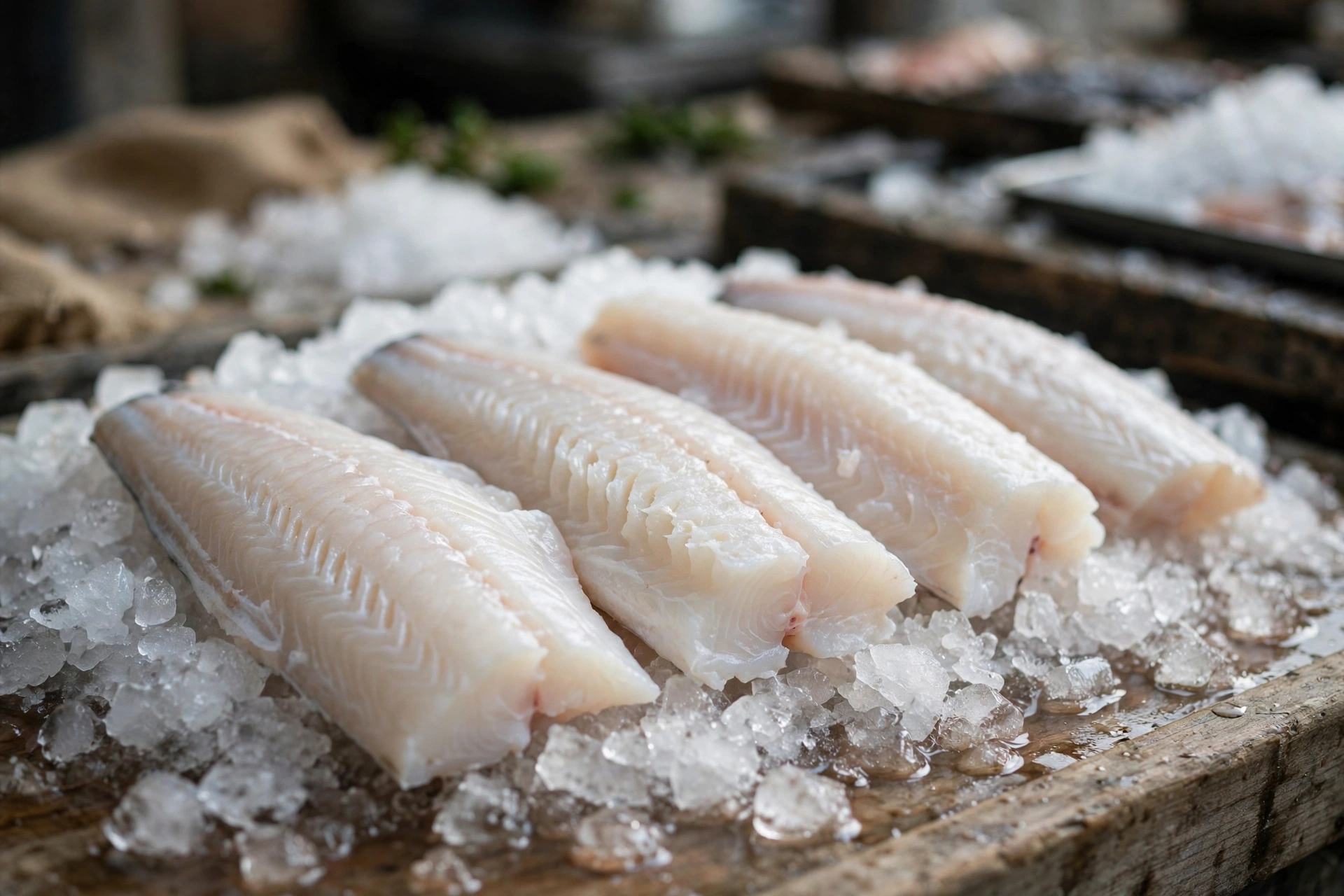
Prefer
- Firm flesh that springs back when pressed
- Slightly translucent, moist appearance
- Clean white to ivory color
- Mild, ocean-like smell
- Clear, bulging eyes on whole fish
Avoid / check more closely
- Mushy texture that holds a fingerprint
- Dull, opaque, or dried-out surface
- Brown or yellow discoloration at edges
- Strong fishy or sour smell
- Cloudy, sunken eyes on whole fish
The press test
Fresh cod fillet feels firm and resilient. Press it gently with a fingertip — the flesh should bounce back quickly. If the indentation lingers or the flesh feels soft and separates easily, the fish is losing freshness. Look at the flake structure: fresh cod shows tight, defined flakes. Gaping — visible separations between the muscle layers — develops as fish ages, so tightly closed flakes are a good sign. The surface should glisten with natural moisture, not look dry or, conversely, sit in a pool of liquid.
Color and smell
Cod should be white to slightly ivory. Pinkish or reddish tints near the bloodline are normal, but brown or yellow patches, especially along the edges, suggest oxidation and age. Smell is decisive: fresh cod smells clean and faintly briny, like seawater. A pronounced “fishy” odor, sourness, or any ammonia note means it should stay in the case. Because cod is a mild-flavored fish, off odors show up clearly — trust your nose over the sell-by date when they disagree.
Atlantic vs. Pacific cod and sustainability
Most cod sold is Atlantic cod; Pacific cod is similar but often considered the more sustainable choice depending on the fishery. Look for sustainability certifications or ask about the source — responsibly managed stocks taste no different but support healthier oceans. Previously frozen cod can be excellent: fish frozen quickly at sea is often fresher than “fresh” fish that has traveled for days. If buying frozen, choose fillets that are solidly frozen with no ice crystals inside the packaging, which suggest thawing and refreezing.
Storing cod at home
Cod is lean and perishable — plan to cook it within one to two days of purchase. Store it in the coldest part of the refrigerator, ideally on ice in a perforated container that lets meltwater drain away. Do not leave it sitting in liquid. For longer storage, freeze fillets individually wrapped airtight for up to six months; thaw overnight in the fridge. Because cod is so lean, it dries out quickly in cooking — gentle methods and careful timing keep it moist.
Common questions
Why is my cod mushy after cooking?
Mushiness usually comes from age rather than cooking: older fillets have weakened protein structure. It can also result from thawing too quickly or cooking from frozen without adjusting. Starting with firm, fresh fillets is the main fix.
Is previously frozen cod as good as fresh?
Often yes, and sometimes better. Fish frozen rapidly right after catch preserves quality well, while “fresh” fish may be several days old by the time it reaches the case. Judge by firmness and smell, not by the fresh-vs-frozen label alone.
What are those small worms sometimes found in cod?
Cod can naturally carry harmless parasites that proper cooking destroys. This is one reason to cook cod thoroughly and to buy from reputable sources. It is not a sign the fish was mishandled.
References
U.S. Food and Drug Administration — Selecting and Serving Seafood Safely. Reference for selecting and handling seafood safely.
Prepared October 13, 2026 with AI assistance. Cited sources do not endorse the entire article.