
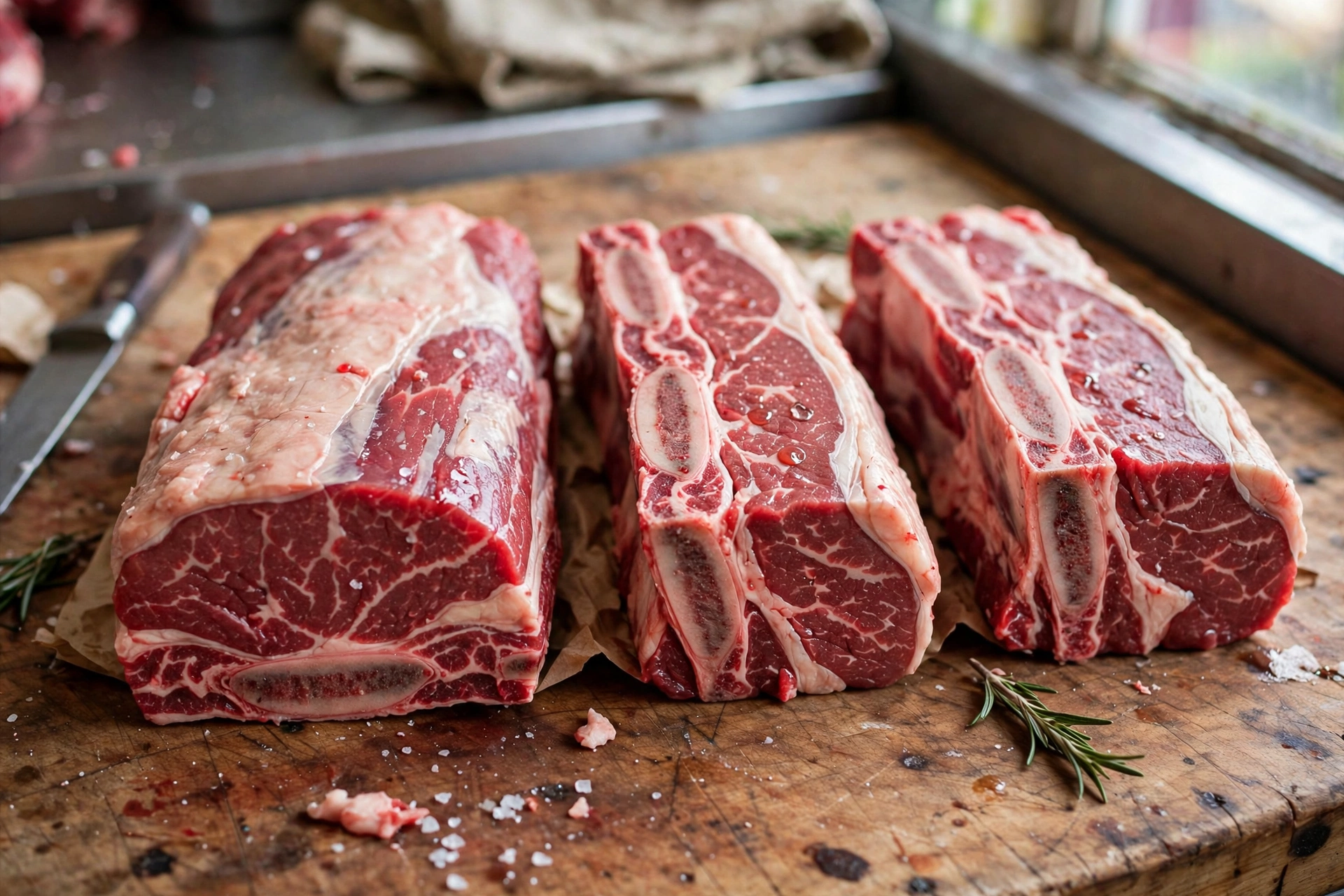
With short ribs, you are paying by weight — so make meat-to-bone ratio your first check. Look for a thick layer of meat over the bone, good marbling running through it, and a bright red color. The meat should feel firm and the surface should look moist, not dried out. Decide between English-cut (thick, bone-in chunks) and flanken-cut (thin cross-cut strips) based on your recipe. Avoid ribs that are mostly bone, look gray, or smell off.
Prefer
- A thick, generous layer of meat over each bone
- Visible marbling running through the meat
- Bright red color
- Firm texture that springs back when pressed
- Evenly cut pieces, sized for your recipe
- Tight packaging with minimal excess liquid
Avoid / check more closely
- Ribs that are mostly bone with a thin meat layer
- Gray, brown, or dull color
- Dry or darkened surface patches
- Mushy texture or sour, off smells
- Excessive liquid pooling in the package
- Uneven, ragged cuts with exposed bone shards
Meat first, bone second
Because short ribs are sold by weight and bone is heavy, the meat-to-bone ratio directly affects value. Pick up the package and look at the cut faces: you want a deep, thick cap of meat over the bone, not a thin strip clinging to a big bone. Good short ribs show marbling — white flecks and seams of fat through the red meat — which melts during long cooking and keeps the meat succulent. The color should be a fresh, bright red; some surface browning from air is normal, but gray meat or a slimy surface is not. Press gently through the packaging: the meat should feel firm and resilient, never soft or mushy.
English cut vs. flanken cut
The two common cuts cook very differently, so buy the right one for your plan. English-cut short ribs are cut parallel to the bone into thick, meaty chunks — typically 2 to 3 inches thick with one bone section each. They are the classic choice for braising, slow roasting, and smoking, where long, gentle heat breaks down connective tissue. Flanken-cut ribs are sliced thin across the bones (usually 1/2 inch or less), giving strips with several small bone cross-sections — the cut used for Korean-style kalbi and other quick grilling. Do not substitute one for the other: thin flanken strips will dry out in a braise, and thick English chunks will not cook through on a hot grill in the time you would give kalbi.
Storing short ribs at home
Refrigerate short ribs promptly at 40°F (4°C) or below and plan to cook them within 3 to 5 days. Keep them in their original sealed packaging or rewrap tightly to limit air exposure. For longer storage, freeze with as much air pressed out as possible — they generally keep good quality for several months. Thaw in the refrigerator, never on the counter. Short ribs are a slow-cooking cut; when braising or smoking, use a food thermometer to confirm safe temperatures rather than relying on time or appearance alone.
Common questions
What is the difference between English and flanken cut?
English cut is sliced parallel to the bone into thick chunks for braising and slow cooking; flanken cut is sliced thin across the bones for fast grilling. Buy the cut that matches your cooking method.
How many short ribs do I need per person?
For English-cut ribs, plan on about 3/4 to 1 pound per person, since the bone accounts for much of the weight. For flanken-style grilling, 1/2 to 3/4 pound per person is usually plenty.
Why are they called “short” ribs?
They come from the short plate and chuck area of the animal — a shorter section of rib compared to the long back ribs. The name refers to the cut’s origin, not the size of the meat.
References
U.S. Department of Agriculture — Cooking Meat: Is It Done Yet?. Reference for safe minimum internal temperatures and food thermometer use for meat.
Prepared October 12, 2026 with AI assistance. Cited sources do not endorse the entire article.