
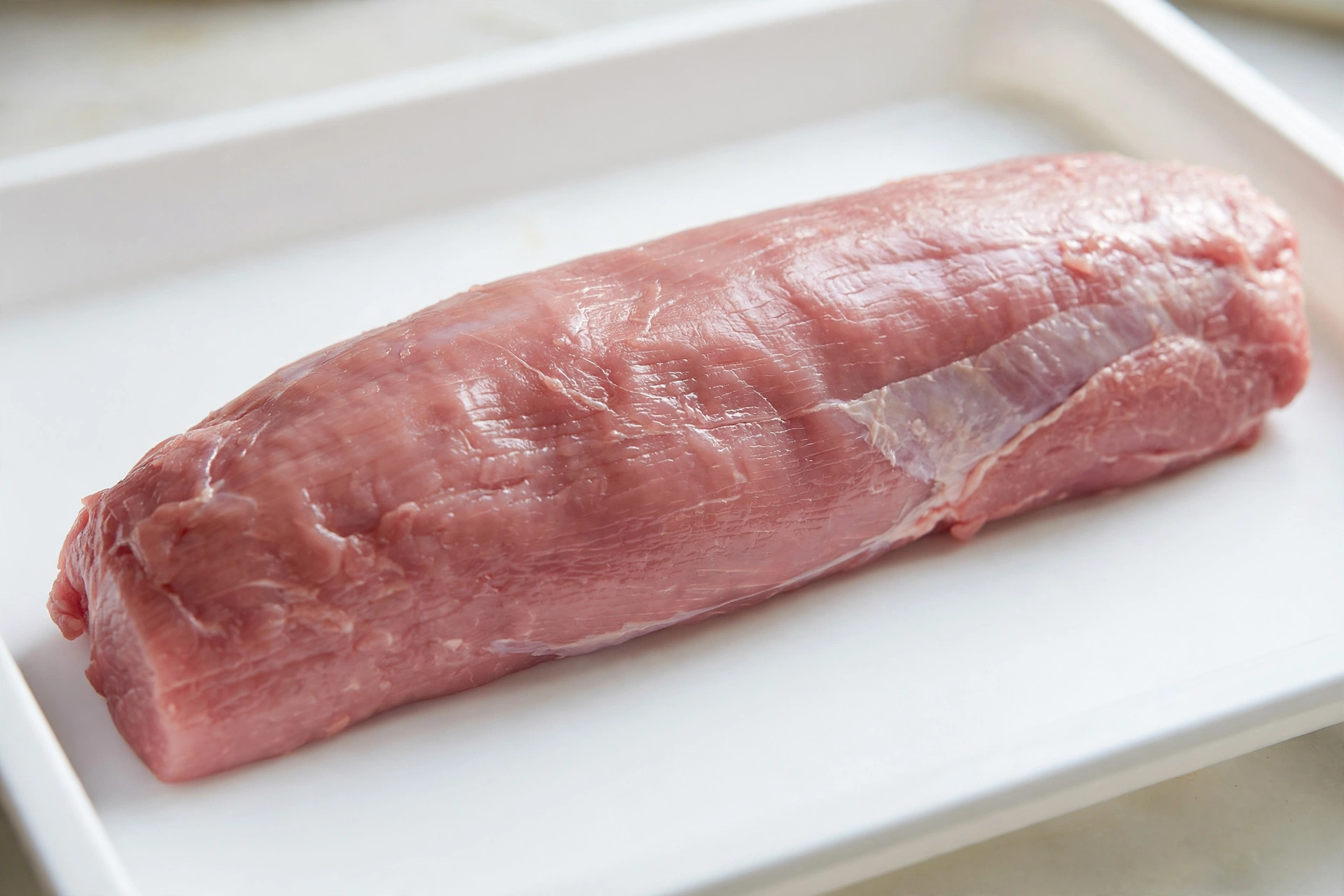
To choose a good pork tenderloin, look for a cut that is pinkish-red with a slight sheen, firm to the touch, and uniform in shape without a thin tapered tail. The surface should look moist but not wet, and the package should have little excess liquid. Avoid tenderloins that look pale gray, feel soft or mushy, or sit in a pool of juice. A fresh tenderloin smells mild and clean — any sour or off odor is a reason to pass.
Prefer
- Pinkish-red color with a fresh sheen
- Firm texture that springs back when pressed
- Uniform, plump shape without a thin tail
- Minimal liquid in the package
- Mild, clean smell
Avoid / check more closely
- Pale gray or washed-out color
- Soft, mushy, or denting texture
- Large pool of liquid in the tray
- Sour or unpleasant odor
- Torn or puffy packaging
Color and firmness first
Fresh pork tenderloin should be a healthy pinkish-red — noticeably darker than pork chops, which is normal for this muscle. Very pale pork can indicate a condition that makes the meat soft and watery when cooked, so richer color is generally the better bet. Press the meat through the packaging: it should feel firm and bounce back. If your finger leaves a lasting dent or the meat feels spongy, choose another one. The surface may have a thin silvery membrane called silver skin; butchers often leave it on, and you will trim it at home — it is not a quality flaw.
Shape and size
Tenderloins are naturally tapered, but the best ones are plump and relatively even, without an extremely thin tail that will dry out in the oven. A typical tenderloin weighs around one pound; much smaller ones can be from younger animals and cook very quickly, while oversized ones may actually be a different cut mislabeled. If a recipe calls for one tenderloin and yours is much larger or smaller, adjust cooking time rather than assuming it will behave the same. Two similarly sized tenderloins in one pack are convenient for even cooking.
Enhanced vs. natural pork
Check the label for words like “enhanced” or “contains up to X% solution” — this means the pork was injected with a saltwater solution to add moisture. Enhanced tenderloin can taste saltier and release more liquid in the pan, so reduce added salt accordingly. Neither type is unsafe, but knowing which you bought helps you season correctly. If you prefer to control seasoning yourself, look for labels that say “minimally processed” or “no solution added.”
Storing pork tenderloin at home
Refrigerate pork tenderloin as soon as you get home and cook it within one to two days, or freeze it for up to six months wrapped airtight. Thaw frozen tenderloin in the refrigerator overnight. Trim the silver skin before cooking — slide a thin knife under it and peel it away, since it does not break down with heat and turns chewy. Cook to a safe internal temperature and let the meat rest a few minutes before slicing so the juices redistribute.
Common questions
Is pork tenderloin the same as pork loin?
No. Tenderloin is the small, slender muscle along the backbone — very lean and tender. Pork loin is a much larger, wider cut that roasts well but is less tender. They are not interchangeable in recipes without adjusting cooking time.
Why is my tenderloin leaking so much liquid?
Some juice in the package is normal, but a large pool often means the pork is “enhanced” with added solution, or was previously frozen. Pat the meat dry before searing so it browns instead of steaming.
What is the silver skin and must I remove it?
Silver skin is a thin, shiny membrane of connective tissue on the tenderloin. It does not soften during cooking and can make the meat curl, so trimming it off gives a better texture. It peels away easily with a sharp thin knife.
References
USDA Food Safety and Inspection Service — Meat: Safe Food Handling. Reference for selecting and handling fresh meat safely.
Prepared October 13, 2026 with AI assistance. Cited sources do not endorse the entire article.