
Juicy pork chops start with color: look for a pinkish-red hue, not pale or gray. A little marbling — fine flecks of fat through the meat — helps keep chops moist during cooking. Choose chops at least 1 inch thick; thin chops overcook in moments. The surface should look moist but not wet, the meat should feel firm, and the package should have little excess liquid. Bone-in chops are often more forgiving than boneless.
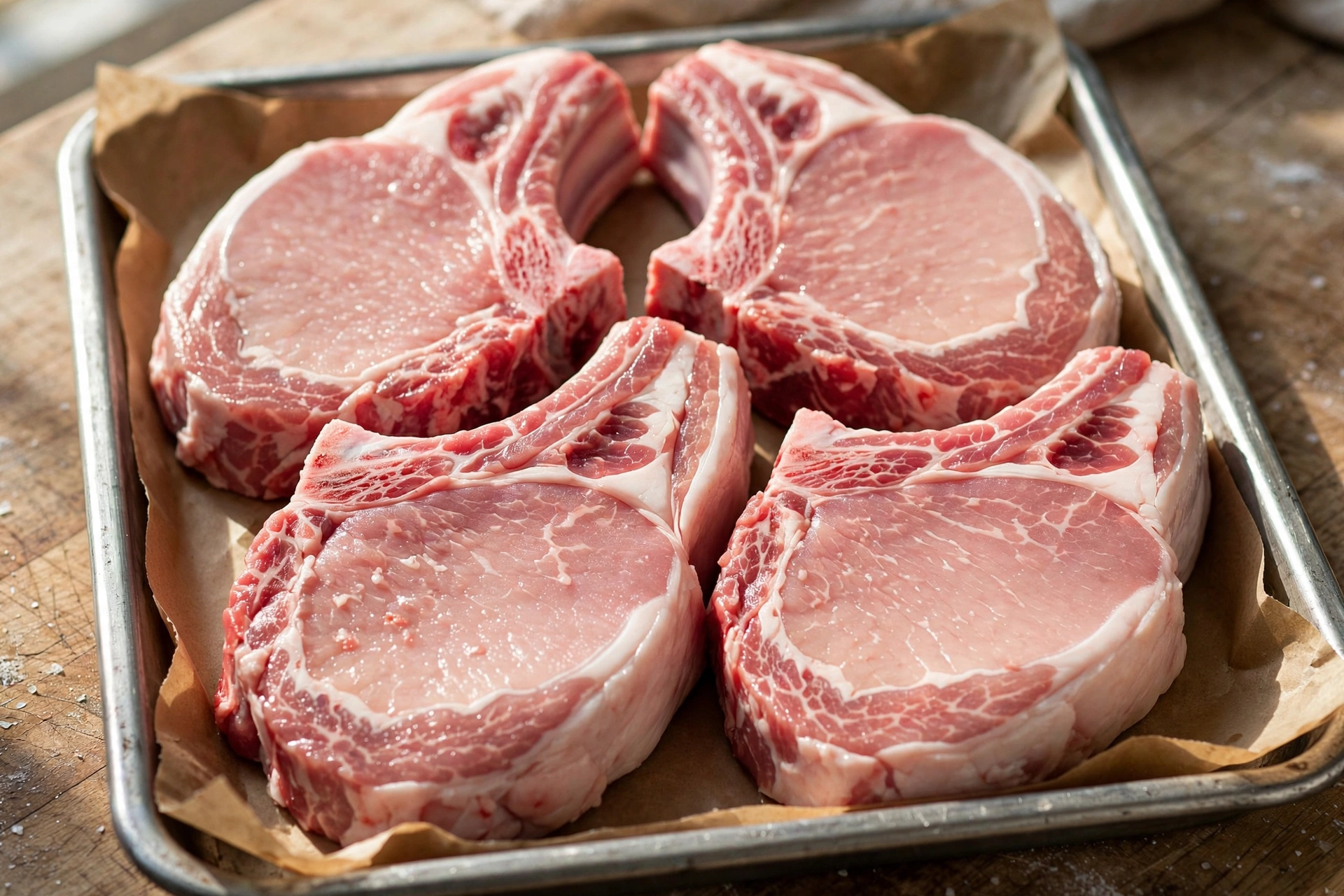
Prefer
- Pinkish-red color, not pale or gray
- Light, even marbling through the meat
- At least 1 inch thick (thicker is more forgiving)
- Firm texture that springs back when pressed
- A moist — not wet or slimy — surface
- Tight, intact packaging with minimal liquid
Avoid / check more closely
- Pale, gray, or greenish color
- Dry, darkened edges
- Thin chops under 3/4 inch for grilling or searing
- Mushy texture or sour, off smells
- Excessive milky liquid pooling in the package
- Torn or leaking packaging
Color is your first clue
Pork color tells you a lot about how it was handled. Healthy, well-rested pork is pinkish-red; meat that looks washed-out pale may have lost moisture and can cook up dry and bland. Gray or green tones are a clear pass. That said, some surface darkening from air exposure is normal and harmless — what matters is the overall tone of the meat, not a slightly darker edge. Marbling matters more than most shoppers realize: those small white flecks melt during cooking and keep the chop juicy. Modern pork is bred lean, so a chop with visible marbling is worth picking out of the case. Also glance at the fat around the edges — it should look white and firm, not yellow or soft.
Thickness and cut choice
Thickness is the difference between a juicy chop and a dry one. At 1 to 1.5 inches, a chop can develop a good sear while staying moist inside; thin chops blast past done before any crust forms. If you only find thin chops, plan a fast, hot method and watch them closely. As for cuts: rib chops (from the rib section) are tender and mild; loin chops are lean and classic; shoulder or “blade” chops are fattier and more forgiving, great for braising. Bone-in chops generally stay juicier and the bone adds flavor, while boneless chops cook faster and are easier to eat — choose based on your recipe, but when in doubt, bone-in is the safer pick for grilling.
Storing pork chops at home
Refrigerate pork chops promptly at 40°F (4°C) or below and use them within 3 to 5 days. Keep them in their original sealed packaging or rewrap tightly to limit air exposure. For longer storage, freeze with as much air pressed out as possible; they generally keep good quality for several months. Thaw in the refrigerator, never on the counter, and do not refreeze thawed raw pork without cooking it first. When cooking, the USDA recommends 145°F with a 3-minute rest for pork chops — use a food thermometer rather than judging by color, since pork can stay pink even when fully cooked.
Common questions
Why do my pork chops always turn out dry?
The usual culprits are thin chops and overcooking. Choose chops at least 1 inch thick, look for some marbling, and use a thermometer to pull them at 145°F with a rest — carryover heat finishes the job.
Bone-in or boneless pork chops?
Bone-in chops tend to stay juicier and offer a bit more flavor, making them the better choice for grilling and roasting. Boneless chops are convenient and cook faster, which suits quick weeknight methods.
What color should raw pork be?
A pinkish-red color is ideal. Pale pork can be dry, while gray or green tones suggest spoilage. Note that cooked pork may still look slightly pink at a safe temperature, which is why a thermometer matters.
References
U.S. Department of Agriculture — Cooking Meat: Is It Done Yet?. Reference for safe minimum internal temperatures and food thermometer use for meat.
Prepared October 12, 2026 with AI assistance. Cited sources do not endorse the entire article.