To choose fresh whole fish, look for clear, slightly bulging eyes, bright red gills, and flesh that springs back when you press it gently. Fresh fish usually smells mildly of clean ocean or fresh water — not strongly fishy or sour. As with any fresh food, what you see is a helpful clue, but proper icing in the display and careful handling on the way home matter just as much.
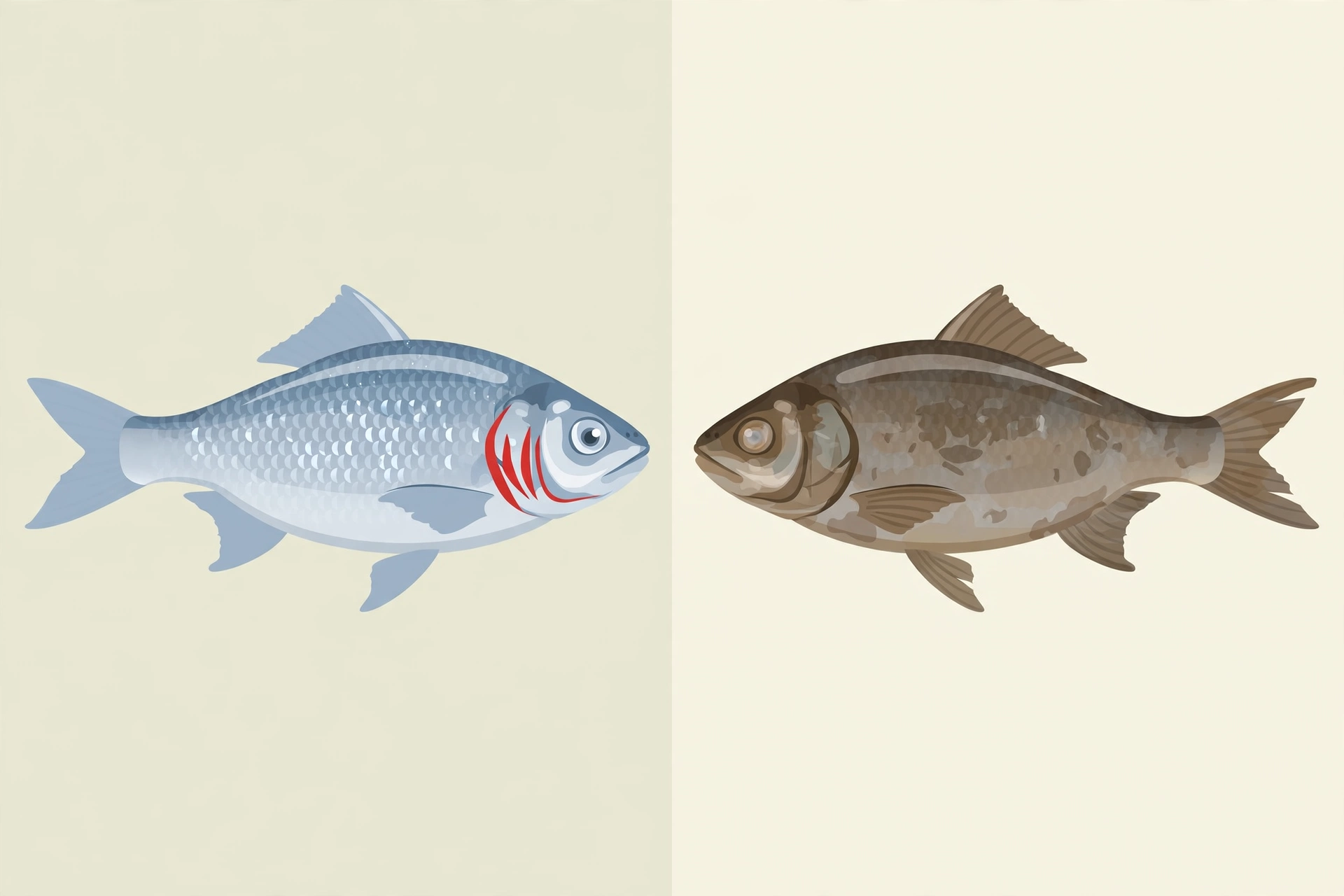
Prefer
- Clear, bright eyes that bulge slightly outward
- Moist gills in a bright red or pink shade, with no brown discoloration
- Firm flesh that springs back after a gentle press
- A mild, clean smell of the sea or fresh water
- Fish displayed on plenty of fresh ice, not sitting in pooled meltwater
Avoid / check more closely
- Sunken, cloudy, or dried-out eyes
- Brown, gray, or slimy gills
- Flesh that stays dented after you press it
- A strong fishy, sour, or ammonia-like smell
- Fish resting in warm water or melted ice at the counter
Start with the eyes
The eyes are often the quickest read on a whole fish. Clear, bright, and slightly bulging eyes usually suggest a recently caught fish, while sunken or cloudy eyes suggest it has been out of the water longer. Keep in mind that some fish look different after freezing and thawing, so treat the eyes as one clue among several rather than the whole verdict.
Check the gills
If the seller allows it, lift the gill cover and take a look: fresh gills are moist and bright red or pink. Brown or gray gills, or a slimy coating, are reasons to be cautious and choose another fish. Gills change color as fish ages, which makes them one of the more honest indicators on display — but like every visual clue, they work best combined with smell and touch.
Press the flesh and check the skin
Give the flesh a gentle press with your fingertip: on a fresh fish it should feel firm and spring back, not keep the dent. The skin should look shiny and metallic, with scales lying flat and tight rather than dull or patchy. For fillets, look for even color, moist surfaces, and flesh that holds together without gaps or separation.
Smell is your best tool
Trust your nose. Fresh fish smells mildly of the ocean or clean water; a strong fishy, sour, or ammonia-like odor is the clearest reason to pass. Smell the fish close up when you can — packaging and ice can mask odors at a distance. If the eyes look fine but the smell is off, let the smell decide.
Keeping fish fresh on the way home
Make the fish counter your last stop before checkout, and ask the seller for a little extra ice for the trip if it is a warm day. Keep the fish cold and separate from other groceries, and get it into the refrigerator as soon as you are home. Plan to cook fresh fish within a day or two; if your plans change, freezing it promptly is the practical backup. These small habits protect the careful choice you made at the counter.
A simple fish-shopping checklist
Before you buy, answer three questions: Are the eyes clear and the gills red? Does it smell clean and mild? Is it sitting on fresh ice? Three yeses mean you have covered the useful checks. This checklist guides a confident choice at the market; it cannot detect anything invisible, so quick chilling and clean handling at home finish the job.
Common questions
Does a strong fish smell always mean the fish is bad?
Not always, but it is the most reliable warning sign you have. Some species naturally smell stronger than others, yet a sharp, sour, or ammonia-like odor is different from a mild ocean scent — when in doubt, choose another fish.
Is previously frozen fish a good choice?
Yes, when it has been handled well. Properly frozen fish can be an excellent option, especially far from the coast. Look for firm flesh, no freezer burn or ice crystals inside the package, and a label that states it was frozen — and avoid refreezing fish that has already thawed.
What if the eyes look fine but the smell is off?
Let the smell decide. Eyes and gills describe how the fish looks, while odor reflects how it has aged. A clean-looking fish with an unpleasant smell is not the one to bring home.
References
Prepared October 8, 2026 with AI assistance. Cited sources do not endorse the entire article.