
To pick a sweet watermelon, knock on it with your knuckles and listen for a deep, hollow sound, then check for a large creamy-yellow field spot where the melon rested on the ground. Lift it — a ripe watermelon feels heavy for its size. Dull, dark-green skin beats shiny skin, and a uniform shape usually means even ripening. No single trick is foolproof, but these clues together pick winners far more often than guessing.
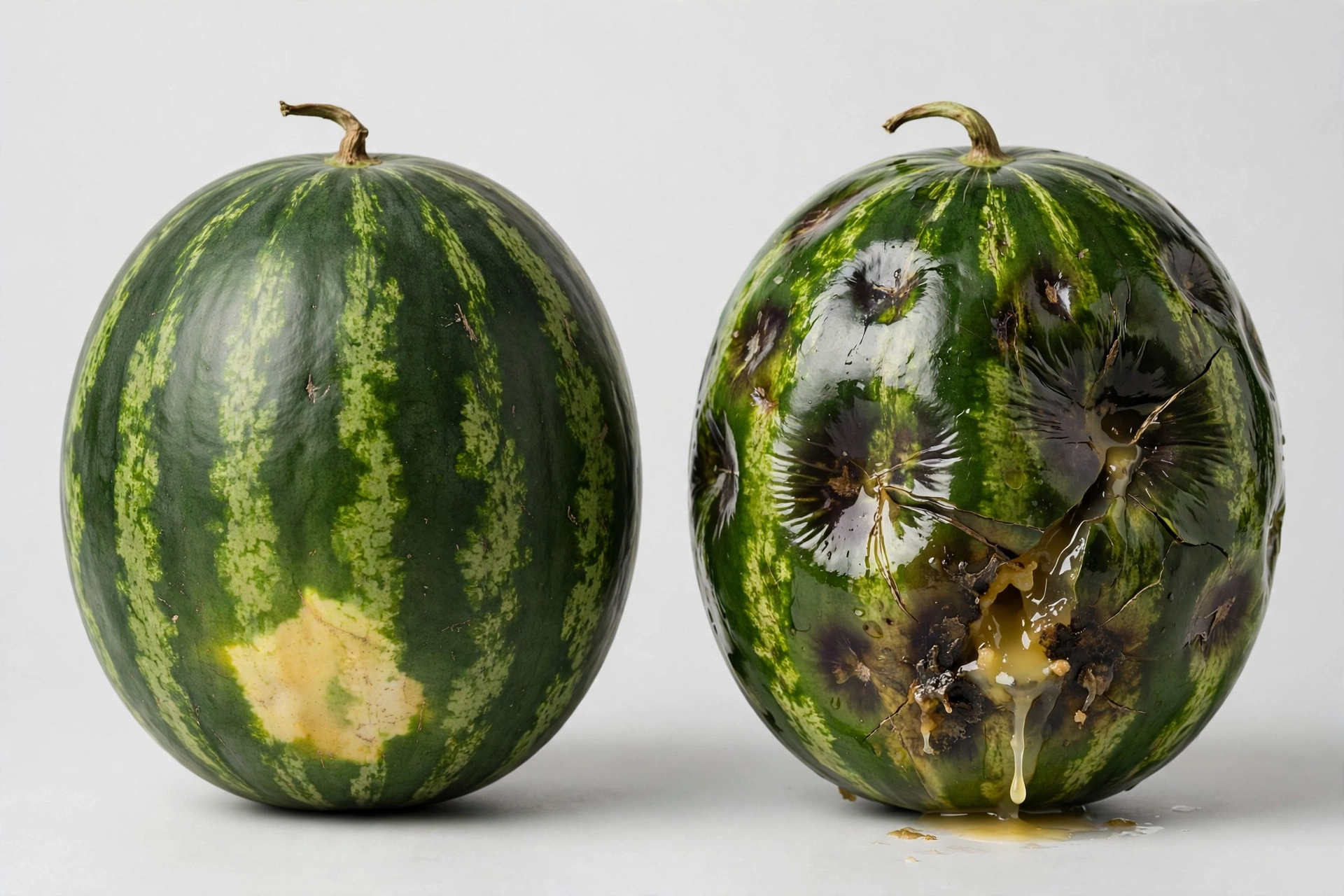
Prefer
- A deep, hollow “bunk” sound when thumped, not a flat metallic ping
- A large field spot that is creamy yellow or buttery, not white or greenish
- Heavy feel for its size — density suggests juiciness
- Dull, matte rind rather than glossy, shiny skin
- A firm, uniform shape with no flat sides or odd lumps
Avoid / check more closely
- Shiny rind, which often means underripe
- A white or pale-green field spot
- Soft spots, bruises, dents, or cracks in the rind
- A dull thud or high metallic ring instead of a resonant hollow sound
- Melons that feel light for their size
The thump test: what to listen for
Hold the watermelon steady and give it a firm knock with your knuckles, the way you would knock on a door. A ripe melon answers with a deep, hollow resonance — growers describe it as a “punk” or “bunk” sound. An unripe melon gives a higher, tighter ping, while an overripe or mealy one sounds dull and flat, with no ring at all. Thump a few melons in the bin to calibrate your ear; the differences become obvious after two or three tries. It is not magic — the sound reflects the internal structure and water content — but it is one of the most reliable quick tests shoppers have.
Read the field spot and the rind
Every watermelon has a field spot, the pale patch where it sat on the soil. On a melon picked at ripeness, that spot turns from white to a creamy, buttery yellow, and bigger is generally better — it means the melon stayed on the vine longer. A white or greenish spot suggests it was picked early. Next, look at the rind itself: ripe watermelons have a dull, matte finish, while underripe ones look glossy and almost polished. Dark green skin with strong contrast in striped varieties is another encouraging sign. None of these clues works alone, so stack them with the thump test.
Heft it and check the stem
Water is heavy, and a ripe watermelon is mostly water, so pick up candidates and compare — the heavier one at the same size is usually the juicier one. Give the melon a once-over for shape: symmetrical, uniform melons ripened evenly, while lumps or flat sides can mean uneven growth. If the stem is still attached, a dried, brown stem suggests the melon finished ripening on the vine; a green stem can mean an early pick. Finally, press the rind gently — it should be firm all over, with no soft or sunken patches.
Storing watermelon at home
A whole, uncut watermelon keeps well at cool room temperature for a week or more — refrigeration is unnecessary until you cut it. Once cut, wrap the pieces tightly or seal them in containers and refrigerate; eat within three to four days for the best texture. Cut watermelon soaks up fridge odors easily, so keep it away from strong-smelling foods. If the flesh develops a slimy film, sour smell, or fizzy taste, discard it.
A simple watermelon-shopping checklist
Before you buy, run the four checks: thump (deep and hollow?), field spot (creamy yellow?), weight (heavy for its size?), and rind (dull, firm, unblemished?). Compare two or three melons side by side — the contrast makes each clue easier to judge. These field-tested tricks raise your odds a lot, though even experienced pickers get an occasional dud; that is simply the nature of a thick rind hiding the inside.
Common questions
Does the thump test really work?
It is a genuinely useful indicator, not folklore. The resonant sound reflects the melon’s internal density and water content. It works best combined with the field spot, weight, and rind checks rather than used alone.
Should I buy whole or pre-cut watermelon?
Whole melons give you the full set of ripeness clues and keep longer. Pre-cut is convenient, but choose containers with uniformly red, firm-looking flesh and no excess liquid pooling at the bottom, and check any date on the package.
How long does cut watermelon last?
Refrigerated in a sealed container, cut watermelon stays good for about three to four days. Discard it if it turns slimy, smells sour, or tastes fizzy.
References
U.S. Food and Drug Administration — Selecting and Serving Produce Safely. Reference for produce selection, handling, and visible damage. Ripeness clues are established produce practice, not laboratory findings about these melons.
Prepared October 9, 2026 with AI assistance. Cited sources do not endorse the entire article.