
To choose passion fruit, pick fruit that feels heavy for its size, with deeply colored skin that is slightly wrinkled — for purple varieties, that wrinkling usually signals ripeness, not spoilage. The fruit should feel full when you hold it, with no soft moldy patches or leaking juice. Smooth, light, green-tinged fruit is often underripe and tart, so give it time or choose a heavier, more wrinkled example instead.
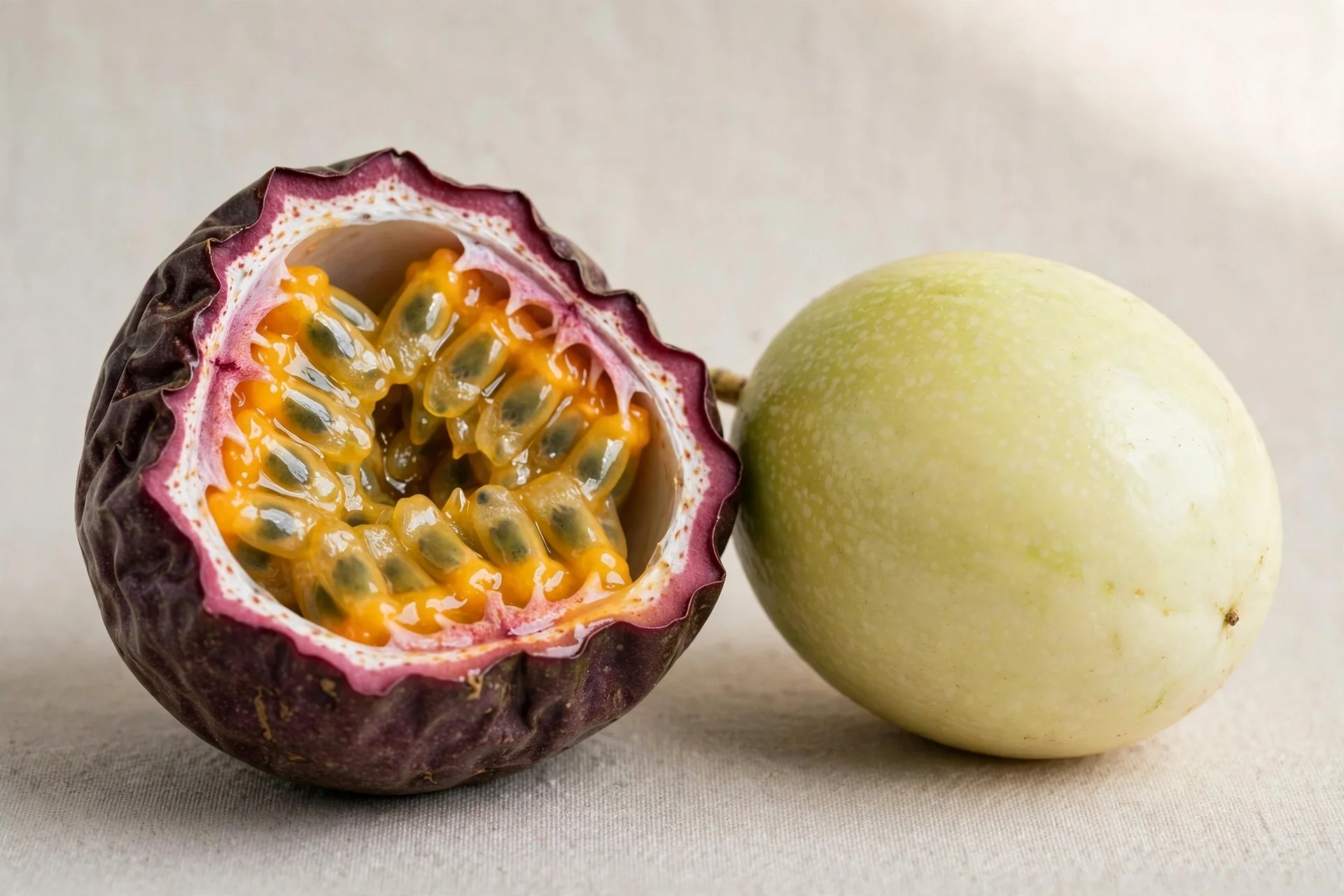
Prefer
- Heavy feel for the size, suggesting a full interior
- Slightly wrinkled skin on purple varieties
- Deep, even color for the variety
- Firm shell with no cracks or leaking juice
- No mold, especially around the stem end
Avoid / check more closely
- Very light fruit that feels hollow when held
- Smooth, shiny, green-tinged skin on purple varieties
- Large soft patches, cracks, or oozing juice
- Visible mold or a fermented smell
- Fruit that rattles excessively and feels dried out inside
Wrinkles are a good sign here
Passion fruit confuses many shoppers because the usual rule for fruit — smooth skin is better — is reversed. As purple passion fruit ripens, its skin gradually wrinkles and the fruit often becomes sweeter and more aromatic. A completely smooth, glossy shell usually means the fruit is still underripe, even if the color looks dark. Judge ripeness by combining three clues: weight, slight wrinkling, and a shell that still feels sturdy rather than collapsing. A fruit that is extremely shriveled and very light has likely dried out, so there is a middle ground to aim for.
This weight-for-size test is useful across tropical fruit. If you have used it for how to choose papayas, you will find the same principle here, just on a much smaller fruit: a full, juicy interior simply weighs more. Pick up several passion fruit of similar size and choose the heaviest ones — the difference is often obvious once you compare two or three in your hand.
Color, variety, and what to expect inside
Purple and yellow passion fruit do not ripen identically. Purple varieties deepen in color and wrinkle noticeably, while yellow varieties may stay smoother and turn a richer yellow-gold. In both cases, avoid fruit with large green patches if you want to eat it soon. Inside, ripe pulp is juicy and aromatic, with seeds surrounded by bright orange-yellow pulp. Pale, dry-looking pulp with little juice is a sign the fruit was picked too early or stored too long, much like the disappointing interior you can get from an underripe dragon fruit chosen only for its dramatic skin.
Because passion fruit is often sold loose or in small trays, inspect each fruit individually. Check the stem end and any small blemishes, since mold can start in tiny cracks that are easy to miss. Minor scarring on the shell is common and usually does not affect the pulp, but deep cuts, soft wet patches, or a sour smell are reasons to choose a different fruit.
Ripening and storing at home
If your passion fruit is smooth and firm, leave it at room temperature for a few days and check daily for wrinkling and a fuller feel. Once ripe, refrigerate it and use it within about a week for the best aroma. The same counter-first, fridge-later approach works for many tropical fruits, including the ones covered in our guide to how to choose mangoes — cold storage too early can stall ripening and mute flavor.
To use passion fruit, cut it in half and scoop the pulp with a spoon. The seeds are edible and add crunch, though you can strain them out for sauces and drinks. Extra pulp freezes well in ice-cube trays, which is a practical way to keep the flavor of a good batch for smoothies and desserts later. Discard any fruit with mold inside, a fermented smell, or pulp that looks unusually dark and dry.
Common questions
Is wrinkled passion fruit spoiled?
Usually not. Slight to moderate wrinkling on purple passion fruit is a normal ripening sign and often means sweeter pulp. Fruit that is extremely shriveled, very light, moldy, or leaking is past its best and should not be chosen.
Can I eat passion fruit straight from the shell?
Yes, that is a common way to enjoy it. Cut the fruit in half and scoop the pulp and seeds with a spoon. The flavor is tart-sweet, so underripe fruit will taste noticeably sharper.
How can I tell if passion fruit is full inside without cutting it?
Weight is the best clue. A full passion fruit feels heavy for its size compared with others in the display. A fruit that feels hollow or very light usually has little pulp or has dried out.
References
U.S. Food and Drug Administration — Selecting and Serving Produce Safely. Reference for produce selection, handling, and visible damage.
Prepared October 21, 2026 with AI assistance. Cited sources do not endorse the entire article.