To pick a sweet pineapple, choose one that feels heavy for its size, smells sweet and fragrant at the base, and shows golden-yellow color spreading upward from the bottom. Because a pineapple does not get sweeter after it is picked, buy it at the ripeness you want to eat. Pass on fruit with soft spots, mold, or a sharp fermented smell.
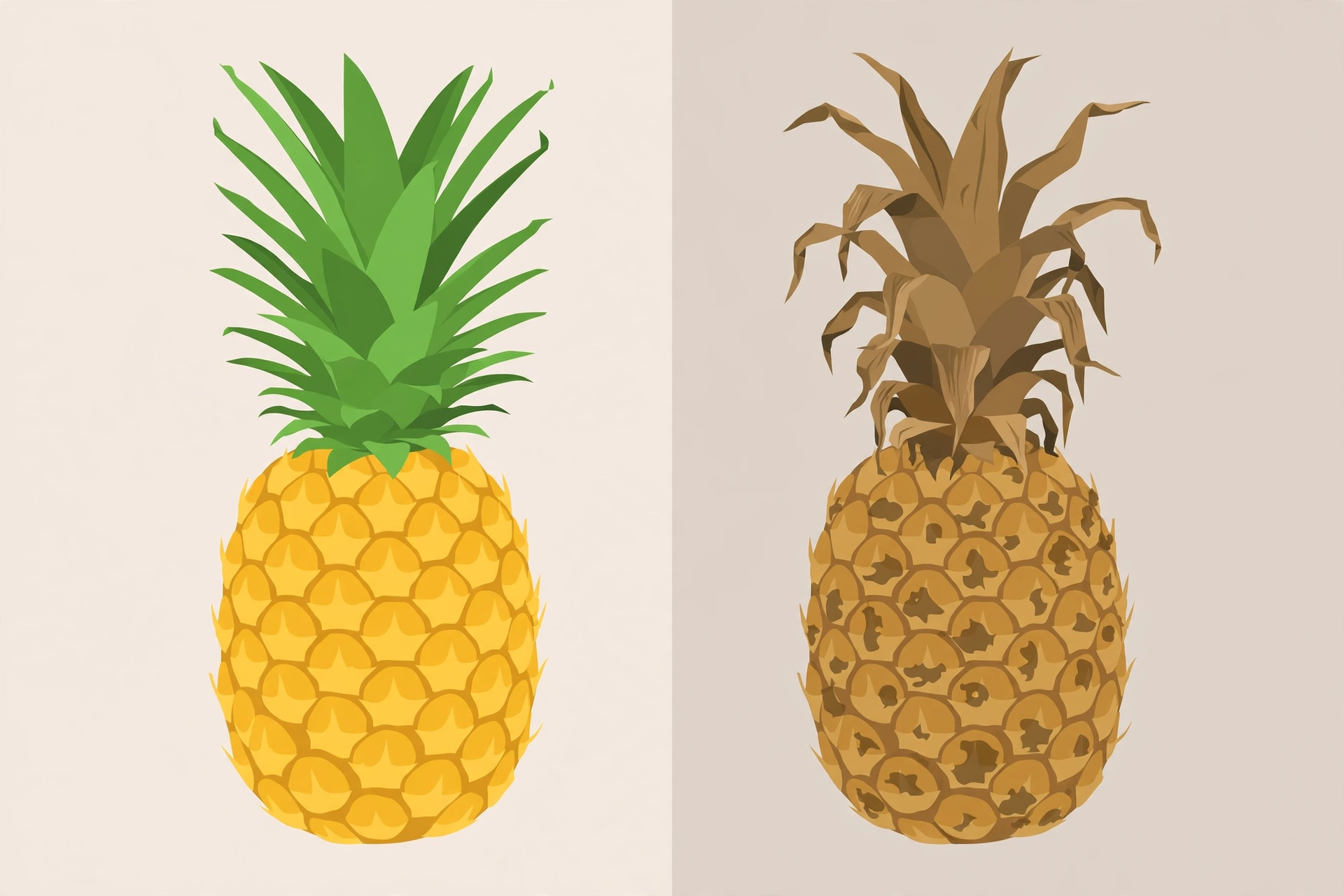
Prefer
- Heavy for its size, which often means juicier flesh
- Sweet, tropical fragrance at the stem end
- Golden-yellow color moving up from the base
- Plump, relatively flat eyes in an even pattern
- Fresh, green crown leaves that look alive rather than dried out
Avoid / check more closely
- Soft, dark, or waterlogged patches on the rind
- White fuzz or mold, especially around the base
- A sharp, fermented, or vinegar-like smell
- Wrinkled, shriveled skin that suggests age or poor storage
- Crown leaves that are entirely brown and brittle
Smell the base first
Turn the pineapple over and sniff the bottom, the stem end. A ripe pineapple usually gives off a sweet, distinctly tropical aroma there. Little or no scent often means the fruit was picked early and may taste flat. A strong fermented, alcoholic, or vinegar-like smell is a warning sign that the fruit is overripe or starting to spoil. Smell is one of the most reliable quick checks you have, so make it your first move.
Check color, eyes, and the crown
Look for golden-yellow color spreading upward from the base; the more gold, the riper the fruit tends to be. Some green near the crown is normal, and a fully green pineapple is not automatically unripe — color varies by variety and harvest. Examine the eyes, the diamond-shaped segments on the rind: they should look plump and fairly uniform. Dark, sunken, or weeping eyes deserve a closer look or a pass. The crown leaves should look fresh and green; a few brown outer leaves are normal, but a completely dried-out crown suggests an older fruit.
Heft it: weight matters more than size
Pick up a few pineapples of similar size and compare. The heavier one is usually the juicier pick, since weight reflects water content in the flesh. Give the rind a gentle squeeze as you lift: it should feel firm with just a whisper of give, never soft or spongy. Do not judge by size alone — a smaller, dense pineapple often eats better than a large, light one.
Why pineapples do not sweeten after picking
Unlike bananas or avocados, pineapples are non-climacteric: once harvested, their sugar content stays essentially fixed. A pineapple left on the counter may soften slightly and turn more golden, but it will not become sweeter. This is why choosing well at the store matters more for pineapple than for almost any other fruit. Buy it ready to enjoy within a day or two, and plan to cut it soon after bringing it home.
A simple pineapple-shopping checklist
Before you buy, run through four checks: weight, smell, color, and skin. Heavy for its size? Sweet scent at the base? Gold working up from the bottom? Rind firm with no soft patches or mold? If the answer is yes across the board, you have a strong candidate. Remember that these are selection clues for taste and texture — they cannot guarantee what is happening inside the fruit.
Common questions
Does pulling a crown leaf tell you it is ripe?
This tip is widely repeated: if a center leaf pulls out with a gentle tug, the pineapple is said to be ripe. Treat it as a rough hint rather than proof — combine it with the smell and weight checks, which are more dependable.
How should I store a pineapple at home?
Keep a whole pineapple at room temperature for a day or two if it needs a little more time. Once cut, store the pieces in a sealed container in the refrigerator and use them within a few days. Rinse the rind and use a clean knife and cutting board before slicing.
Can a mostly green pineapple still be sweet?
Sometimes, yes. Color varies with variety and growing conditions, so a green rind does not always mean a tart fruit. When the color is uncertain, lean on the base aroma and the weight test to decide.
References
U.S. Food and Drug Administration — Selecting and Serving Produce Safely. Reference for produce selection, handling, and visible damage. Storage suggestions are kitchen practice, not laboratory findings.
Prepared October 8, 2026 with AI assistance. Cited sources do not endorse the entire article.