
To choose sweet tangerines, pick them up — a good tangerine feels heavy for its size, which signals juicy segments inside. The peel should be firm, thin, and a deep, glossy orange, clinging closely to the fruit rather than feeling loose or puffy. A fresh tangerine smells sweet and citrusy, especially at the stem end. Avoid fruit that feels hollow or airy, looks pale, or has soft spots and mold.
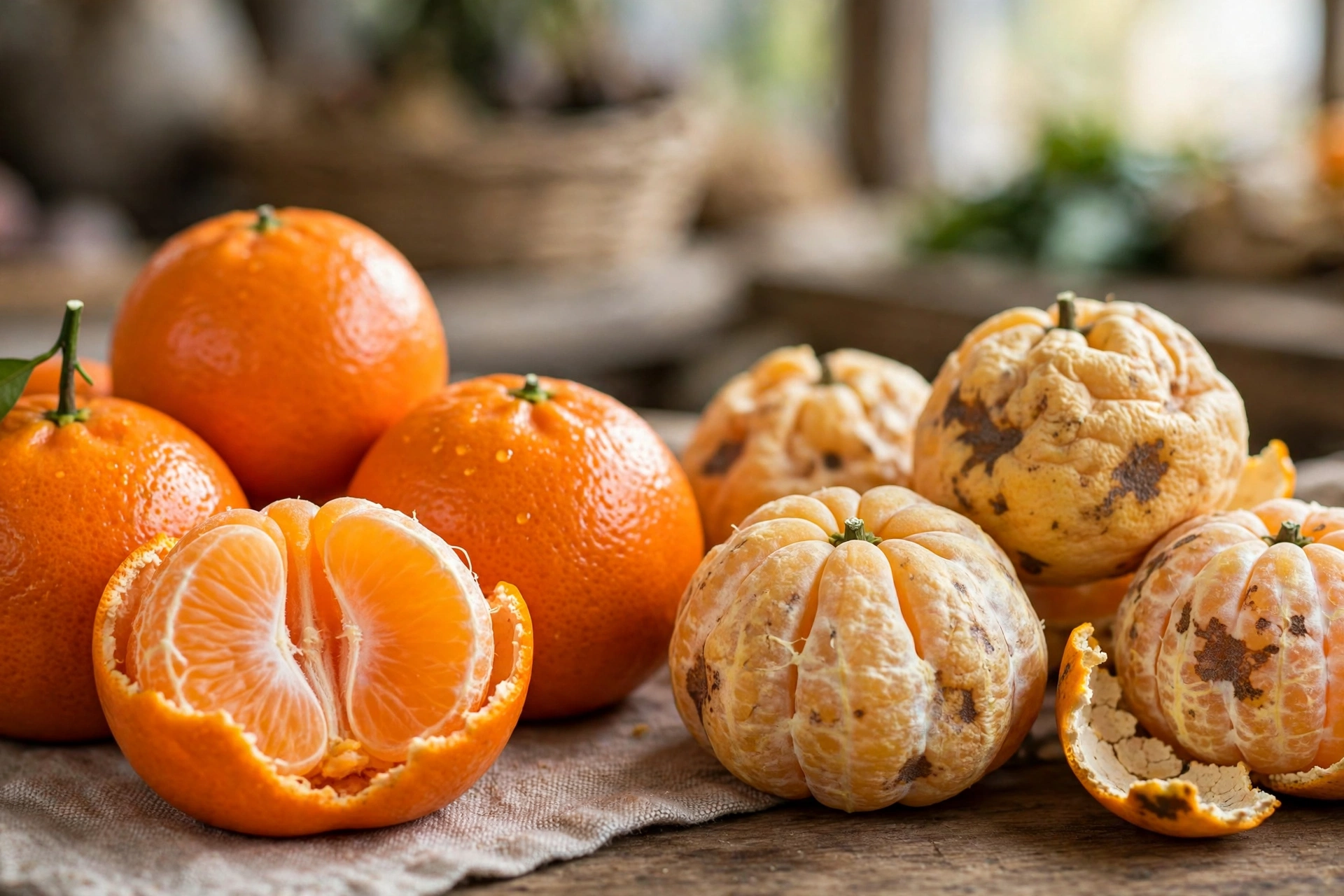
Prefer
- Heavy feel for the size — the juiciest indicator
- Firm peel that hugs the fruit closely
- Deep orange, glossy, even color
- Sweet citrusy smell at the stem end
- Small to medium size, which often means sweeter fruit
Avoid / check more closely
- Puffy peel that feels loose or hollow
- Soft spots, bruises, or mold
- Pale or greenish color
- Light, airy feel suggesting dry segments
- Wrinkled or shriveled skin
Weight and peel fit matter most
The two quickest tests for a tangerine are weight and how the peel fits. Heft several in your hand and choose the heaviest for their size — light fruit is often dry inside. Then feel the peel: on a fresh tangerine it lies close to the segments with no air gap, feeling firm and slightly pebbly. A puffy, loose peel that separates from the fruit usually means the segments inside have shrunk from moisture loss, and the flavor will be flat. A gentle squeeze should meet even firmness all around; soft patches are a warning sign.
Color, gloss, and varieties
Look for a rich, deep orange color with a natural shine — pale or yellowish tangerines are often underripe and tart. A little variation is normal, but mostly green fruit is not ready. Common types include satsumas (very easy to peel, mild and sweet), clementines (small, sweet, usually seedless), and tangors or murcotts (larger, richly flavored). Smaller fruit within a variety is often sweeter than oversized ones. A few tiny surface blemishes are harmless, but skip fruit with cuts, punctures, or any white or blue-green fuzz, which is mold.
Season and buying in bags
Tangerines are a winter citrus, at their peak roughly from November through March, when they are sweetest and cheapest. Bags are convenient, but inspect through the mesh: look for consistent color and firmness, and check the bottom of the bag where damaged fruit hides. If one fruit in the bag is moldy, its neighbors may be affected, so choose another bag. Loose fruit lets you inspect each piece, which is worth the small extra cost for the best quality.
Storing tangerines at home
Tangerines keep about a week at cool room temperature and up to two weeks refrigerated. Store them loose or in a breathable bag in the crisper drawer — sealed plastic traps moisture and encourages mold. Keep them away from ethylene-producing fruits like apples and bananas if you want maximum freshness. Do not wash before storing; rinse just before peeling and eating. Peeled segments dry out quickly, so eat them the same day or store in a covered container in the fridge.
Common questions
Why is my tangerine dry inside?
Dryness usually comes from age or poor storage — the fruit loses moisture over time. Choosing heavy, firm fruit with tight peel and refrigerating promptly keeps them juicy longer.
Are seeds a sign of bad tangerines?
No. Seediness varies by variety — clementines and satsumas are nearly seedless, while murcotts and some others naturally have seeds. Seeds do not indicate poor quality.
Can I eat the white pith?
Yes, the white pith is edible, though it tastes bitter. Most of it comes away with the peel; the thin threads left on the segments are harmless.
References
U.S. Food and Drug Administration — Selecting and Serving Produce Safely. Reference for produce selection, handling, and visible damage.
Prepared October 13, 2026 with AI assistance. Cited sources do not endorse the entire article.