
To choose fresh strawberries, look for berries that are evenly bright red from tip to shoulders, with fresh green caps still attached, and flesh that feels firm but not hard when you press very gently. Give the container a quick sniff — ripe strawberries smell sweet and fragrant. Because strawberries do not ripen after picking, always choose fully colored berries at the store; pale or green-tipped ones will stay tart.
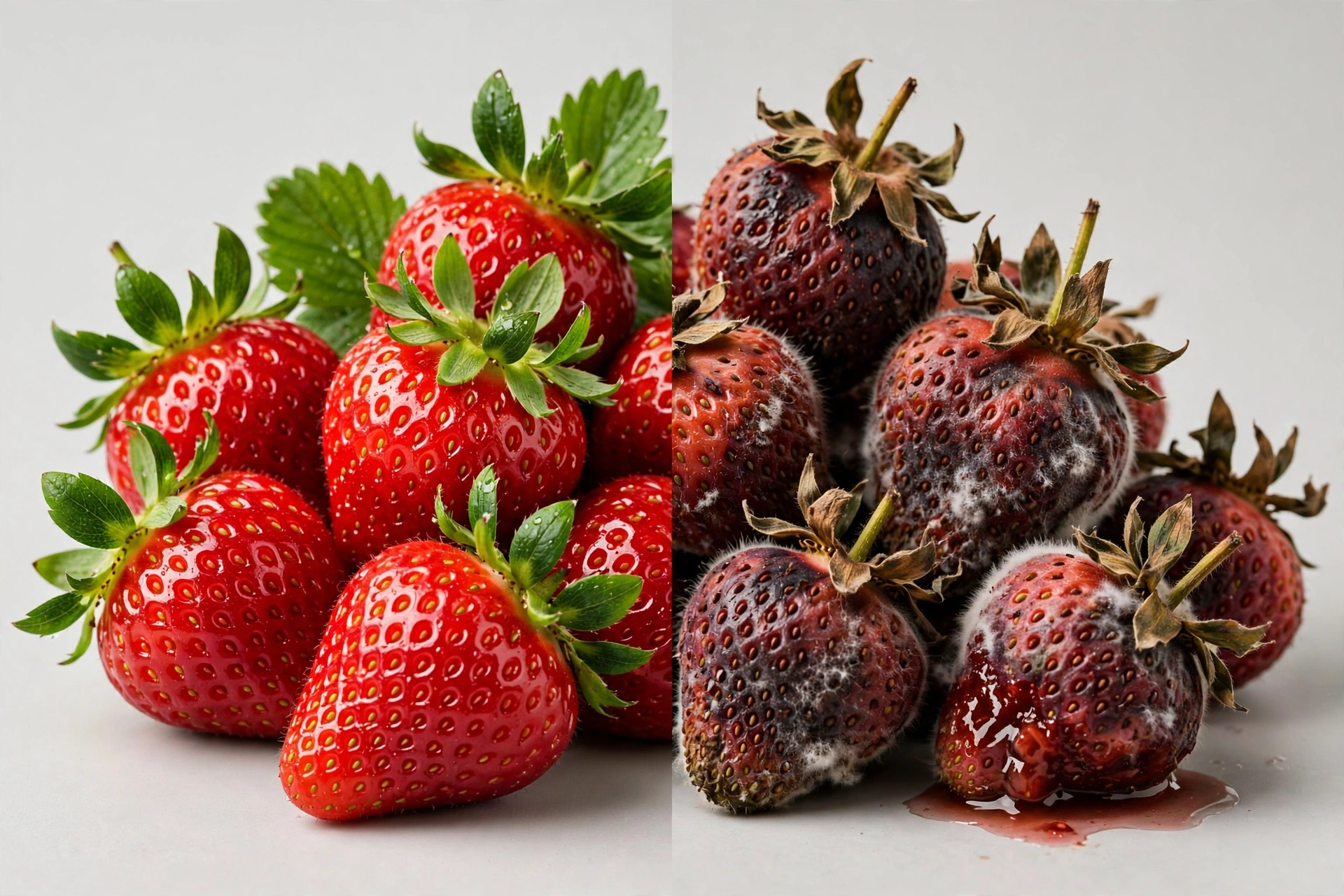
Prefer
- Even, bright red color all the way to the shoulders
- Fresh, green caps (calyx) that look lively, not dried out
- Plump berries that feel firm with a slight give
- A sweet, fragrant smell when you sniff the container
- Dry, clean containers with no juice stains on the bottom
Avoid / check more closely
- White or green shoulders, which signal underripe, tart fruit
- Soft, mushy, or leaking berries
- Any white or gray fuzzy mold — check the bottom layer too
- Dried, brown, or missing caps
- Containers with red juice stains, a sign of crushed berries inside
Color and caps tell the ripeness story
Strawberries are non-climacteric, meaning they stop ripening the moment they are picked. That makes color your most honest guide: a fully red berry from tip to top was picked at its peak, while white or green shoulders mean it was picked too early and will never sweeten up. The small green leafy cap on top is a freshness clock — on just-picked berries it looks bright and perky, and it dries and darkens as the days pass. Shiny skin is another good sign; dull berries are usually older. Do not worry much about size: smaller berries are often more intensely flavored, while giant ones can be watery, though variety matters more than size.
Touch gently and trust your nose
Pick up a berry and press it very lightly between your fingers. Fresh strawberries feel firm with just a hint of give, like a ripe grape. Mushy spots, especially near the tip, mean the berry is breaking down, and any leaking juice will quickly spoil its neighbors in the box. Then smell the container: ripe strawberries release a sweet, almost floral fragrance you can notice without even opening the lid. Little or no smell usually means the berries were picked underripe or have been in cold storage a long time. If you catch a fermented or wine-like odor, put the box back — that fruit is past its best.
Inspect the whole box, top to bottom
Mold spreads fast among strawberries, so one bad berry can ruin the box within a day. Tilt the container and look at the bottom layer, where damaged fruit hides. Flip the box gently if the packaging allows it, and scan for white or gray fuzz. Also check for juice stains on the cardboard or plastic — red streaks mean some berries were crushed during transport, and crushed berries mold quickly. It is better to buy a slightly smaller box of perfect berries than a large one with two or three questionable ones mixed in.
Storing strawberries at home
Do not wash strawberries until right before you eat them — moisture speeds up mold. Keep them unwashed in the refrigerator in their original ventilated container, or spread them in a single layer on a paper-towel-lined plate. Most boxes keep well for two to three days this way. If you spot a soft or moldy berry, remove it immediately so it does not affect the rest. For longer keeping, hulled strawberries freeze well: spread them on a tray to freeze individually, then transfer to a sealed bag.
A simple strawberry-shopping checklist
Before you buy, run through four checks: color (fully red?), caps (green and fresh?), feel (firm, not mushy?), and smell (sweet fragrance?). Peek at the bottom of the box for hidden mold and juice stains. Buy only what you will eat within a few days, since strawberries are among the most perishable fruits in the store. These checks guide your choice well, though they cannot reveal everything about flavor — variety and growing conditions play their part too.
Common questions
Will strawberries ripen on the counter?
No. Unlike bananas or avocados, strawberries do not continue ripening after harvest. A white-shouldered berry will stay white-shouldered and tart. Always buy them fully red.
Should I wash strawberries before refrigerating?
No — wash them just before eating. Extra moisture encourages mold, so store berries dry and unwashed in the fridge, ideally in a breathable container.
Is it safe to eat around a moldy spot?
It is best to discard the whole berry. Mold on soft fruits like strawberries can spread invisibly through the flesh, so cutting off the fuzzy part is not a reliable fix. When in doubt, throw it out.
References
U.S. Food and Drug Administration — Selecting and Serving Produce Safely. Reference for produce selection, handling, and visible damage. Ripening behavior is established produce science, not a laboratory finding about these berries.
Prepared October 9, 2026 with AI assistance. Cited sources do not endorse the entire article.