
To choose a ripe pomegranate, pick the heaviest fruit of similar size — weight means juice-filled arils inside. The skin should look leathery and slightly angular rather than perfectly round and shiny, with deep red color. Tap it: a ripe pomegranate gives a metallic, tinny ring, while an unripe one sounds dull and woody.
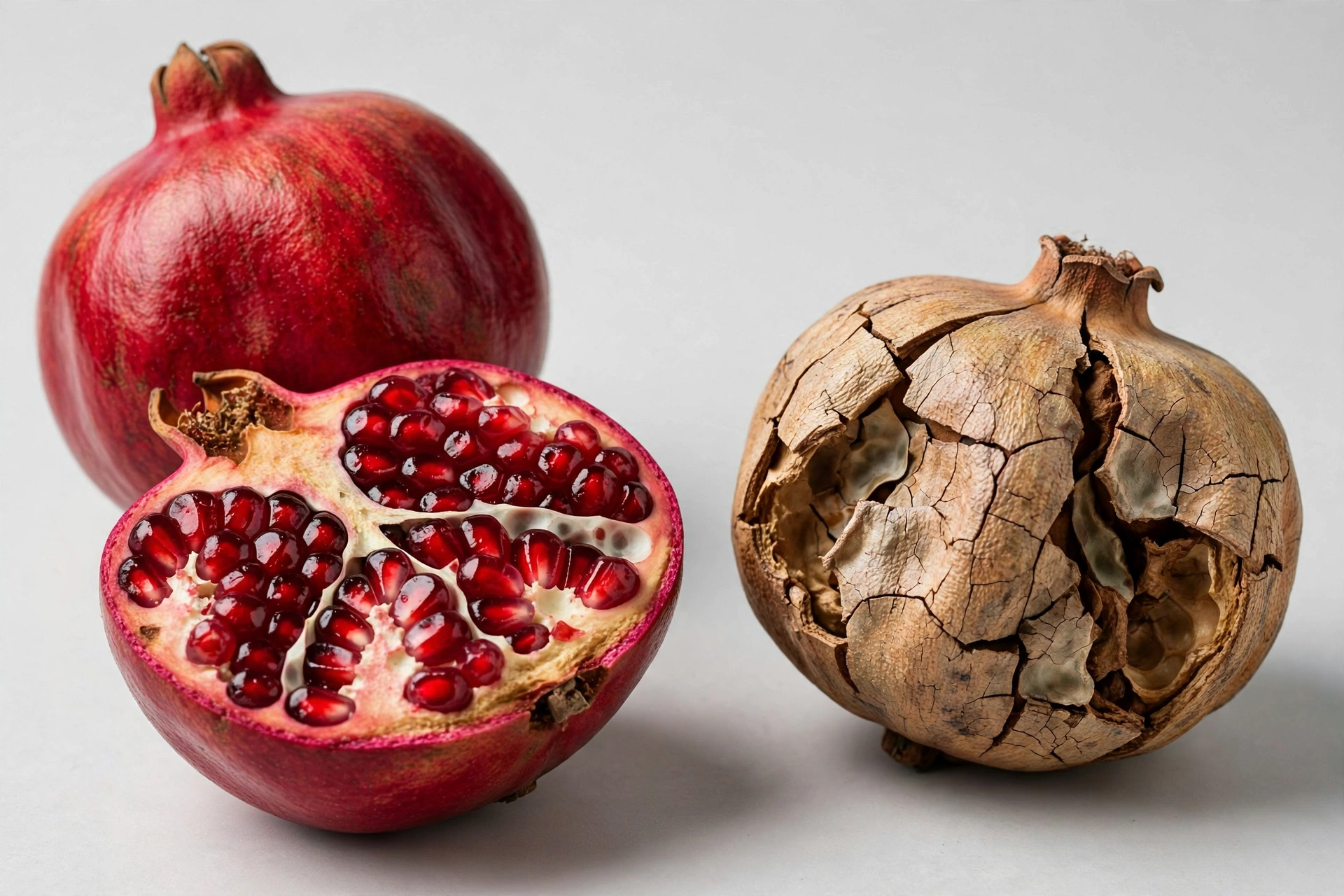
Prefer
- Heavy feel for the size
- Deep red, leathery skin with slight angularity
- A metallic ring when tapped
- Firm fruit with no soft spots
- A dry, intact crown
Avoid / check more closely
- Light-feeling fruit
- Perfectly round, shiny, pale skin
- Cracks, cuts, or leaking juice
- Soft or mushy patches
- Mold around the crown
Weight and shape: the aril test
A pomegranate’s treasure is inside — hundreds of juice-filled arils — and weight is your window into it. Heft several and choose the densest; light fruit often has dried-out arils. Ripe pomegranates also look slightly angular or hexagonal rather than perfectly round, because the full arils press against the skin. Deep, even red color is encouraging, though some varieties stay lighter when ripe.
The tap test and surface check
Flick the skin with your finger: ripe pomegranates ring with a metallic, almost tinny sound, while unripe ones thud dully. The skin should feel leathery and firm — a little scratch or blemish on the outside is fine and does not affect the arils. Reject fruit with cracks (which invite mold), soft spots, or any mold around the crown.
Storing and opening pomegranates
Whole pomegranates keep for weeks — a month or more refrigerated, thanks to their thick skin. Once opened, refrigerate the arils in a sealed container and use within about five days; they also freeze well. To open without a mess, score the skin, break into sections underwater in a bowl — the arils sink and the white pith floats.
Common questions
How do I open a pomegranate without staining everything?
Open it underwater in a large bowl: score, break apart, and let the arils sink while the pith floats. Wear an apron — the juice stains.
Are the seeds edible?
Yes — the juicy arils, seeds and all, are the edible part. The seeds are fiber-rich and fine to eat.
How long do pomegranates last?
Whole, they keep for weeks at room temperature and over a month refrigerated. Seeded arils last about five days chilled.
References
U.S. Food and Drug Administration — Selecting and Serving Produce Safely. Reference for produce selection and handling. Ripeness guidance is established produce practice.
Prepared October 10, 2026 with AI assistance. Cited sources do not endorse the entire article.