To choose a ripe mango for eating today, look for fruit that gives slightly under gentle pressure and has no visible mold or wet, damaged areas. Skin color varies by variety, so do not use yellow or red skin as your main ripeness test. Choose firmer fruit when your recipe calls for a crisp texture.
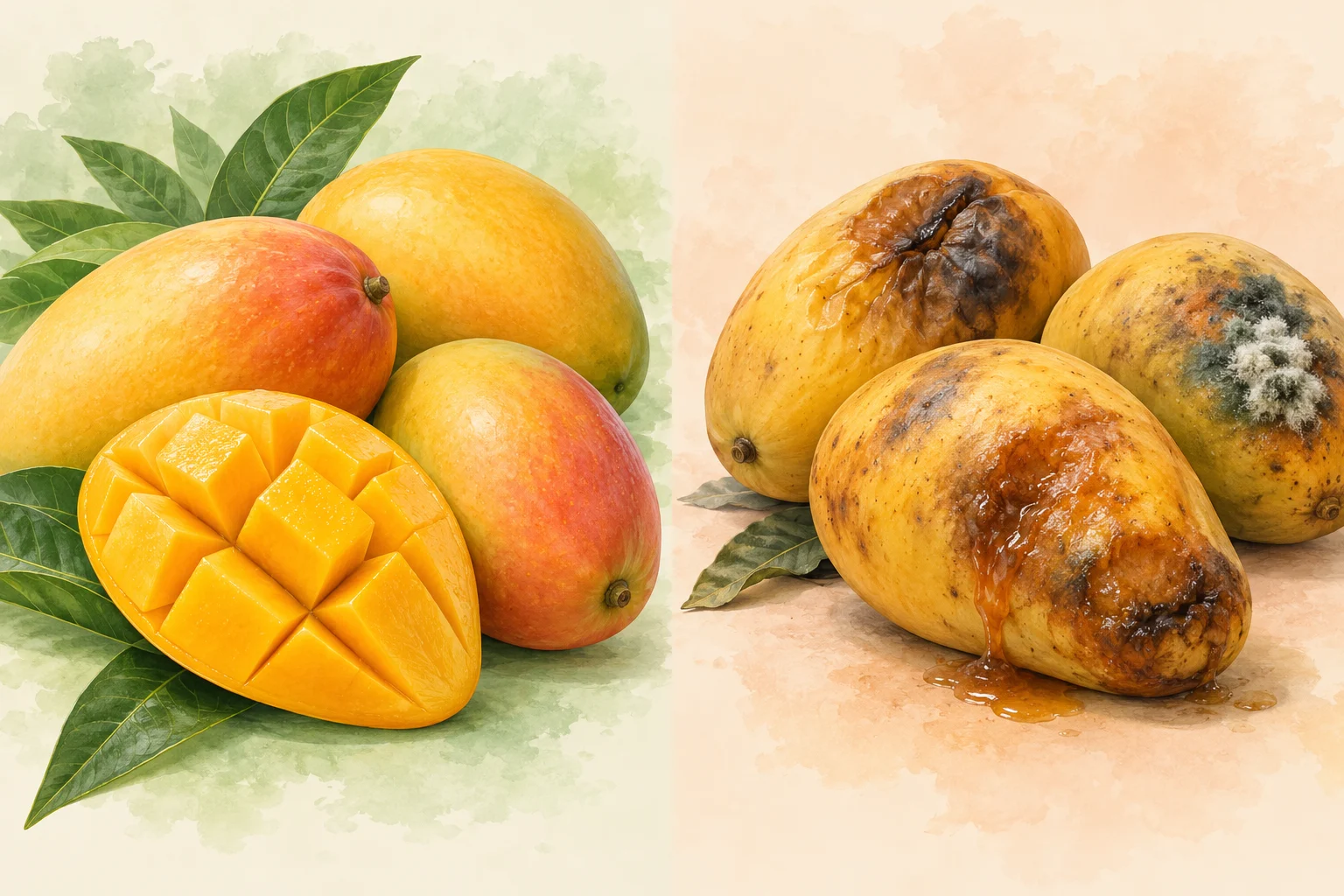
Prefer
- Intact skin without leaking juice
- Firmness suited to your planned dish
- No sunken, mushy areas or visible mold
Avoid / check more closely
- Visible mold on the surface
- Wet bruises or leaking juice
- An unusual fermented smell
Choose the right ripeness for your meal
Mangoes for a crunchy salad and mangoes for dessert call for different textures. Before buying, decide whether you will use the fruit today or in a few days. A firm mango may work for a dish that needs crunch, while a mango that yields slightly and evenly may suit a ripe-fruit dessert. Avoid squeezing hard: doing so can create bruises that are not immediately visible.
Check the whole mango for damage
Turn the mango to check its underside and the area around the stem. Distinguish a dry surface scratch from a sunken, wet area or a spot that is leaking. One attractive side does not cancel out damage on the other. If the seller allows it, hold the fruit gently rather than pressing repeatedly on one spot.
Why mango skin color can be misleading
Different mango varieties have different skin colors. Do not assume that green always means unripe or that yellow guarantees sweetness. Ask about the variety, its typical flavor, and when this batch is expected to be ready to eat. If you are unfamiliar with the variety, buying a small amount to try can be more useful than choosing by color alone.
How to handle mangoes after shopping
Keep the fruit from being crushed under heavier groceries. Rinse it under running water before peeling, and use a clean knife and cutting board. Cover cut mango and keep it refrigerated. If you see mold or clear signs of decay, do not taste it to decide whether to keep eating it.
A simple mango-shopping checklist
Before choosing a mango, answer three questions: What am I making? When will I use it? Is the fruit intact? For a crisp mango salad, ask for a suitable firm variety. For fruit to serve fresh today, look for a slight, even give. Buy only what you can use, and keep the fruit from being crushed on the way home. This checklist helps match texture to a meal; it does not test for microorganisms or chemical residues.
Common questions
Can a green mango be ripe?
Yes. Some varieties retain green skin as they ripen. Use a gentle firmness check rather than treating green skin as a universal sign of unripe fruit.
Does a ripe mango have to be very soft?
No. A ripe mango typically gives slightly to gentle pressure. A collapsing, leaking, or visibly moldy fruit should not be treated as a better choice simply because it feels softer.
References
FDA — Selecting and Serving Produce Safely
Reference for produce handling and visible damage. Dish-specific suggestions are kitchen tips, not laboratory findings.
Prepared October 8, 2026 with AI assistance. Cited sources do not endorse the entire article.
National Mango Board — How to Choose a Mango — Reference for firmness and variety-dependent skin color.